Accutron, a fork that hums
Before a shape, a hum. The Accutron keeps the seconds with a tuning fork, a small metal voice inside the case, and the jewel is that you are allowed to know it is there. A Milgauss puts a lightning hand on the dial and lets the bolt be the first fact. A Speedmaster opens on counters. An El Primero opens on a count in three colors. A Tangente opens on a Bauhaus face that sits, almost no voice at all. A Reverso turns the face over and offers another. The Accutron opens on a mechanism that hums, and on the Spaceview it leaves the dial open so the fork is part of the picture. The hour is still told. The fork is what you remember.
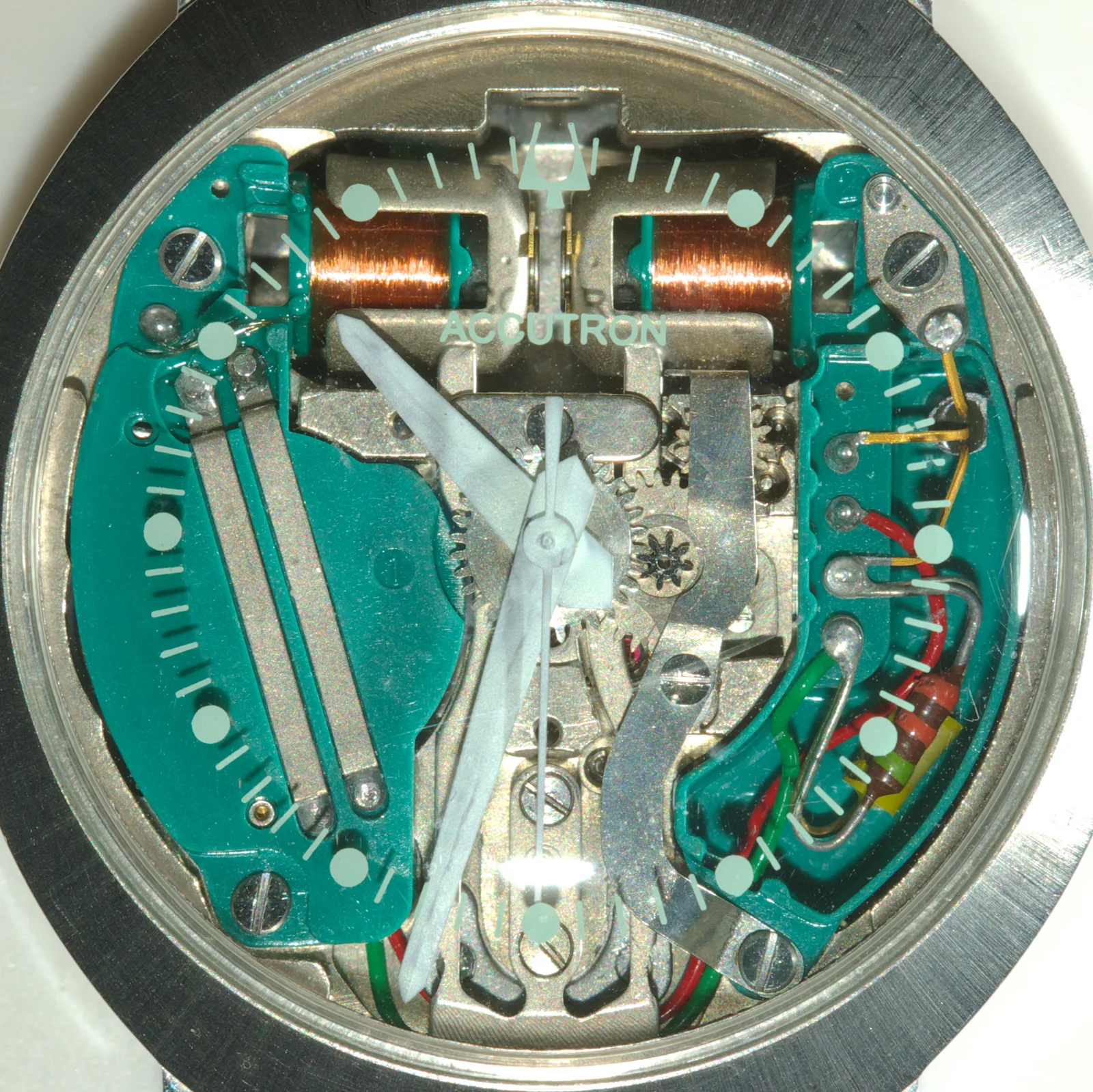
A face with the works in view
A Spaceview from 1963, off the wrist, on a white ground. The dial is an opening. Coils, the fork, a small architecture of metal, and the hands crossing all of it, the hour still readable and the works left in the room. The fork is the first meeting. Nothing in the plate is a wrist. Take the name away and the watch still says the same thing: the thing that keeps the time has agreed to be seen.
The window is the manners. Another house might have laid a sunburst over this and let the sunburst be the jewel. Here the jewel is the decision not to cover the fork. Markers hold the hours. A date keeps its little aperture. The rest is mechanism, finished as if it were a dial, because it is the dial. You would name the watch from the open heart and from the tuning-fork mark before you read a line of type. The case does the work of a mount. The fork does the work of a stone: a shape with a sound attached, the bright fact the eye returns to.
The scale of that decision stays a jewel’s scale. The watch is still a round on a bracelet, still a thing arranged to be fastened, and the openness does not turn it into a movement on a bench. The fork is centered the way a stone is centered. The hands are the only stroke moving across a field of metal that has been asked to stay beautiful while it works. Off the wrist, the picture is complete. You are looking at a hum that has agreed to be a face.
The same opening, a later calm
A Spaceview with calibre 214, from the early 1970s, spends the open face again and spends it more quietly. Off the wrist, a silver-tone case, a clean white ground, the movement still the dial. The fork is there. The coils are there. The hands cross them. Fewer lines of print, a broader field of metal, the same decision: do not hide the hum.
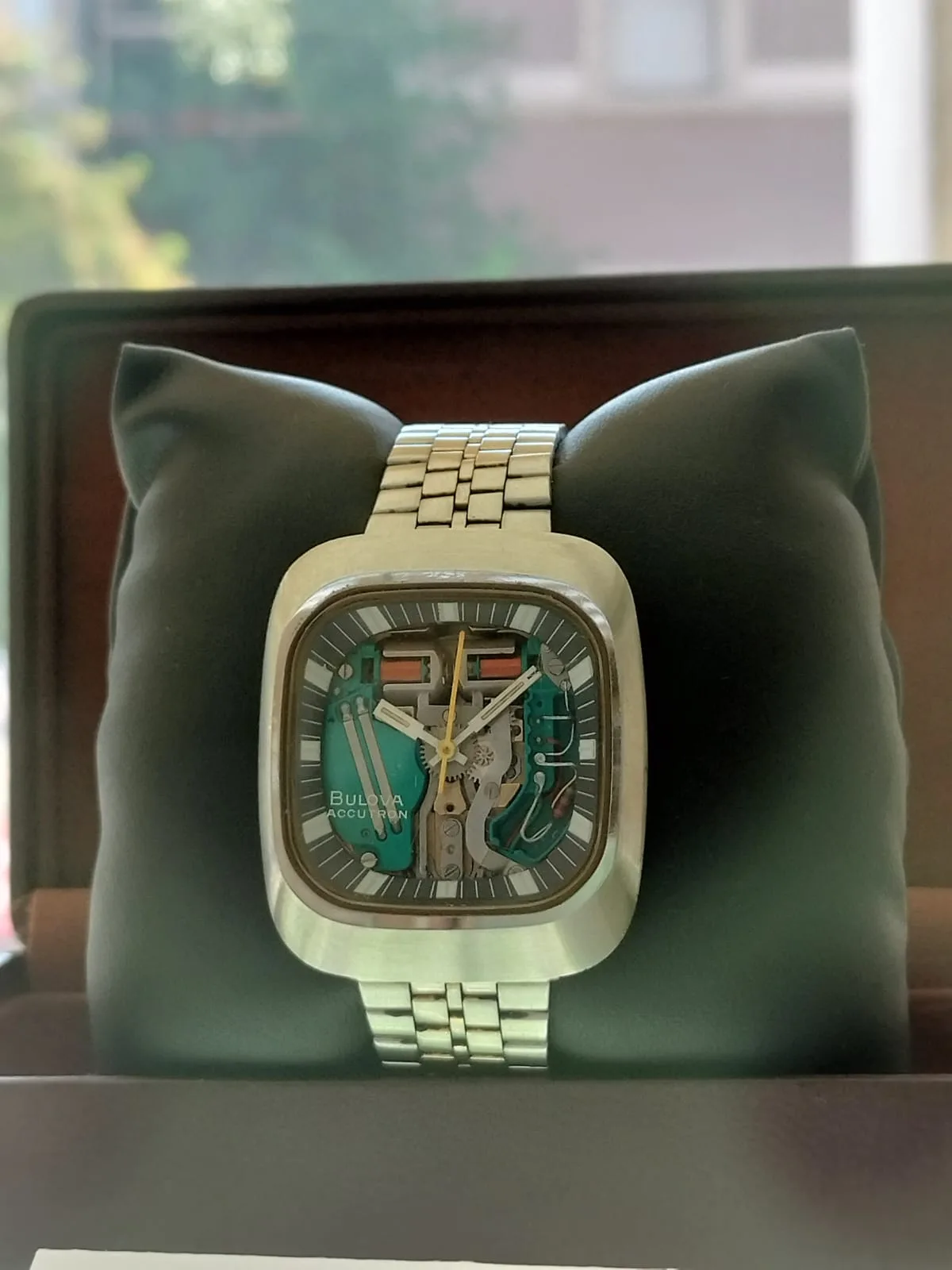
The two Spaceviews are two watches, and the opening is the icon’s constant. A year changes the layout. The fork does not step aside. The 1963 gives the open face its earlier, fuller field of marks. This 214 lets the metal of the movement be a quieter ground, so the tuning fork reads as one object in a small machine, which is what it is. A fluted ring would have made the bezel the first fact. A diving ring would have made the bezel a count of minutes. This ring stays a thin frame, and the color of the watch is the color of its own works: steel, a warm tone in the bridges, the hands a dark stroke across them.
Set the 1963 beside this 214 and you are still reading one sentence. The hum has a face. The face is the movement. On a light ground, with no wrist in the picture, the watch is simply a dial you are allowed to study, and the study ends at the fork. The shape is enough. The sound is the memory the shape keeps.
A dial that keeps the fork inside
A calibre 218 from the same years puts a dial back on, and the fork does not leave. Off the wrist, a round case, applied markers, a date, hands of a bright familiar kind, the tuning-fork emblem still on the face so the hum has a sign even when the works are covered. The Spaceviews let you see the fork. This one lets you wear it as a secret the dial has agreed to keep, and the emblem is the small honesty that remains. The mark is how you know which watch this is, before any story about a calibre.
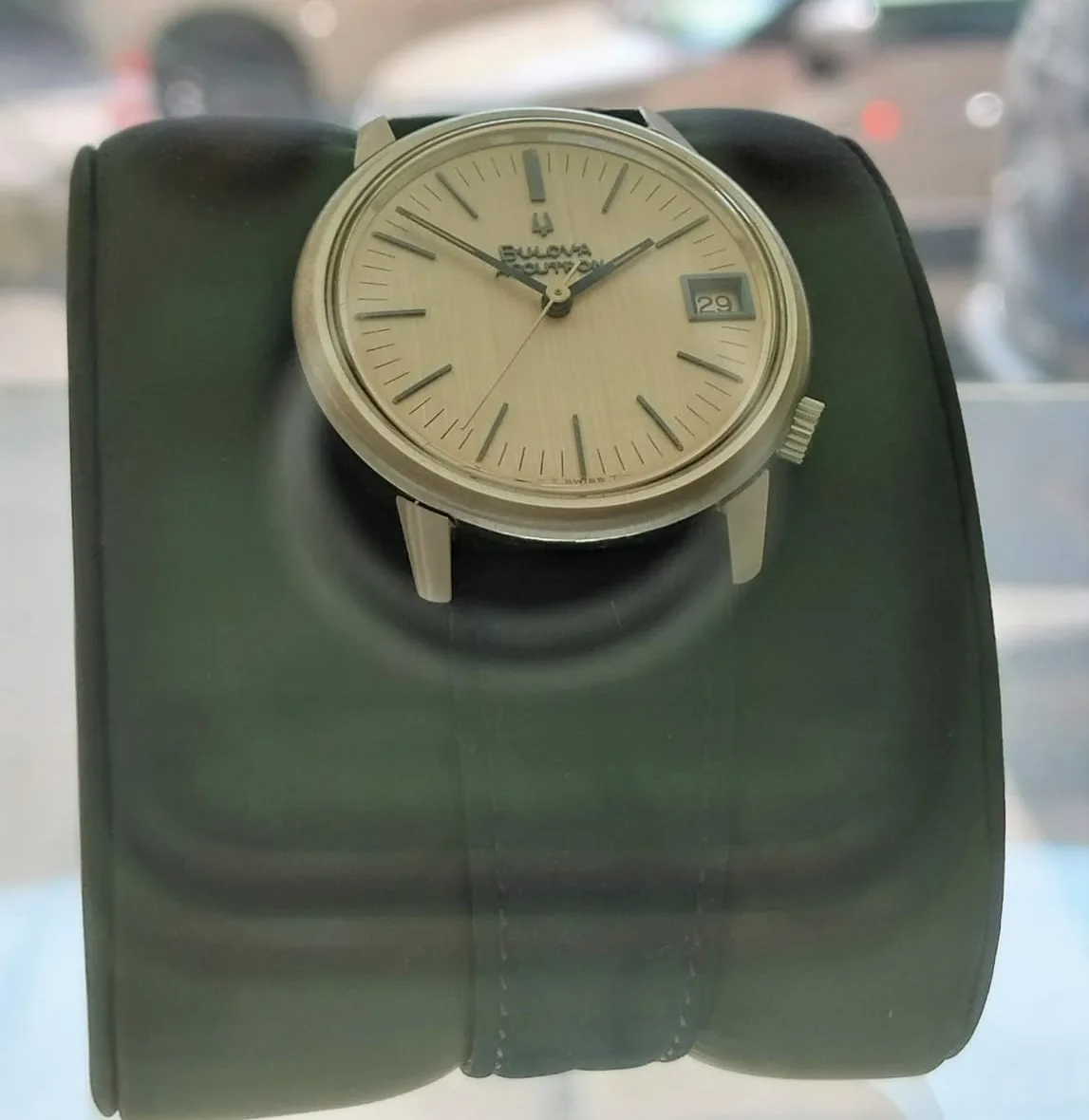
The closed dial is the other way the fork can be jewelry. Present as a sound and as a sign, the hour given a clean field, the mechanism still the reason the field exists. A lightning hand would have made the seconds the drawing. A day at twelve would have made a word the event. A slide rule would have made the bezel a map. This watch puts a tuning fork in the case and lets the case be calm. The bracelet is a line of links. Nothing in the still is a wrist. Attention goes to the dial, the dial sends it to the emblem, and the emblem sends it inward, to the fork you cannot see and can still name.
Three stills, one fork. The 1963 lets the hum be an open face, works and hands together. The 214 lets the same opening go quiet, a later movement asked to be the dial. The 218 lets a conventional face return and leaves the fork inside, the emblem keeping the sentence. A bolt can still cross a Milgauss. A counter can still sit on a Speedmaster. A tricolor count can still be an El Primero. A Bauhaus face can still sit. A case can still turn. On an Accutron, the time is kept by a fork that hums.
That is the icon. Accutron, a fork that hums. An open 1963, a quieter 214, a dial that covers the same idea — the fork, already the thing you meet.
Educational only · Not jewelry, insurance, or legal advice