A table is a flat
A table is a flat. The window on top of a cut stone — the face you look through, the largest plane the crown offers the eye. A girdle is the equator, the band a fingertip finds around the middle. A culet is the tip where the lower cone finishes, sometimes a tiny facet asked to spare that tip. A pavilion is the whole lower architecture that returns the light. The table is the flat those other facts are arranged under. The literacy is the window.
You meet it face-up. Everything else in the cut is a slope, a band, or a point. The table is the part that stays level, parallel to the world you are looking from.
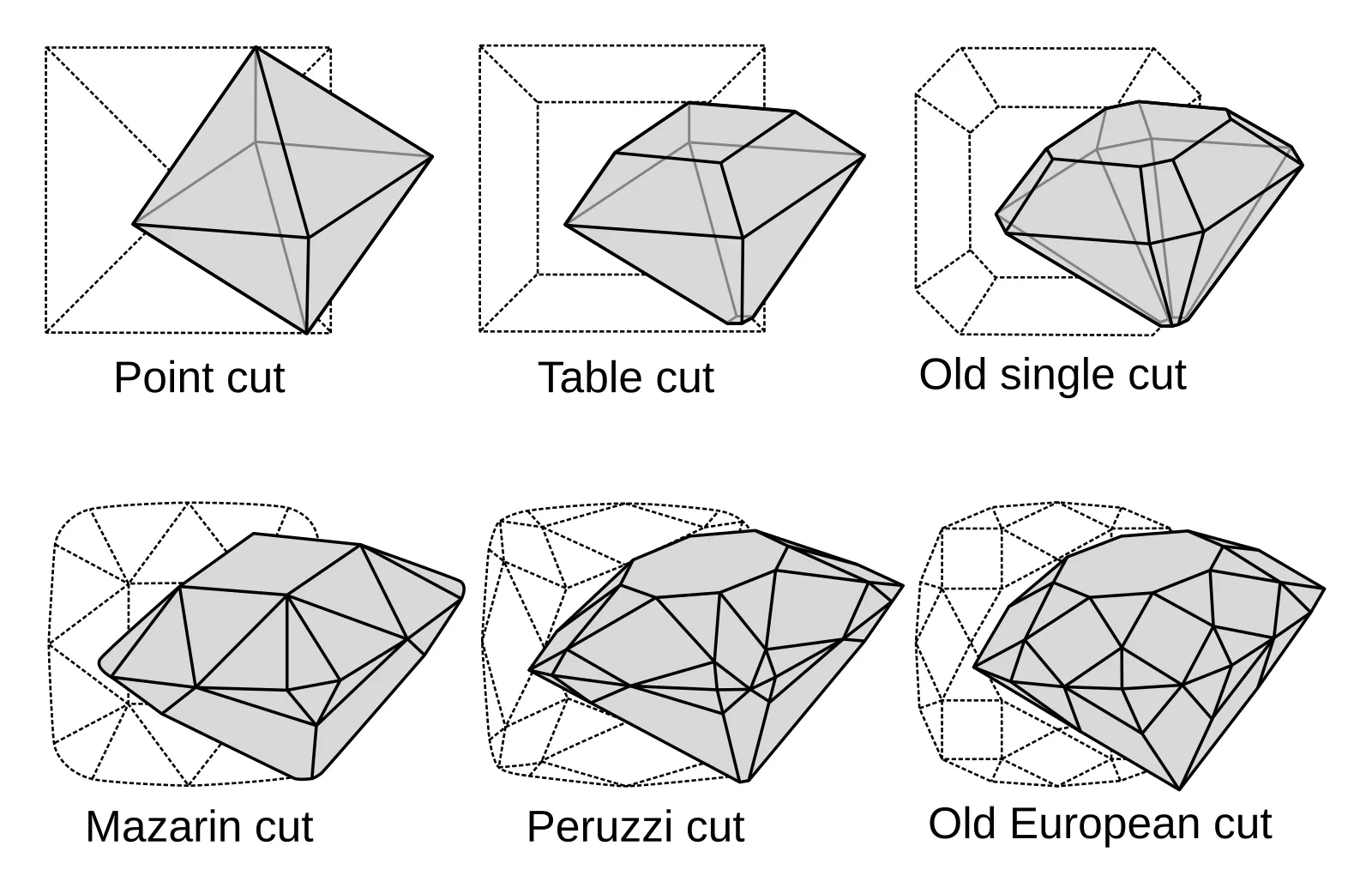
A plate of old cuts keeps the lesson in one row. A point cut is almost all slope. A table cut puts a large flat on top and takes its name from that flat. Later crowns — single cut, Mazarin, Peruzzi, old European — keep a window even as the facets multiply around it. You would see that flat before you counted a kite. The name on the plate can change. The face you look through is still the table.
Facets can multiply and the window stays one. The plate is there to show the flat, not to make you count stars.
The octagon in the crown
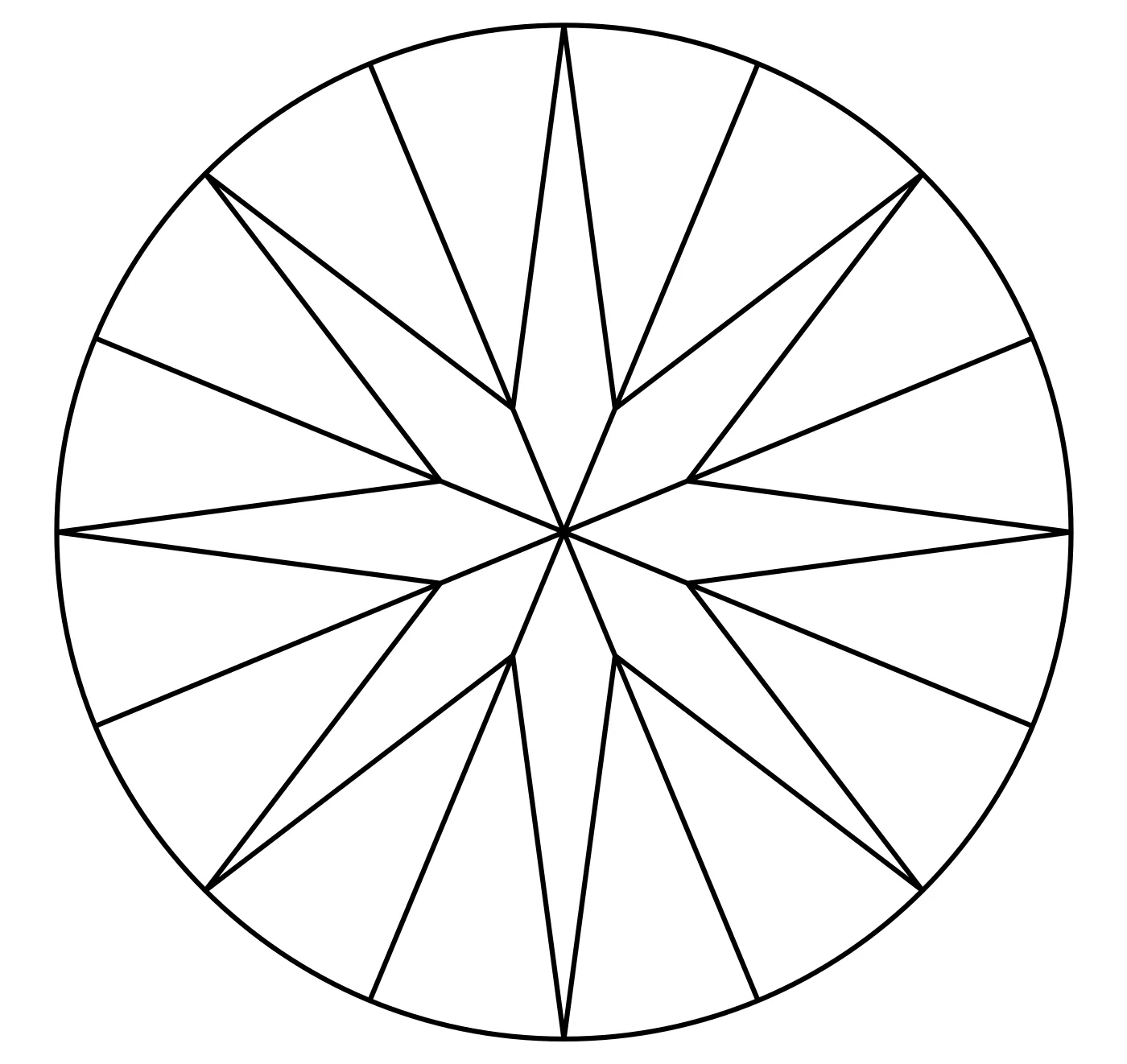
A crown view of an Eppler brilliant keeps the window as geometry. In the middle, a large octagon — the table. Around it, star and kite and the facets that step down toward the girdle. You would meet that octagon before you named a proportion. The pavilion, seen from below, would be a different drawing, all slopes meeting toward a tip. This plate is the top. The flat is what the eye is given first.
You would turn the page and the octagon would stay the octagon. Light can break in the lower cone and still leave the table where it was. The window is not the fire. It is the face the fire is asked to come through.
The same flat on a stone
A loose round brilliant finishes the thought as a window you can see. Face-up, the center is calm — an octagon of table — and the facets gather around it like a city around a square. You would feel that flat before you asked what a setting will do with the girdle. The table does not need a claw to be a table. It is the place the light enters, the plane a cutter left level.
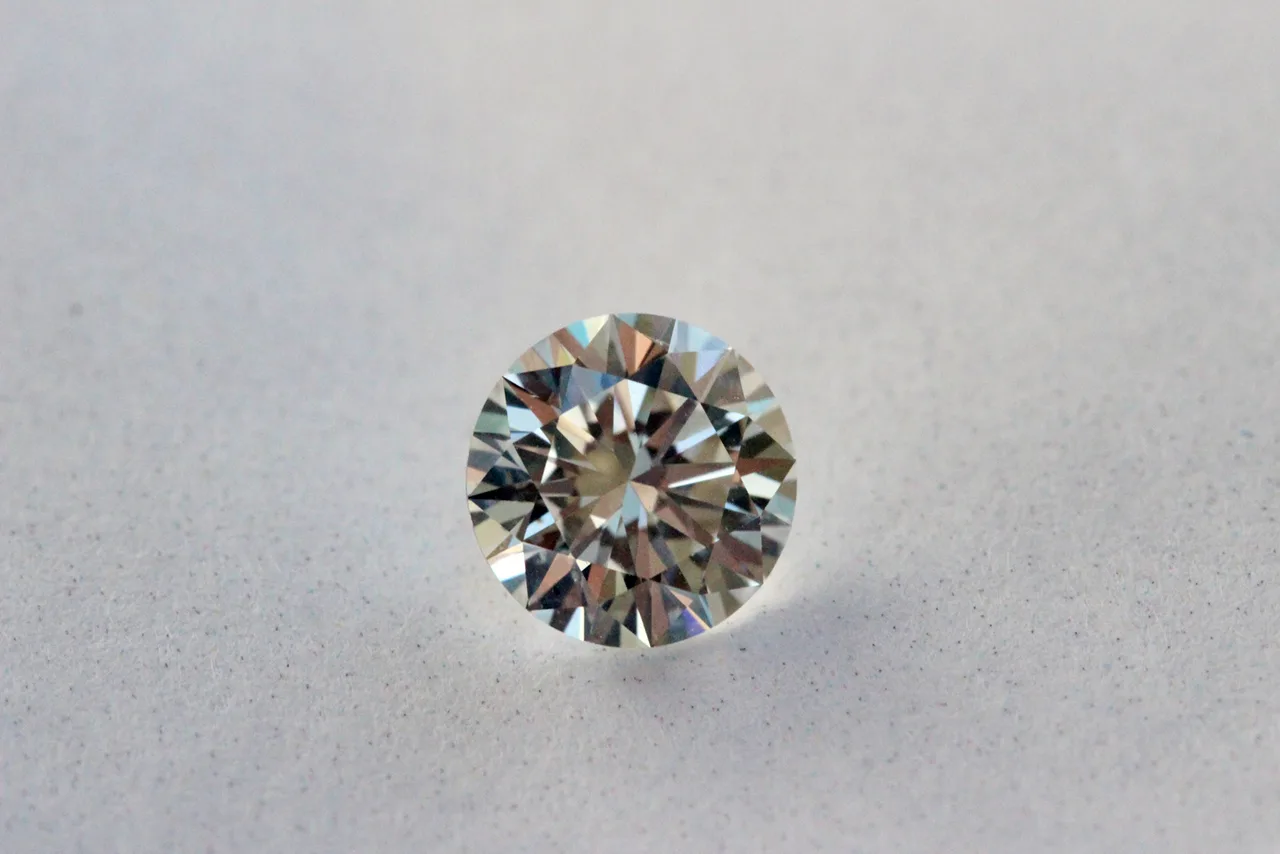
Turn the stone and the slopes change their flash. The flat stays the flat. A girdle can catch a fingertip. A culet can finish the cone. A pavilion can return the light. The table is what you would look through — a window, already cut, the first sentence of the face.
That is the note. The girdle circles the middle. The culet finishes the tip. The pavilion is everything below. A table is a flat — the window on top of a cut stone, the face a crown is built to show.
Educational only · Not jewelry, insurance, or legal advice