A solitaire is one stone
A solitaire is one stone. A single center — usually one gem as the whole event on the finger. You do not meet a ring of smaller stones. You do not meet a paved field. You do not meet a cluster. A halo is melee circling a center so the center reads larger. Pavé is a field of small stones set until the metal disappears. A cluster is several stones sharing one event. A solitaire begins when one stone has already agreed to be the entire jewel. You feel one stone, not a crowd.
The center can be a diamond. It can be another gem. Either way the literacy is the count: one stone, one event, a face you would know before you named a carat.
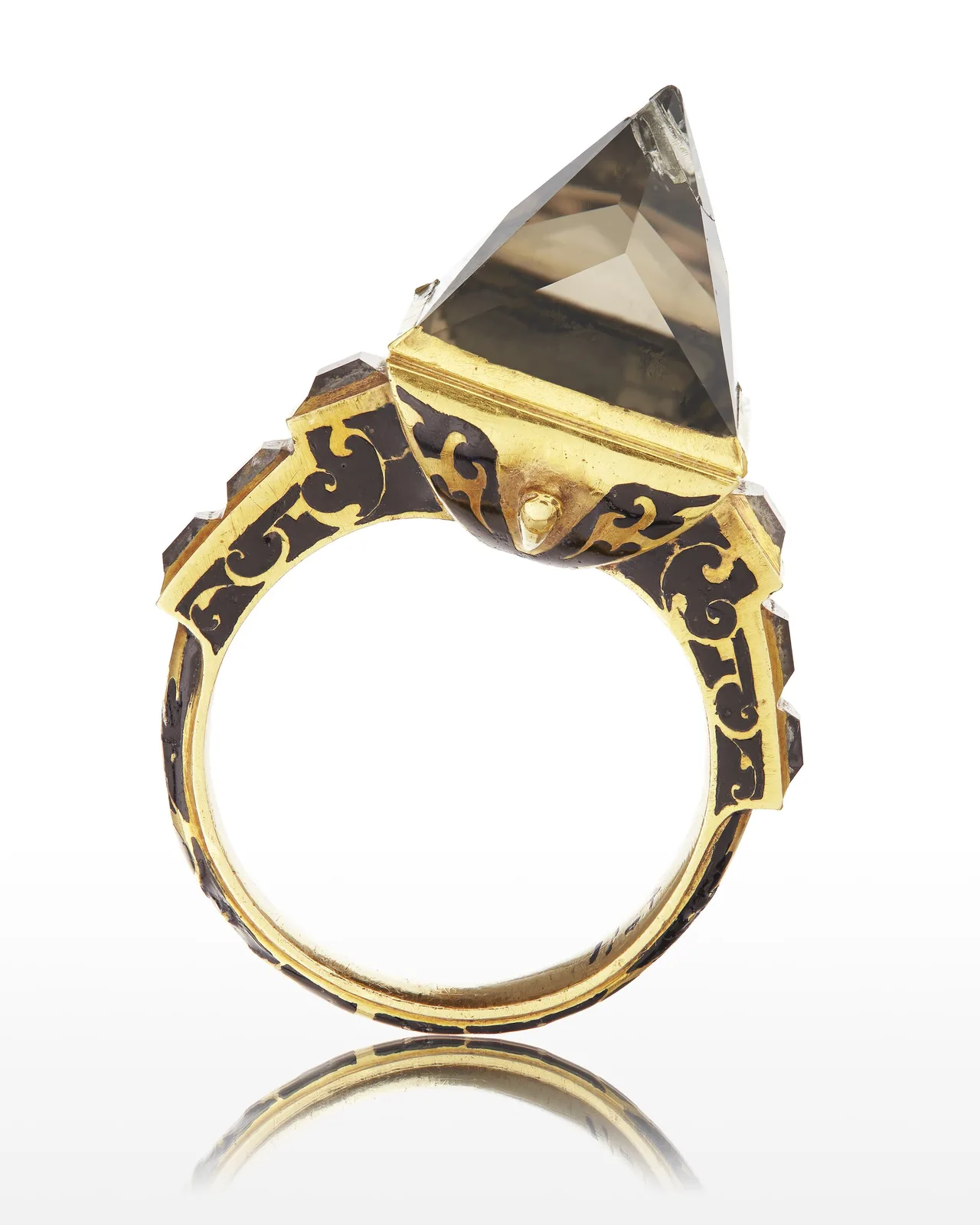
A coronation ring of 1607 is the lesson in one face. Gold, black enamel on the shoulders, one table-cut stone already the whole event. You would feel that single face before you named a court. A halo would have asked for a ring of light. Pavé would have paved the head. A cluster would have shared the hour among several stones. This solitaire stays one stone. The setting has already agreed to keep a single center.
The literacy is the count you can name. If smaller stones circle the center, you are in a halo. If the head is a field of melee, you are in pavé. If several stones share the event, you are in a cluster. A solitaire begins when one stone is already the jewel — a center you can read.
One dome in a bezel, then a step-cut alone
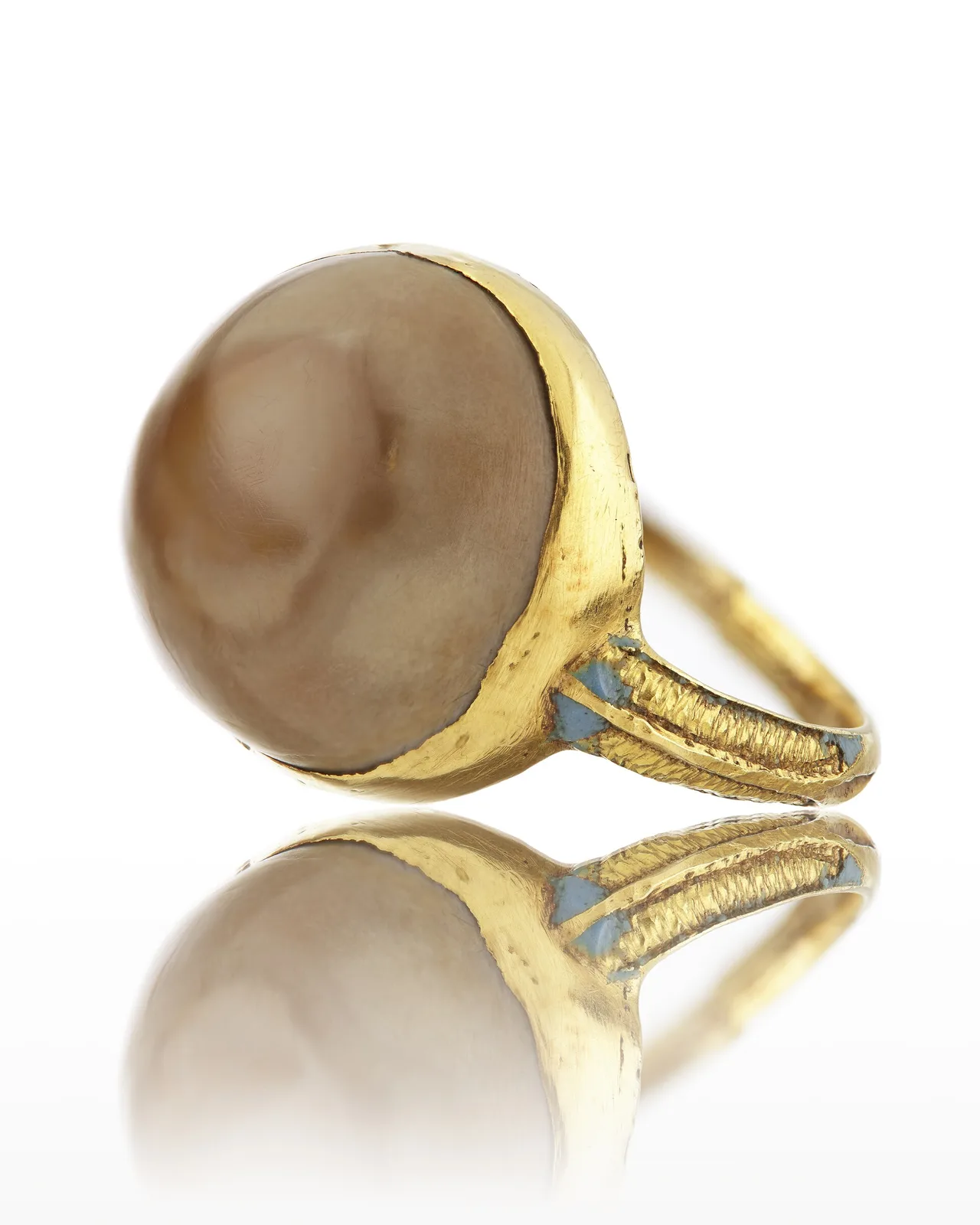
A bezel of one agate keeps the same appetite as a quieter one. One dome in gold, the hoop only the hold, no second gem asked to help. You would feel that single face before you named a queen. A halo would have stayed a circle of light. Pavé would have stayed a field. A cluster would have asked for company. This ring stays one stone. The count has already agreed to be a solitaire, worn as a single event the finger can keep.
You would wear that dome as a single hour. The gold has already agreed to keep one face and no second. Turn the jewel and a solitaire stays one stone. A halo would stay a ring of light. Pavé would stay a field. A cluster would stay a crowd.
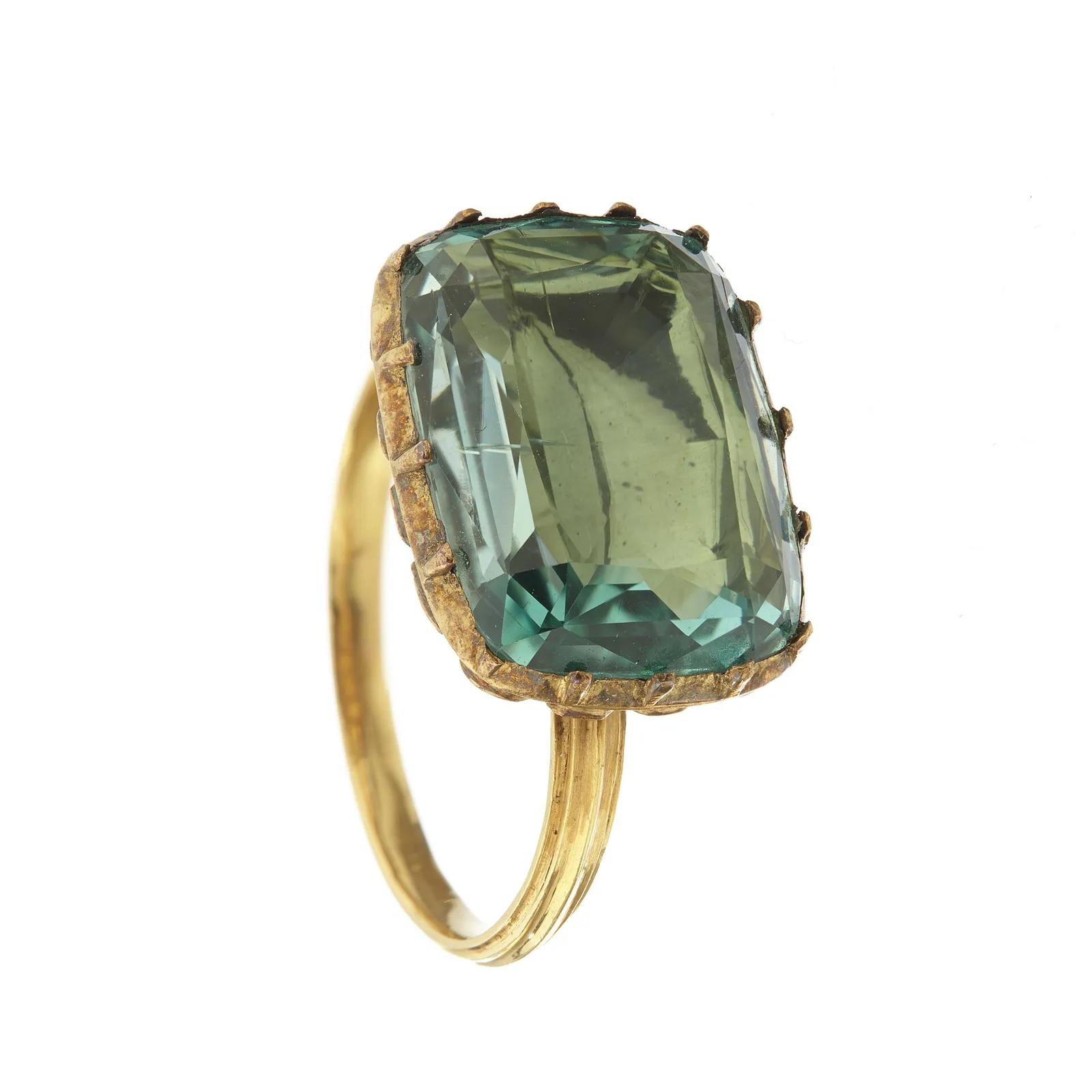
A seventeenth-century step-cut finishes the thought as one green already alone. A bezel as a wall around a single face, the hoop only the hold. You would meet that one stone before you named a color. The house word for a modern center is later. The sit remains a count of one.
That is the note. A halo is a ring of light. Pavé is a field. A cluster shares the event. A solitaire is the one stone — a single center, the whole jewel.
Educational only · Not jewelry, insurance, or legal advice