A rose cut is a faceted dome
A rose cut is a faceted dome. Triangles rise from the girdle to a low point, and the back is flat. You look at the roof. You do not look through a pavilion, because the stone has none. A cabochon is a dome too, and the word there is a polished curve without facets. A brilliant is a face and an underside, a pavilion you can enter. A table is one plane, the flat at the top of a stone that still has a body under it. The rose cut is the dome that is made of facets, and then stops. The literacy is the roof: many small planes, a flat back, no underside to read.
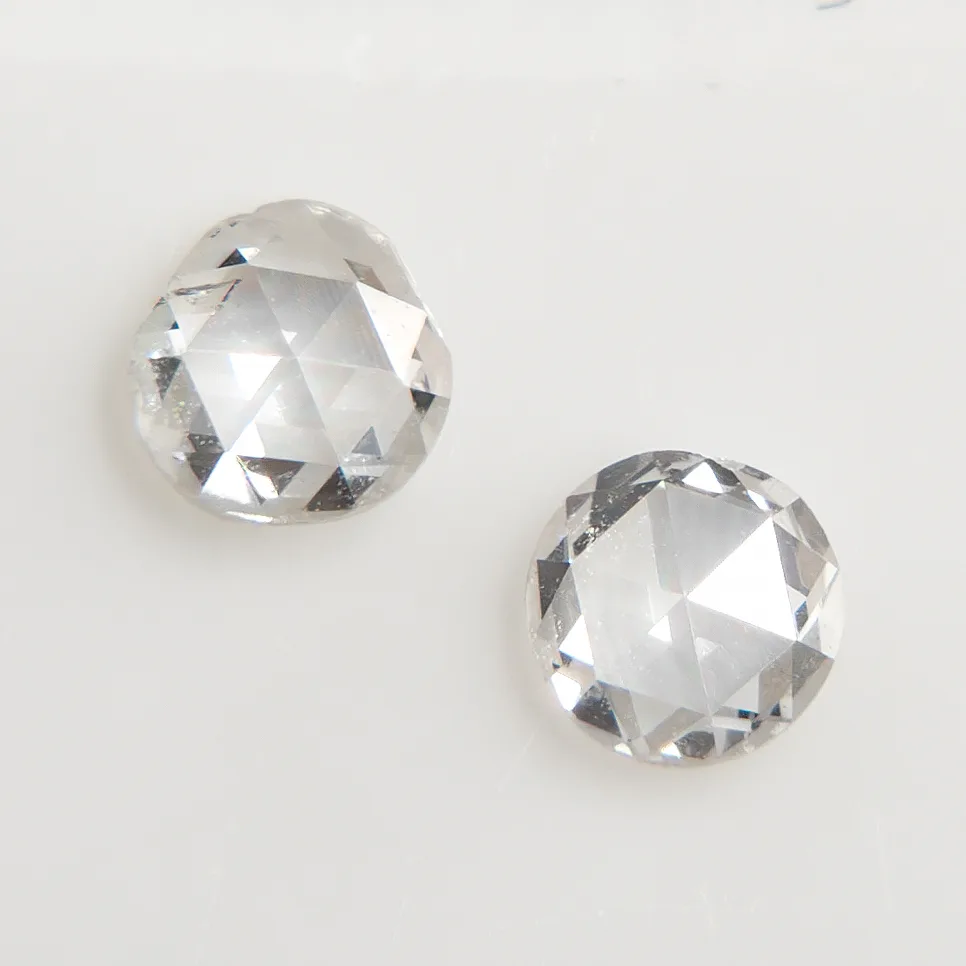
A roof, and a flat back
Two rose-cut diamonds on a black ground keep the lesson as a pair of roofs. Each stone is a low dome of triangles, the point quiet, the outline round, the back a plane you would meet if you turned it over. You would feel that roof before you named a color. A cabochon would have given one smooth curve and a glow, and no triangle to count. A brilliant would have offered a table and then a pavilion under it. A pear would have asked for a point and a rounded body, an outline, not a roof. These stay rose cuts. The face is the dome.
The flat back is how the word finishes. Light returns from the roof. It does not travel through an underside and come back as a brilliant’s flash. You would cover the carat with a look and still have the cut left over: triangles, a low point, a back that has already agreed to be flat. If the surface is one polished curve, you are in a cabochon. If you can look through the stone into a pavilion, you are in a brilliant. If the word is a single flat plane on top of a deeper cut, you are at a table. A rose cut begins when the dome is already made of facets and the back has already stopped.
The roof, worn as a brooch
The Rasumni brooch spends the same cut as jewelry. Rose-cut diamonds in 18k gold, each a small roof, the metal only the hold between them. You would meet those domes before you asked for a pin. A cabochon brooch would have given smooth color and a sliding highlight. A brilliant cluster would have given stones you look into. This brooch gives a field of roofs — facets, a low rise, an outline you can name as a rose cut before you name a house.
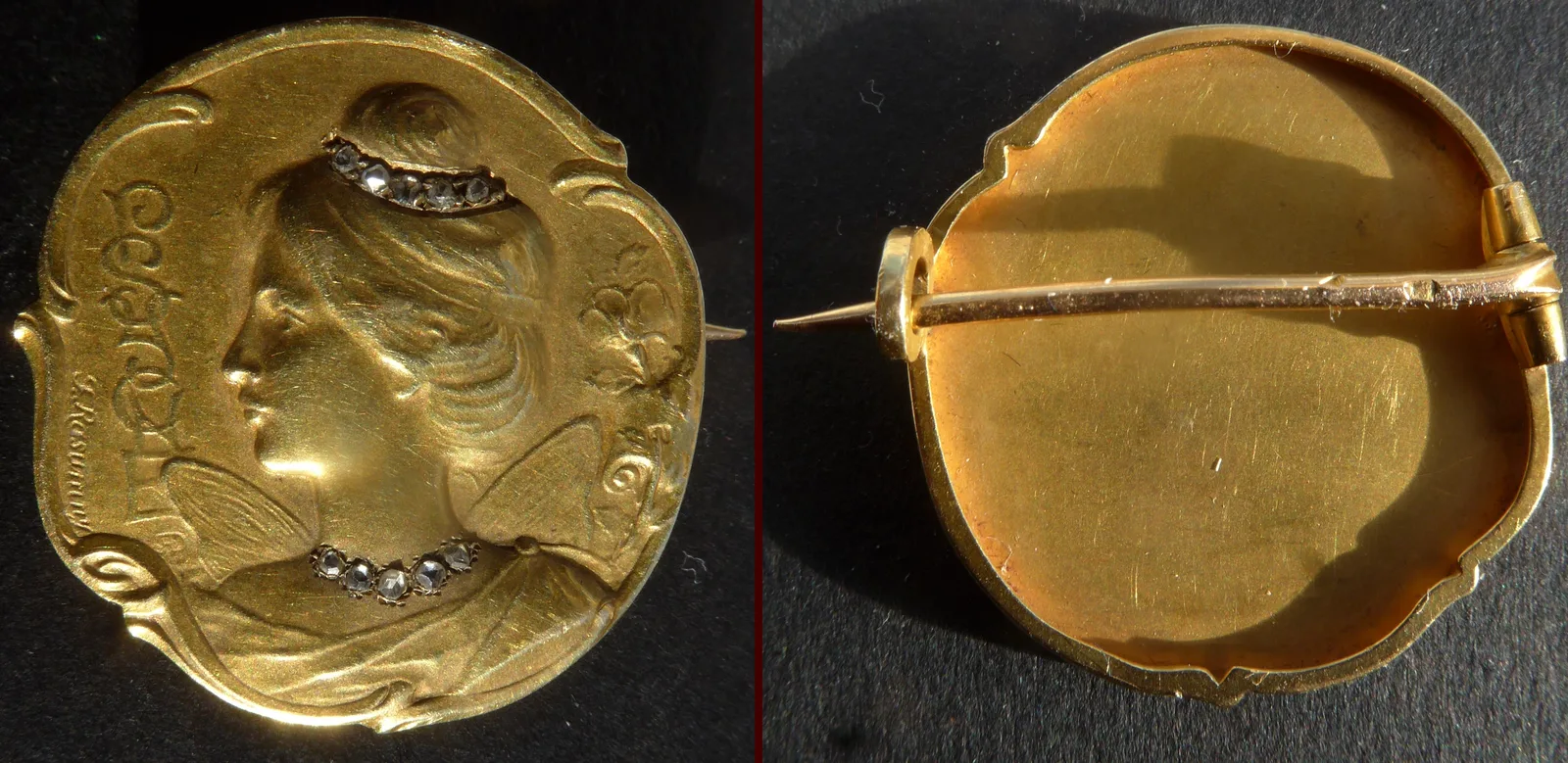
You would feel that scatter with a look before you counted a stone. The point of each rose is quiet. The triangles do the work. A table cut in the same place would still have been one plane. These stay domes. The gold between them is only the chair. Cover the setting and the cut remains: a roof of facets, flat underneath, a face the room meets from the front.
The brooch is the word worn as a crowd. The literacy does not multiply. It stays one cut, repeated until the gold reads as the space between roofs.
The same dome, in quartz
A pair of smoky-quartz earrings spends the rose cut in another material. Golden smoky quartz, each stone a faceted dome, hung so the roof faces the room. You would meet the cut before you named the quartz. The color can be a smoke. The word is still the roof. A cabochon drop would have given a smooth glow. A briolette would have been faceted all around and had no flat back to be the finish. These are rose cuts. The earring is the dome the word already described.
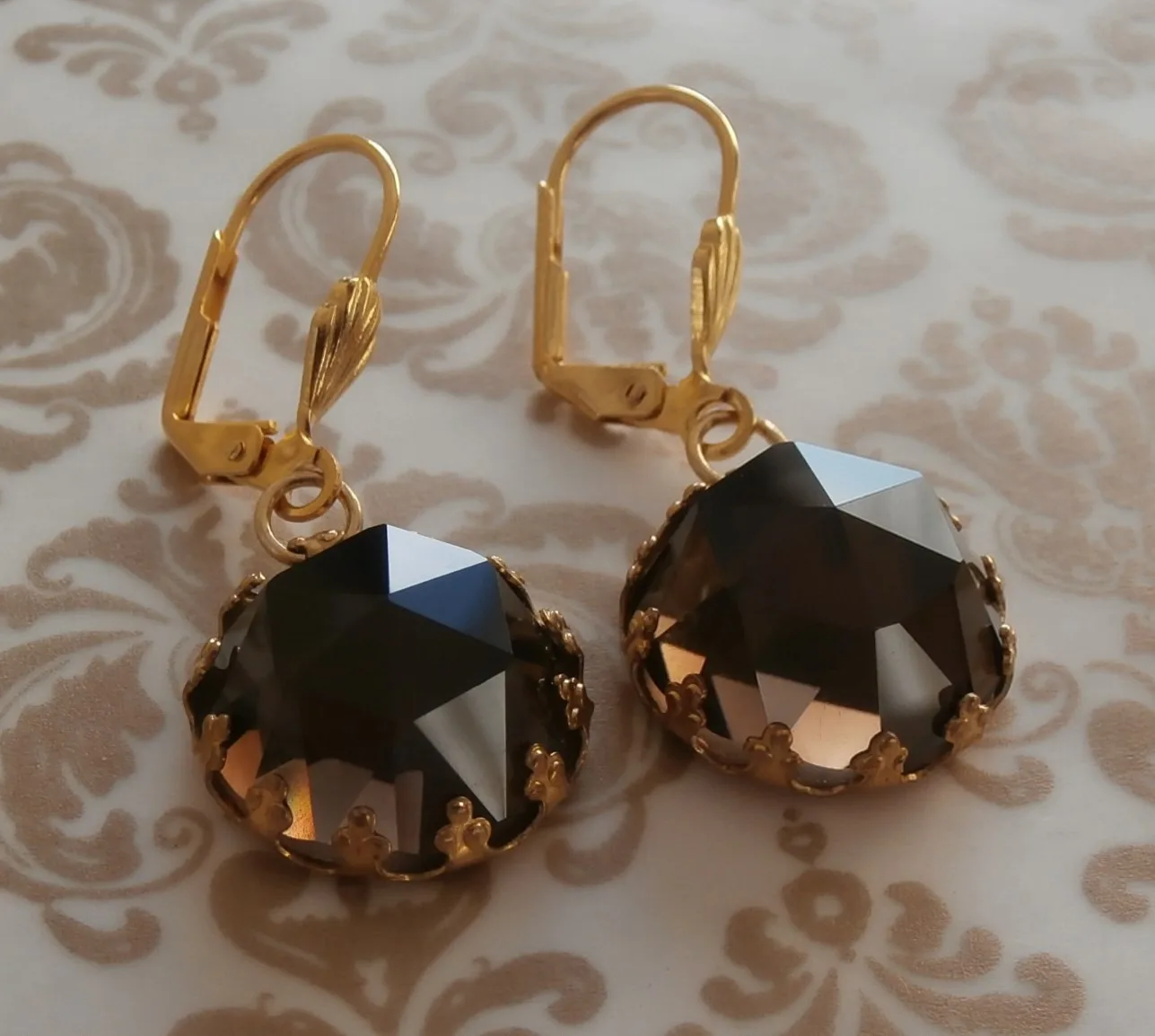
The face is the roof
You would cover the material with a word and still have the rose cut left over. The triangles are the dome. The back is flat. The room meets a roof, not an interior. A cabochon is still a smooth curve. A brilliant still has a pavilion. A table is still one plane. A pear is still an outline. This one continues as a faceted dome.
The two diamonds show the roof alone. The brooch wears it as a field. The earrings give the same dome to quartz and let it hang. The color can change. The rose cut does not.
That is the note. A cabochon is a smooth dome. A brilliant is a stone you look through. A table is one plane. A rose cut is a faceted dome — a low roof of triangles, flat underneath, a face you read from the front.
Educational only · Not jewelry, insurance, or legal advice