A prong is a claw, not a wall
A prong is a claw. A thin metal finger that reaches over a faceted stone and holds it. Not a wall. Not a hidden rail. You can count them. Light comes in from the side. A brilliant or a pear wants that air. The stone is a lantern the claw agrees to keep.
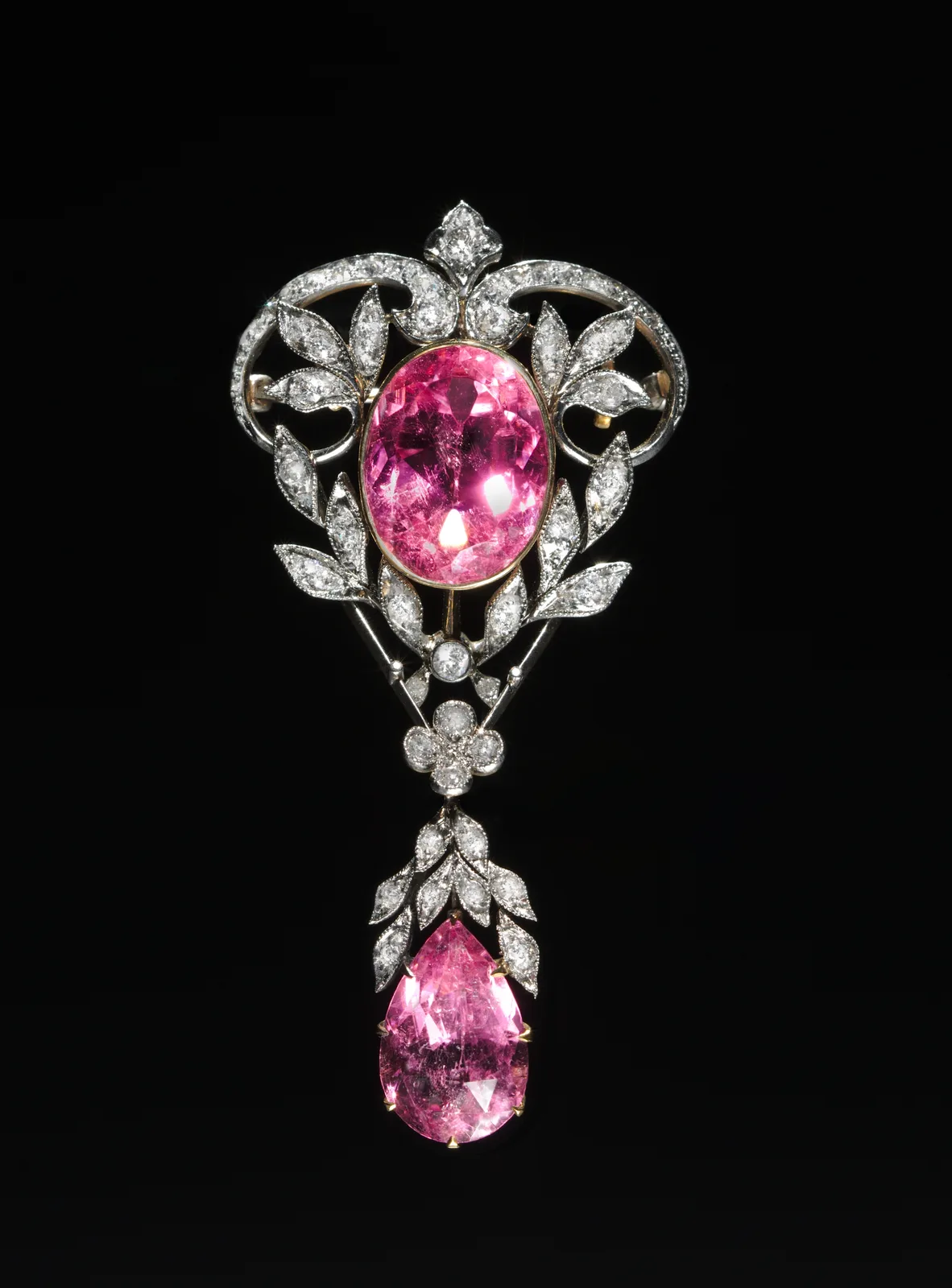
A Gilded Age pendant is the lesson in one object. An oval pink tourmaline in a diamond garland, and below it a pear of the same hue, held in six gold claws. One at the point, two on each side, one at the belly. You would see the fingers before you named the cut. The tourmaline hangs because six small holds agree. A bezel would have been a wall around the stone. A mystery set would have hidden the gold. The prong leaves the metal as a fingertip — visible, countable, a little warmth against the pink.
The literacy is the count. Six claws, six points of contact, air between them. Turn the piece and light enters the pavilion. That is what the finger is for: a hold that does not become a wall.
Fingers on a flower, then a cluster
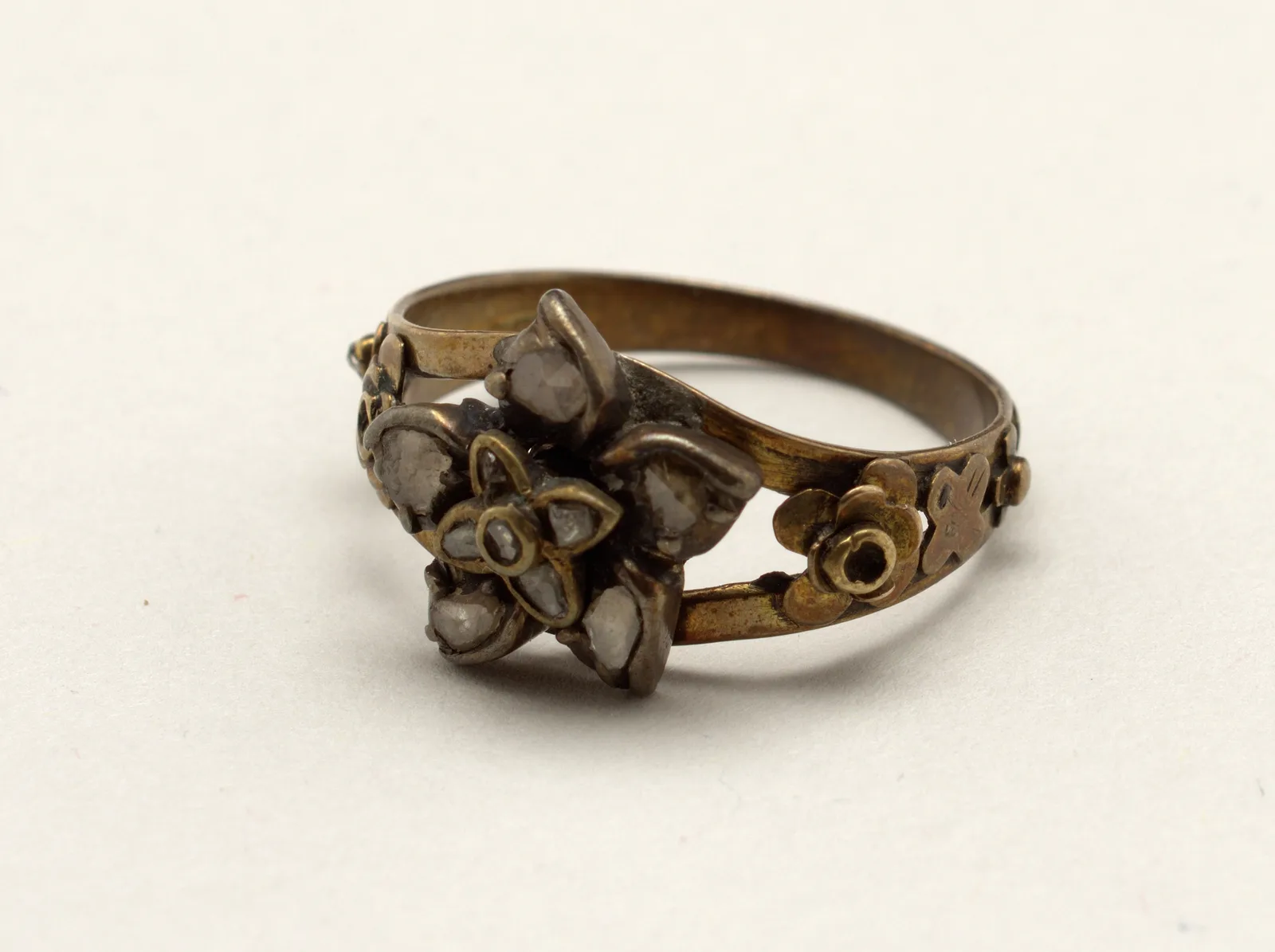
A French flower ring makes the same sit small. Rose-cut diamonds, a four-petal center over a five-petal head, each stone kept by tiny gold claws that curl over the edge. You would feel the metal tips before you felt the hoop. The cut is old and a little soft. The claws are what let the light in. A bezel would have drawn a line around each petal and kept the air out.
An 18th-century cluster is the claw as a crowd. Rubies, an emerald, diamonds, a small opal, each stone in its own darkened fingers, a mound on a gold band. You would meet a ridge of metal points, then color. No continuous wall. No tiled field. Only claws, one per hold, a faceted stone allowed to breathe.
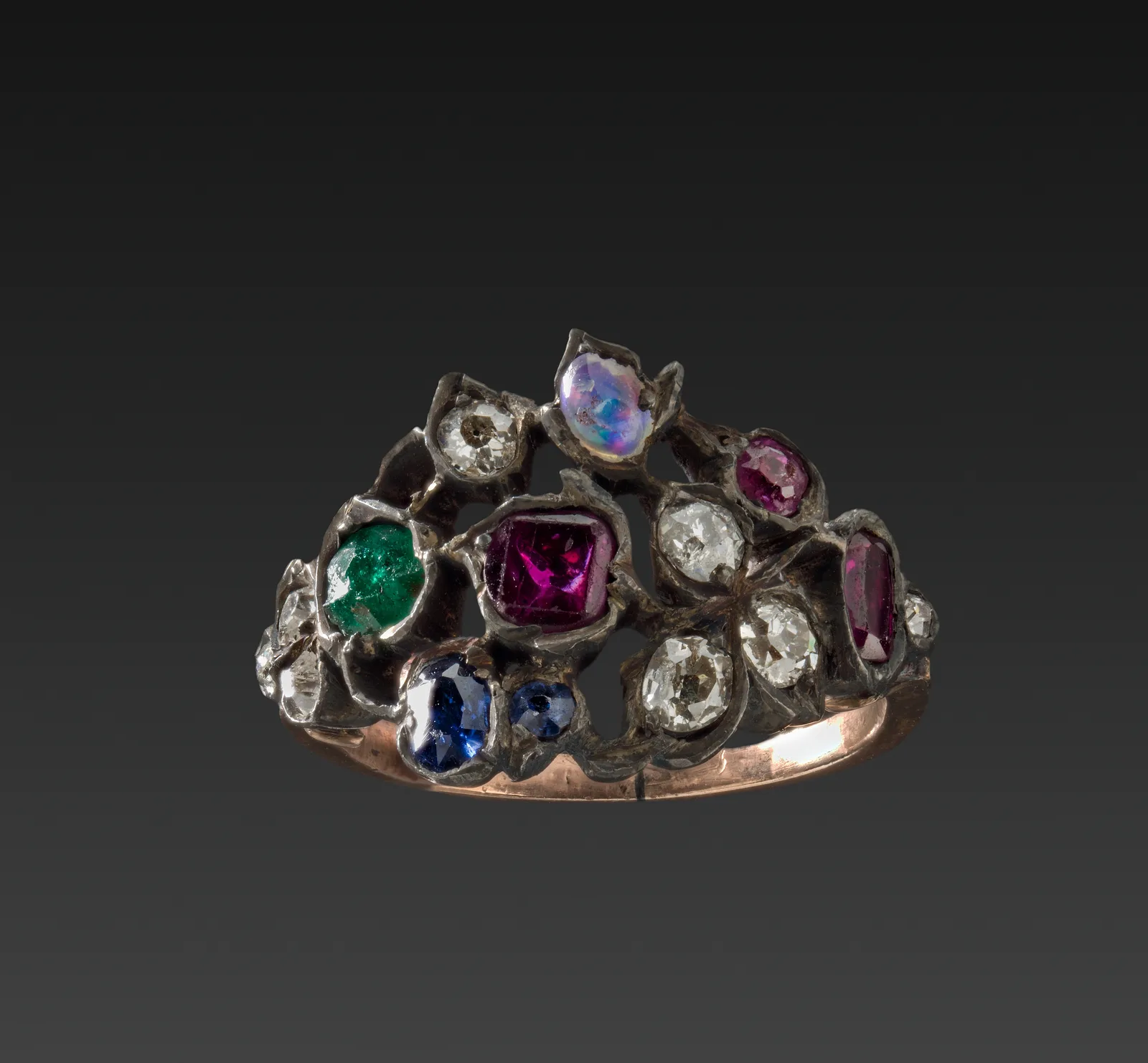
That is the note. A cabochon often wants a wall. A mystery-set ruby wants a rail you cannot feel. A faceted stone wants a claw you can count — a metal finger, a little air, a lantern held in the open.
Educational only · Not jewelry, insurance, or legal advice