A pearl wants skin
A pearl is not a hard stone. Nacre is a surface that records: skin oils keep it from drying, silk takes the weight, a knot between each bead so one loss is not a scatter. Diamonds will scratch it. A closed box with nothing sharp is enough. The literacy is simple. Pearls want to be worn.
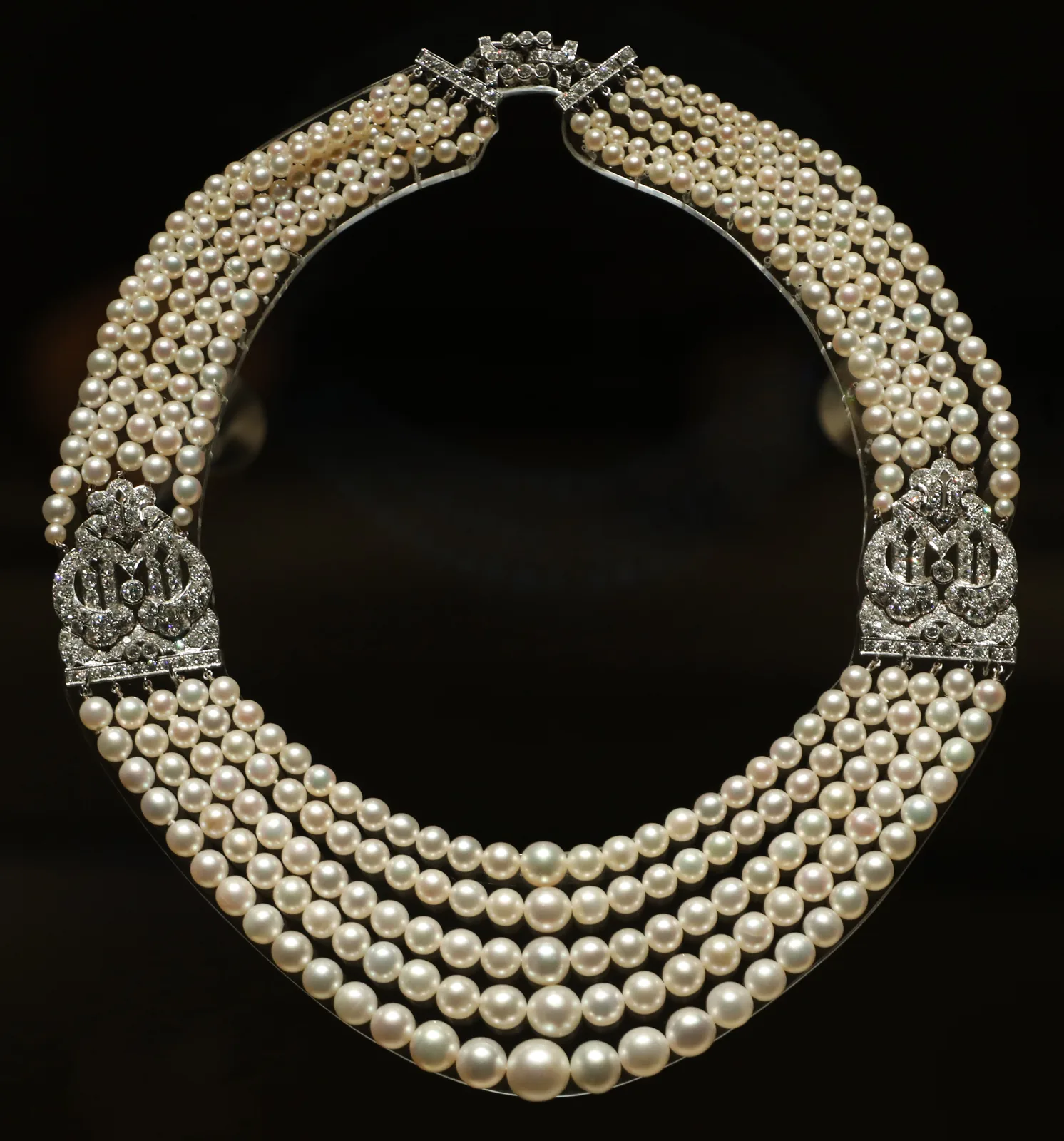
Five strands of Gulf pearls, diamond plaques at the sides. Cartier, a collar that sits as a warm, slightly irregular light. Each pearl a little different from its neighbor. The plaques are the only hard architecture. You would feel cream, then platinum — a softness against the neck, not a ridge. The sit is a temperature, not an edge.
A garland that still begins with nacre
Stringing is part of the sit. Silk, not chain, for a row of pearls; a knot so the next bead cannot run. When the silk stretches, the collar loosens before it fails. Restringing is ordinary care, not a drama. Wipe after wearing. Keep the diamonds in another box. The pearl remembers the last thing it touched.
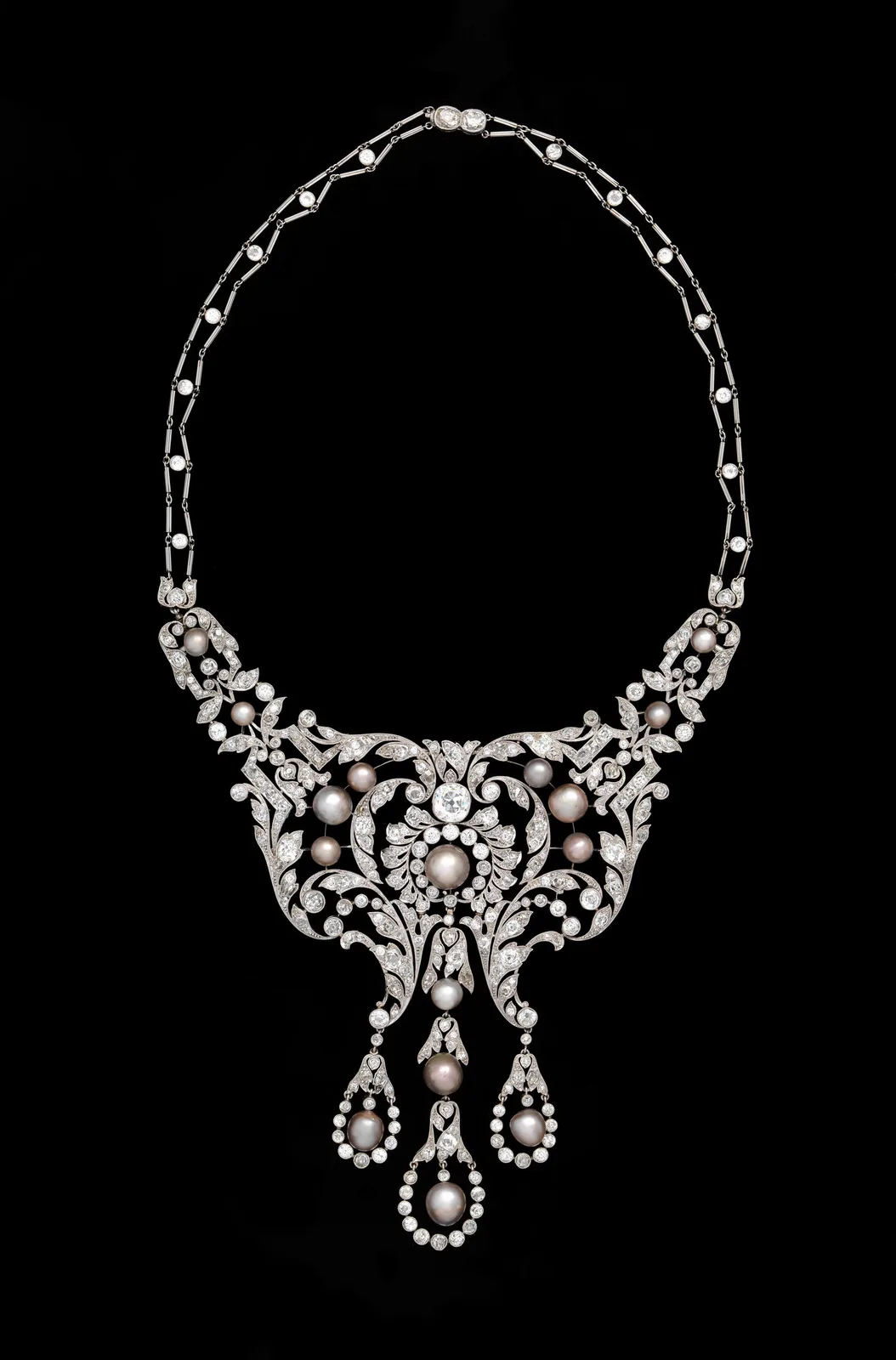
Dreicer’s garland is the other conversation with the neck: natural pearls held in platinum lace, a bib that pours down the sternum. Same material, a different architecture. The pearls are still the first contact. The diamonds are scaffolding. Michael Dreicer was a pearl man. The piece remembers that. What you touch is nacre, then metal.
That is the note. A collar of pearls lives next to warmth. Silk, a knot, a little oil from the skin. Not a stone you can knock.
Educational only · Not jewelry, insurance, or legal advice