A pear is a drop
A pear is a drop. A pendeloque — one point, a rounded body, a face with a table you can look into. A marquise is a boat, pointed at both ends. A briolette is a drop cut all around, hung from the tip, with no face to sit. A cabochon is a dome, and the word is the curve without facets. The pear is the drop that still has a front. The literacy is the outline: a point, then a shoulder that has already agreed to be round.
You can set the point up or down. The direction is only how the drop agrees to hang or to sit. The outline is what the word is keeping.
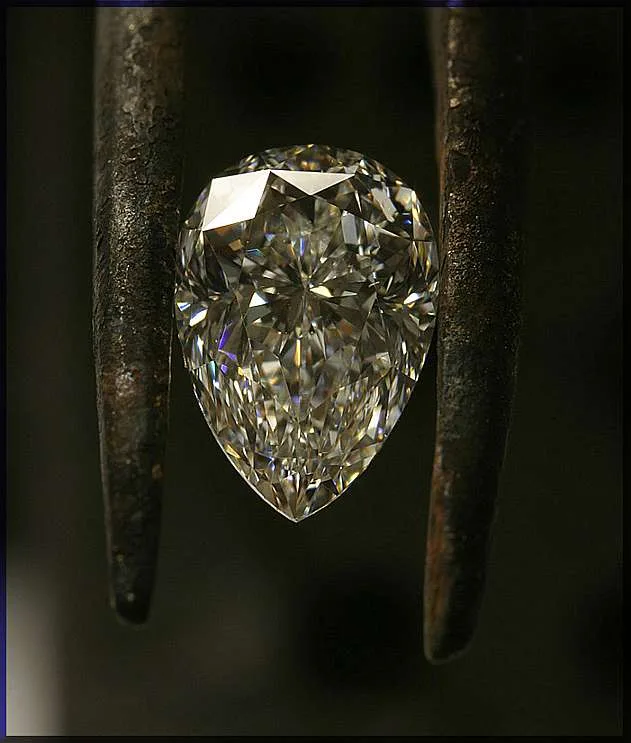
A point, and a body
A natural diamond of about a carat, pear-cut, keeps the lesson on a white ground. One tip, a rounded end, facets on a face you meet from the front. You would feel that outline before you named a clarity. A marquise would have asked for a second point. A briolette would have been cut in the round and had no table to offer. A cabochon would have stopped at a dome. This stone stays a drop. The point has already agreed to be one, and the body has already agreed to be full.
The table is how you look in. It does not move the word. A pear is the shape that has a point and a rounded body, whether the carat is small or the color is a white. You would feel the drop before you asked for a grade. The literacy is the silhouette. If both ends come to a point, you are in a boat. If the stone is faceted from every side and hung from the tip, you are in a briolette. If the surface is a polished curve and the word is that curve, you are in a cabochon. A pear begins when one end is already a point and the other has already rounded.
The drop, worn as a pair
The Marie Antoinette diamond earrings spend the same outline as jewelry. Two pear-shaped diamonds, each a drop, hung so the point is the tip and the rounded body is the weight you see. You would meet those drops before you asked for a chain. A boat would have needed two points and a hull. A briolette would have lived on every side and had no face aimed at the room. These are pears. The earring is the drop the word already described.
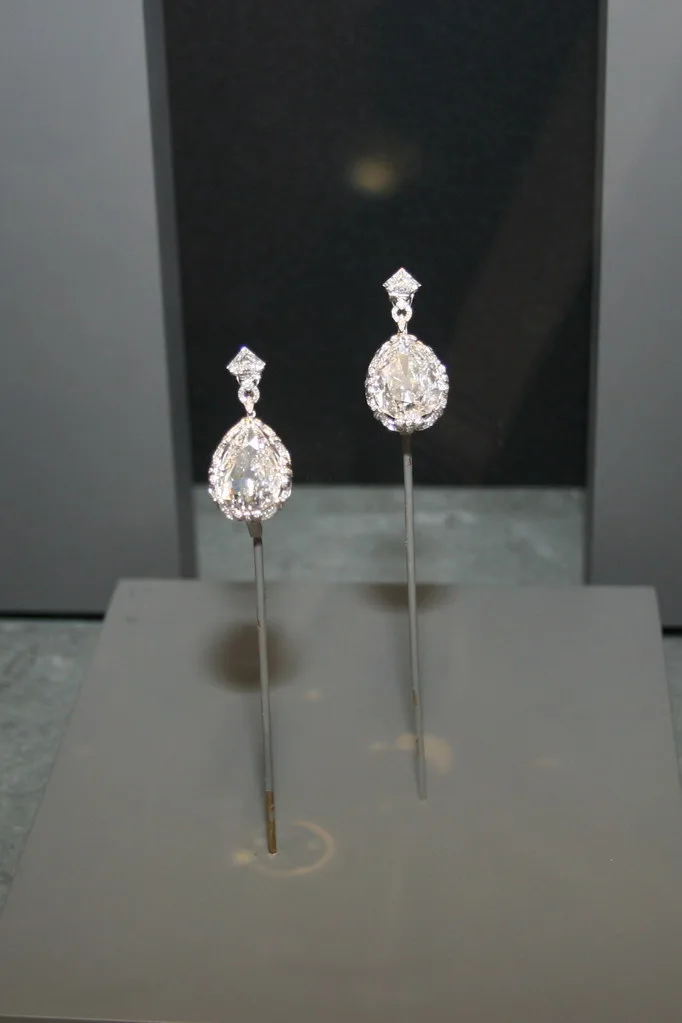
You would feel that hang with a look before you asked which ear the pair belongs to. The point leads. The body follows. A cabochon earring would have given a dome and a glow. This pair gives a faced drop — facets, a table, an outline you can name as a pear before you name a queen. The two stones are the same lesson twice. The literacy does not double. It stays one outline, worn as a pair.
The metal at the top is only the hold. The drop is the stone. You would cover the setting with a look and still have the pear left over: one point, a rounded body, a front the room can meet. A marquise hung in the same place would still have been a boat. These stay drops.
A large drop, in a case
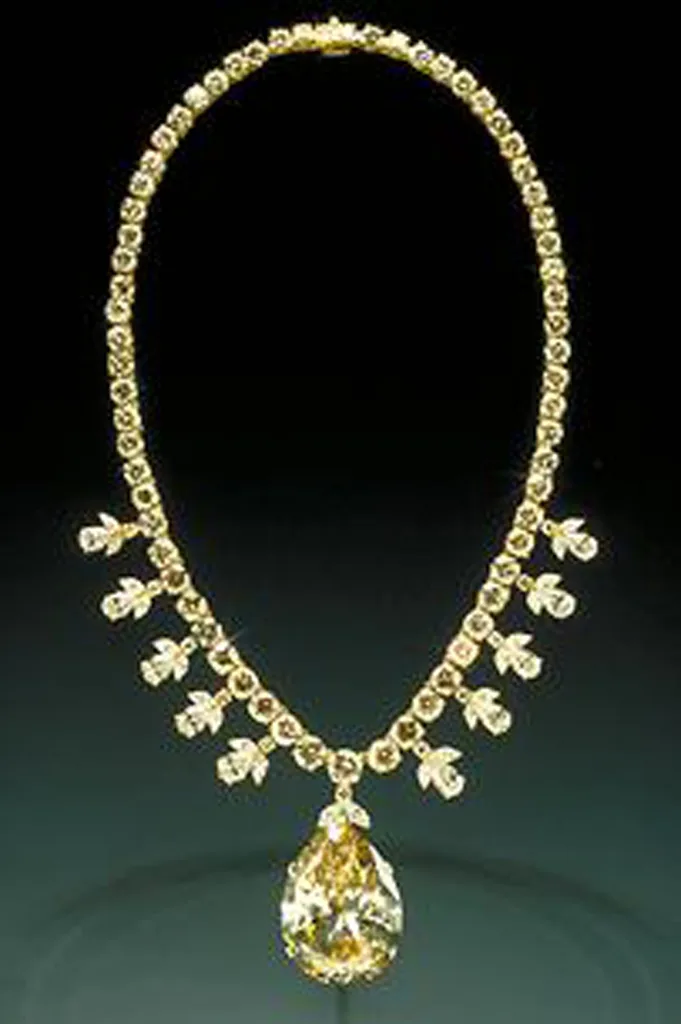
The Victoria-Transvaal diamond spends the pear as size. A champagne brilliant, pear-shaped, 67.89 carats and 116 facets, hung at the center of a yellow-gold necklace in a Smithsonian case. You would meet the drop before you counted the fringe. The large stone is the point and the rounded body, large enough to be a climate. The necklace is the hold. The word is still the outline.
The face is the drop
You would cover the carat with a word and still have the pear left over. The point is one end. The round is the other. The table is the face the drop is willing to show. Looking at this stone, you are looking at an outline. A marquise would have stopped at two tips. A briolette would have had no front. A cabochon would have had no facets to be the word. This one continues as a drop.
The small diamond shows the outline alone. The earrings wear it as a pair. The museum stone gives the drop a size. The face can change. The pear does not. A marquise still has two points. A briolette still lives all around. A cabochon is still a dome.
That is the note. A marquise is a boat. A briolette is a faceted drop with no face. A cabochon is a dome. A pear is a drop — one point, a rounded body, a front you can read.
Educational only · Not jewelry, insurance, or legal advice