A pavilion is an underside
A pavilion is an underside. The lower half of a faceted stone — everything beneath the girdle, the cone that sends the light back up. A table is the flat window on top, the face you look through. A culet is the tip where that cone may finish, a point or a tiny facet. A girdle is the equator, the band a fingertip finds around the middle. The pavilion is the architecture below that band. The literacy is the underside.
Light enters at the table. It returns from here. You meet the lower half when the stone is turned, or when a drawing is willing to show the side.
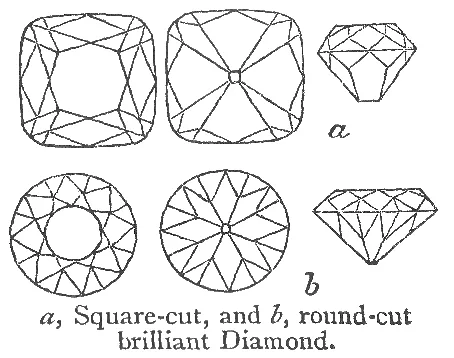
A dictionary plate of a brilliant keeps the lesson in profile. Above the middle line, a crown and a flat. Below it, a longer cone of facets falling toward a tip. That cone is the pavilion. You would see the underside before you counted a kite. The table is the window. The girdle is the line. The culet is only the end. The pavilion is the whole lower half the light is asked to travel.
The plate is there to show the cone, not to make you count stars. A brilliant can carry as many facets as it likes and still have one underside.
The same cone on a stone
A blue topaz, held beside a measure, shows the underside as a real body. From the side the crown is a low roof, the girdle a bright rim, and below it a longer slope of facets — the pavilion, already the part that can return a light. You would meet that lower cone before you named a millimeter.
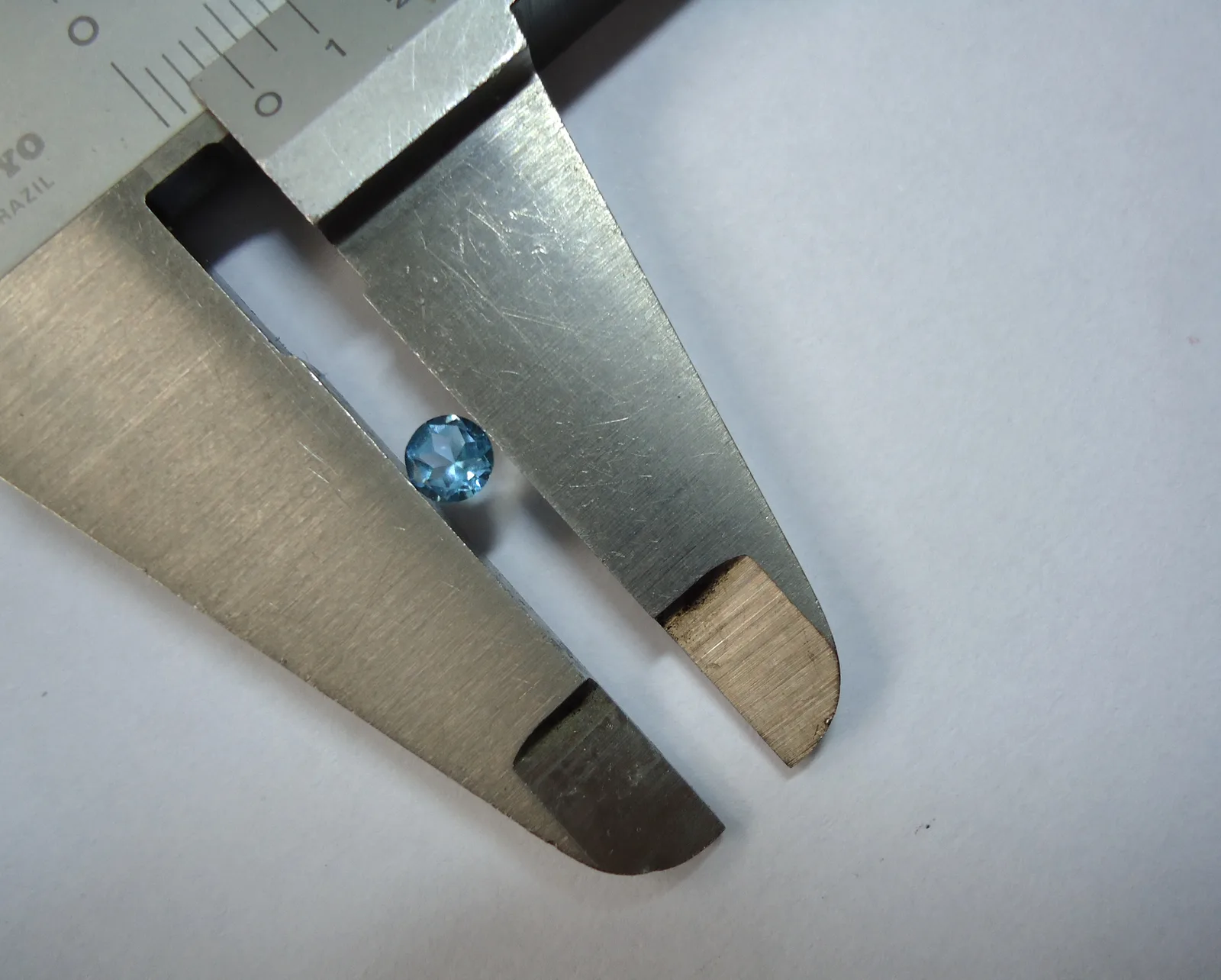
A table would have been the window you look through from above. This view is the side, and the side is where the underside declares itself. The caliper can wait. The pavilion is the stone below the rim.
You would turn that topaz and the lower cone would stay the lower cone. Light can enter at the flat and still leave the return to the facets underneath. The pavilion is not the window. It is where the window’s light is sent back.
Looking into the lower facets
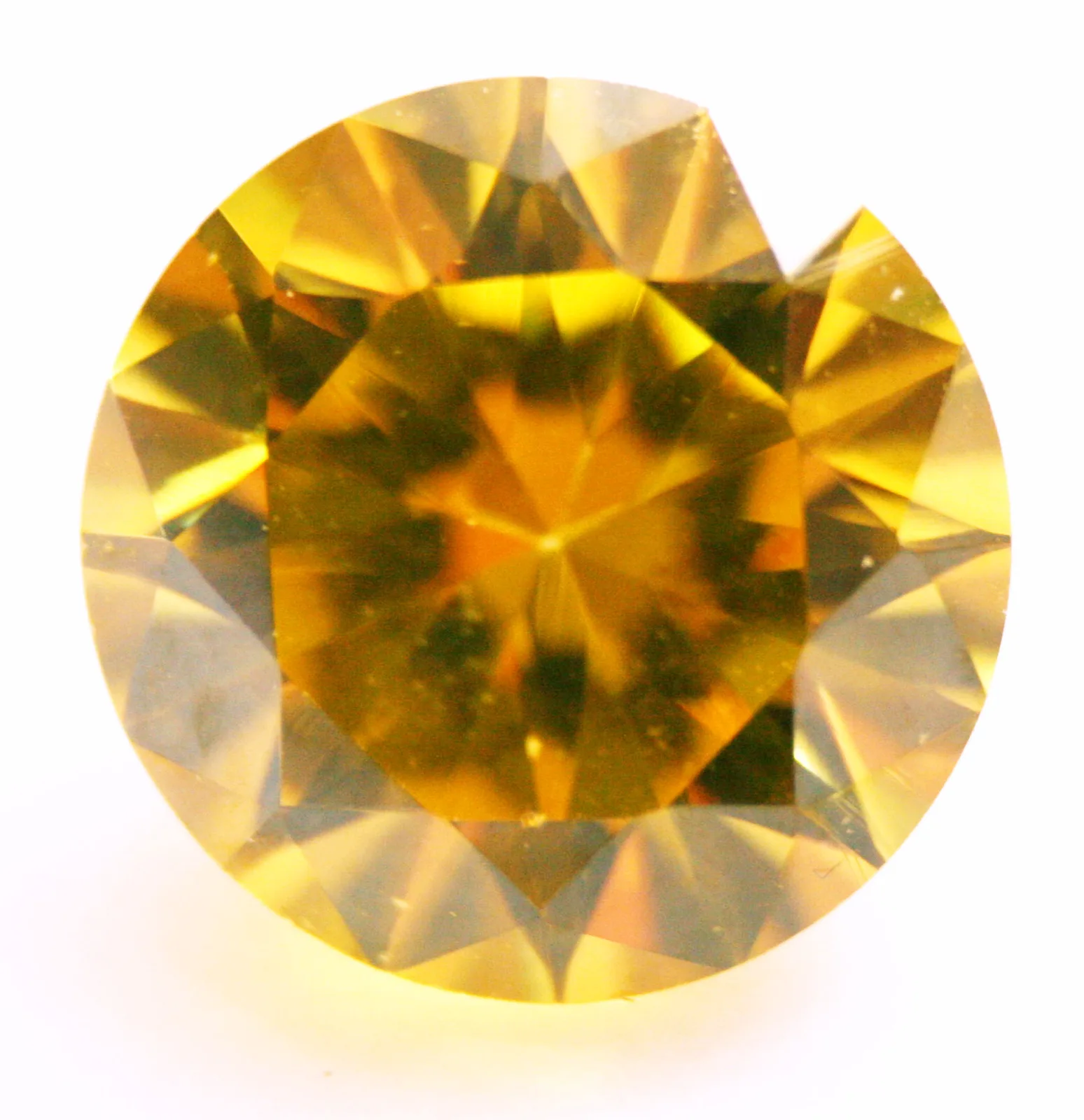
A round yellow cubic zirconia, seen a little from below, keeps the underside as a face you can look into. Facets gather toward a center. That meeting is the pavilion doing its work — slopes that send light back, not the flat on top, not the equator, not only the tip.
Where the light turns around
You would feel those lower planes before you asked what the stone is made of. The species can change. The underside stays the underside. A diamond, a topaz, a zirconia: beneath the girdle, the pavilion is the cone that returns the light.
A table can stay a calm window. A girdle can stay the band a setting takes. A culet can finish the tip, sharp or spared by a tiny face. None of those is the whole lower half. The pavilion is the half you do not see when you only look down through the flat — and the half the light uses to come back.
That is the note. The table is a window. The girdle is an equator. The culet is a point. A pavilion is an underside — the lower half of a faceted stone, the place the light turns around and comes back.
Educational only · Not jewelry, insurance, or legal advice