A parure is a matched set
A parure is a matched set. A necklace is one line at the throat. A pair of earrings is a pair. A brooch is a single pin. A parure is the decision that those pieces were drawn once and made several times: the same motif, the same finish, the same scale of care, so that wearing them together is one jewel in several places. A rivière is a river, one line of stones. A sautoir is one long line. A parure is a set that agrees.
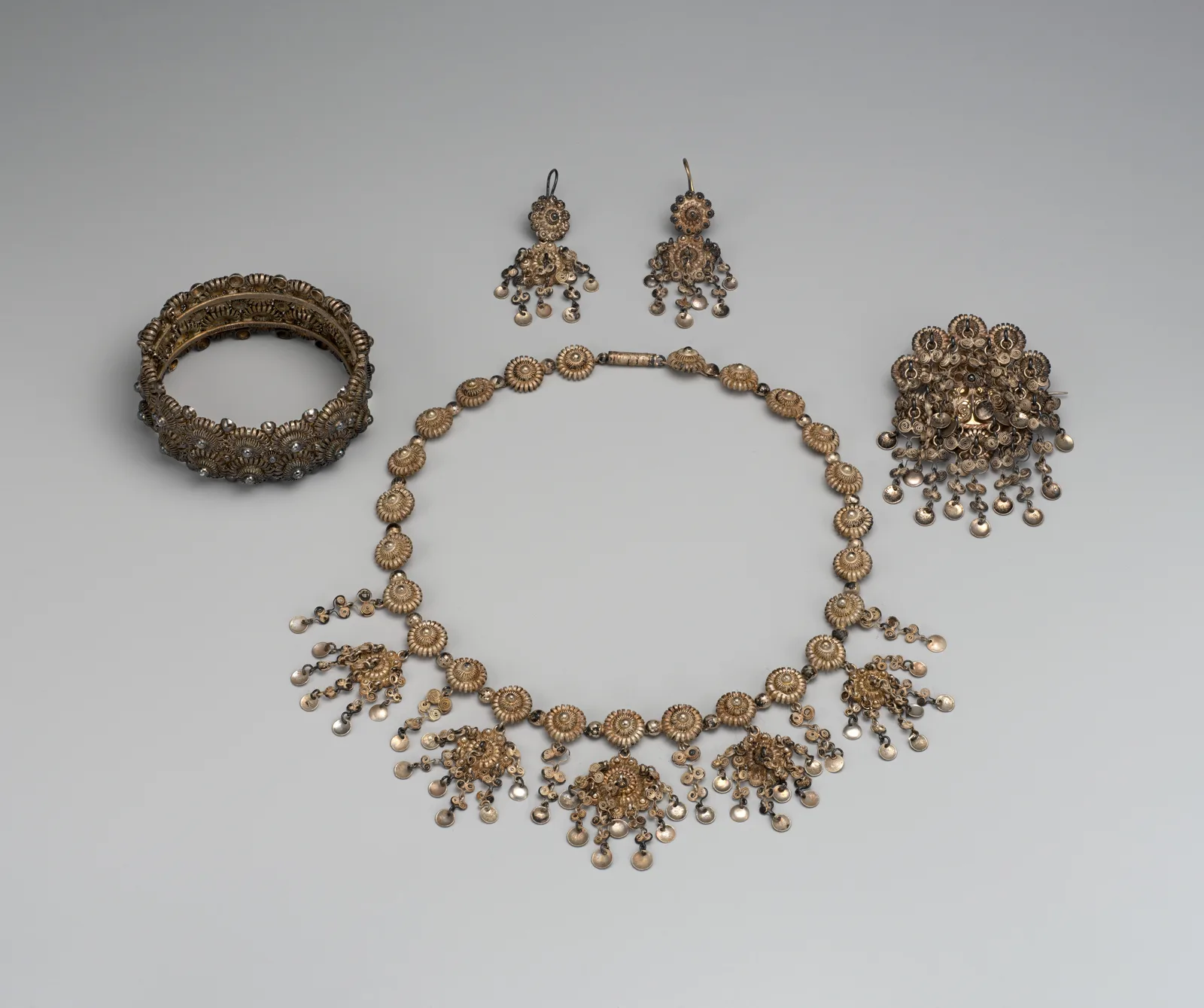
Sixteen pieces, one lace
Jacob Ulrich Holfeldt Tostrup, Christiania, about 1873, keeps the set at full size. Sixteen pieces, silver filigree, the Metropolitan Museum of Art, 06.457–.472. They sit in one tray: necklaces, brooches, earrings, ornaments for the hair, a field of the same lace repeated until the repetition is the object. A single brooch from the tray would be a beautiful pin. The jewel is the fact that the pin has fifteen relatives, finished to the same drawing.
The lace is silver, the same small flower of wire, over and over, with no second material needed to make the match. That is the literacy. The agreement is visible at a glance and then again up close, when the wires resolve into the same curl. Each earring in the tray already shares that curl. The set has decided what belongs.
The care is the tray. A parure this large wants to be kept as an inventory. Pieces that wander into separate boxes become cousins. The filigree wants a soft cloth. A buff that asks silver for a higher shine asks the fine wire to lose the edge the drawing depends on. Sixteen pieces, already one sentence. The sentence stays whole when the lace stays fine and the pieces stay together.
Gold, enamel, and paste
A parure probably Swiss, about 1840 to 1850, spends the same agreement in a smaller family. Gold, enamel, and paste, again the Metropolitan Museum. A necklace, earrings, a brooch, a bracelet. Blue enamel, pale drops, the same blue and the same pale at the throat, the ear, the pin, and the wrist. Fewer than Tostrup’s sixteen. Just as much a set. The pieces were finished as one idea, and the idea is the match.
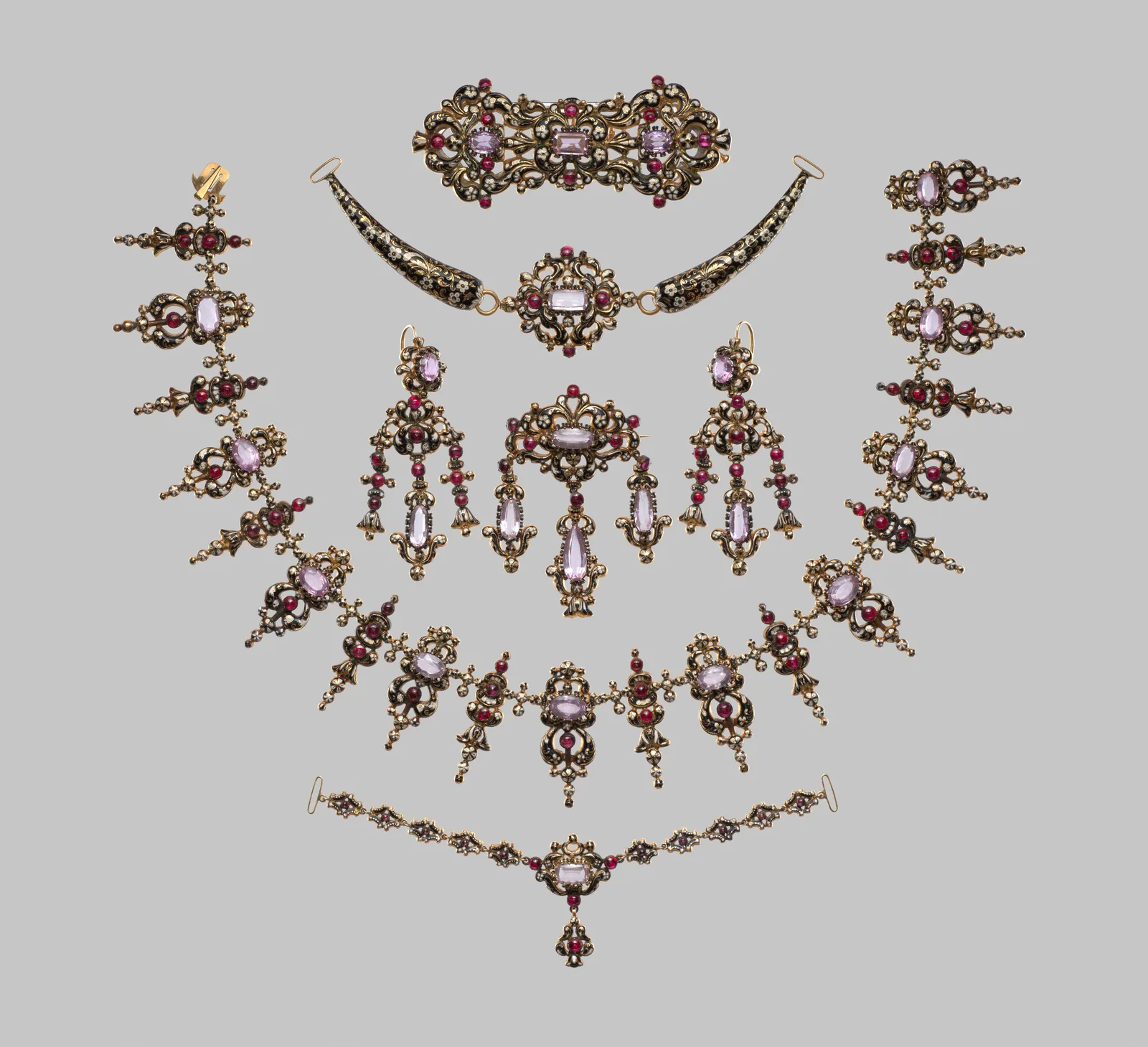
The pale drops are paste, a brightness the blue enamel answers. The literacy is the match. A diamond river would have been one line of stones. This is a family: the necklace says a sentence, the earrings repeat a word of it, the brooch pins that word to the dress, the bracelet carries it out to the wrist. Cover any one piece and the others still know the sentence.
The case, when a parure has one, is part of the object. It is the inventory and the rest between wearings. Enamel wants its surface left alone. Paste wants a gentle cloth, and wants to stay clear of a soak. The set wants to stay a set. One earring on its own is still a pretty earring. In the tray it was half of a pair, and the pair was a word in a longer sentence. Put the word back.
Two trays, one agreement. Tostrup gives the set sixteen times, a silver lace with nothing but the repetition to hold it together. The Swiss parure gives it a necklace, earrings, a brooch, and a bracelet, blue enamel and pale drops, matched in gold. A river of stones remains one line. A long chain remains one line. A parure is the matched set: a full tray, or a smaller family, already a whole when any one piece begins.
That is the note. A necklace is a necklace. A parure is a matched set — the same design, several places on the body, already a whole when any one piece begins.
Educational only · Not jewelry, insurance, or legal advice