A locket is a hollow
A locket is a hollow. A small case asked to open — a door, a hinge, a room inside for a lock of hair or a face. A pendant can be solid: a stone, a medal, a drop with nothing behind the front. A bail is the loop that hangs a face, not the room. A clasp is a join that opens a chain and then stops. The locket is the hollow. The literacy is the room.
You can cover the door with a look. The hinge is only how the room agrees to show itself. The hair, when it is there, is what the room was built to keep.
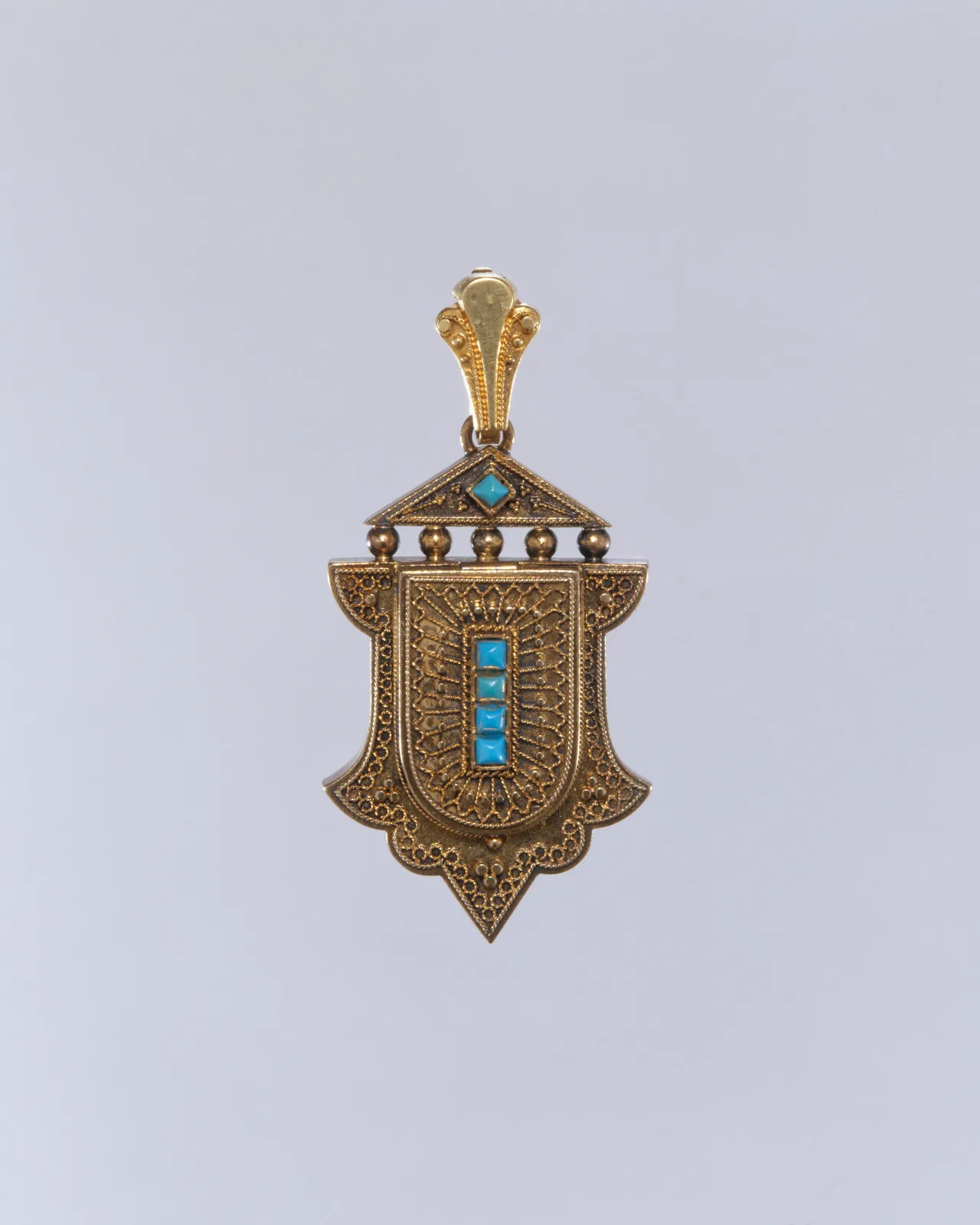
A room, opened
An American locket of about 1878, opened, keeps the lesson in one oval. Gold, a hinge along the side, a glass over a lock of hair, a small interior that is already a room. You would meet that hollow before you named a maker. A solid pendant would have given you a face and stopped. A bail would have been the loop above it. A clasp would have joined a chain and had no interior to offer. This locket stays a room. The door has already agreed to open.
The hair is what the hollow is keeping. The literacy is the space that can keep it. You would feel the depth before you asked whose lock it was. A cameo would have been a profile raised on a stone, a face with no door. Enamel can paint a skin on the outside. The locket begins when the jewel has an inside.
What the room keeps
A locket of the 1850s, shown from the inside, spends the same fact as a compartment. Woven hair under glass, a shaped reserve, metal as the wall around a small climate. You would meet the hair before you asked for a chain. The outside can be plain. The hollow is the jewel.
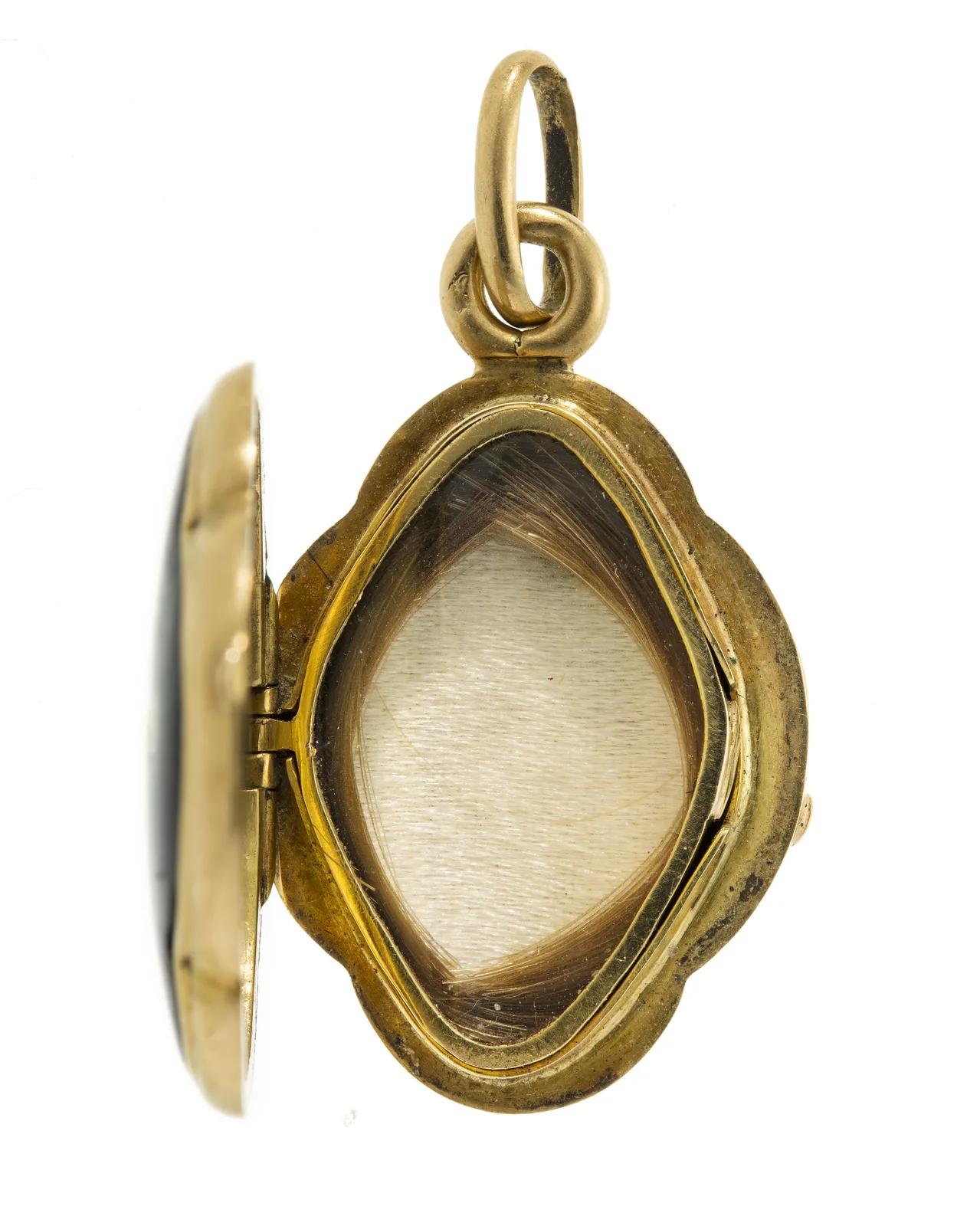
You would feel that interior with a look before you asked how the door shuts. The weave belongs to the person the locket remembers. It does not move the word. A locket is the case that has a place for that weave. A pendant without a door would have worn the hair on the surface, or not at all. This one keeps it in a room.
A well, with the hair in it
A British locket of about 1746 spends the hollow as a well you can see. Silver gilt, an oval, a hinge, a loop at the top, and under the glass a braided lock — the room and what the room was asked to hold, in one face. You would meet the hair before you read a date. The gold is the wall. The glass is the window onto the inside. The case is a hollow that has agreed to show its reason.
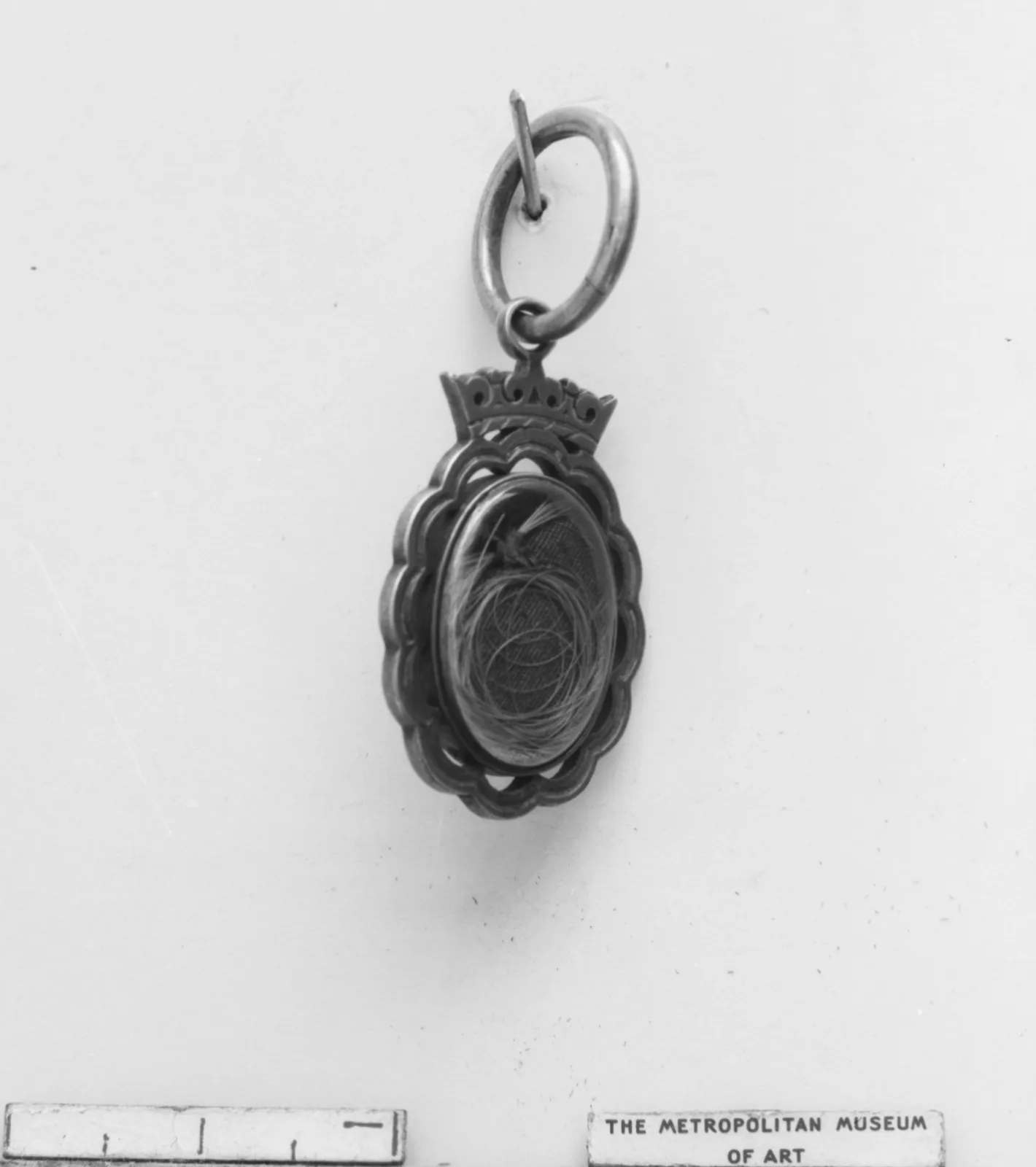
The face is the door
You would cover the hair with a word and still have the locket left over. The lock is what the room keeps. The hinge is how the door agrees to open. The hollow is the sum of the inside — hair, a portrait, a folded note, whatever the well was asked to hold. Looking at this oval, you are looking into the room, not at a solid face. A medal would have stopped at the metal. This one continues past it.
The American locket shows the door swung wide. The Hallwyl interior wears the hair as a shaped reserve. The British well keeps a braid under glass. The face can change. The hollow does not. A bail still only hangs. A clasp still only joins. A solid pendant still has no room.
That is the note. A pendant can be a face. A bail is a loop. A clasp is a join. A locket is a hollow — a case that opens onto a room.
Educational only · Not jewelry, insurance, or legal advice