A karat is a share
A karat is a share. Twenty-four parts, and the number tells you how many of them are gold. You do not meet a weight. You do not meet a carat. A carat is how heavy a stone is — a mass, a number a gem can claim. A karat is a fraction the metal already is. 24k is the whole. 18k is eighteen of twenty-four. You feel a purity, not a mass. The literacy is the share.
A carat (ct) weighs a diamond, a tourmaline, a pearl. A karat (k) names the gold. If the number is about how much of the metal is metal, you are in a karat. If the number is about how much the stone weighs, you have already left.
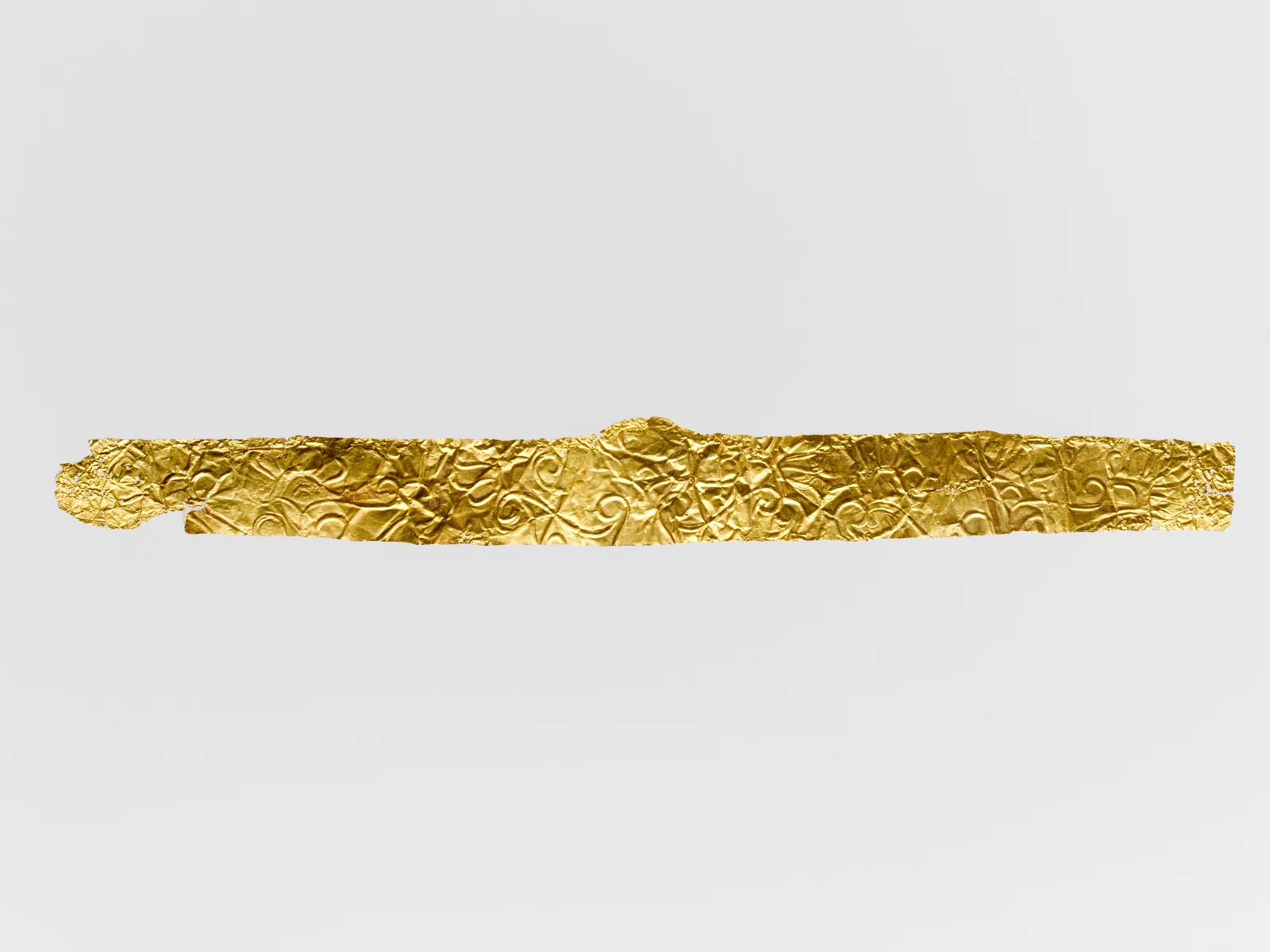
A Cypriot gold diadem is the lesson in one sheet. Thin metal, scrolling vines, a band beaten until it is almost a leaf. You would meet that softness before you named a tomb. Gold this yielding is already close to the whole — twenty-four parts of itself, a share so high the metal agrees to become foil. A carat would have asked how heavy a stone sat on it. There is no stone to weigh. The jewel is the share: gold as the metal, worn as a thin climate at the brow.
The literacy is the fraction. If the number changes when the stone is heavier, you are in a carat. A karat begins when the number is already about the metal.
Coins that are a known share, then eighteen of twenty-four
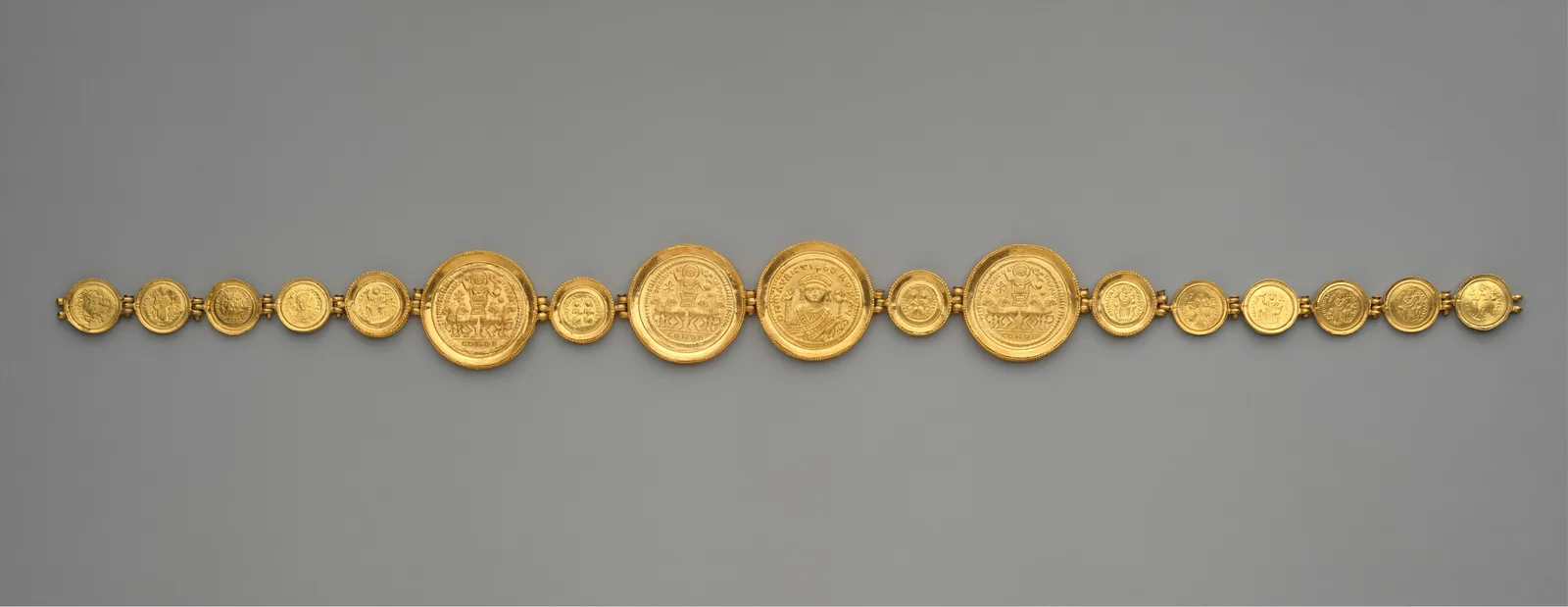
A Byzantine girdle keeps the same sit as gold that has already been named. Coins and medallions, a line of stamped shares, each disk a known fineness before it was asked to be jewelry. You would feel a currency of gold before you felt a clasp. The coin is a share written as a face. A carat would have weighed a gem hung from it. This gold is the gem: twenty-four parts, or nearly, worn as a belt of metal that already knew its fraction.
A pectoral cross finishes the thought as the share written in the gold itself. Yellow gold at 750 in a thousand — eighteen of twenty-four, 18k, the fraction stamped as a fineness. You would meet that number before you met an amethyst. Filigree is the drawing. Enamel is the skin. The karat is the share underneath: not a carat of stone, a purity the metal has already agreed to be. Twenty-four parts. The number is how many of them are gold.
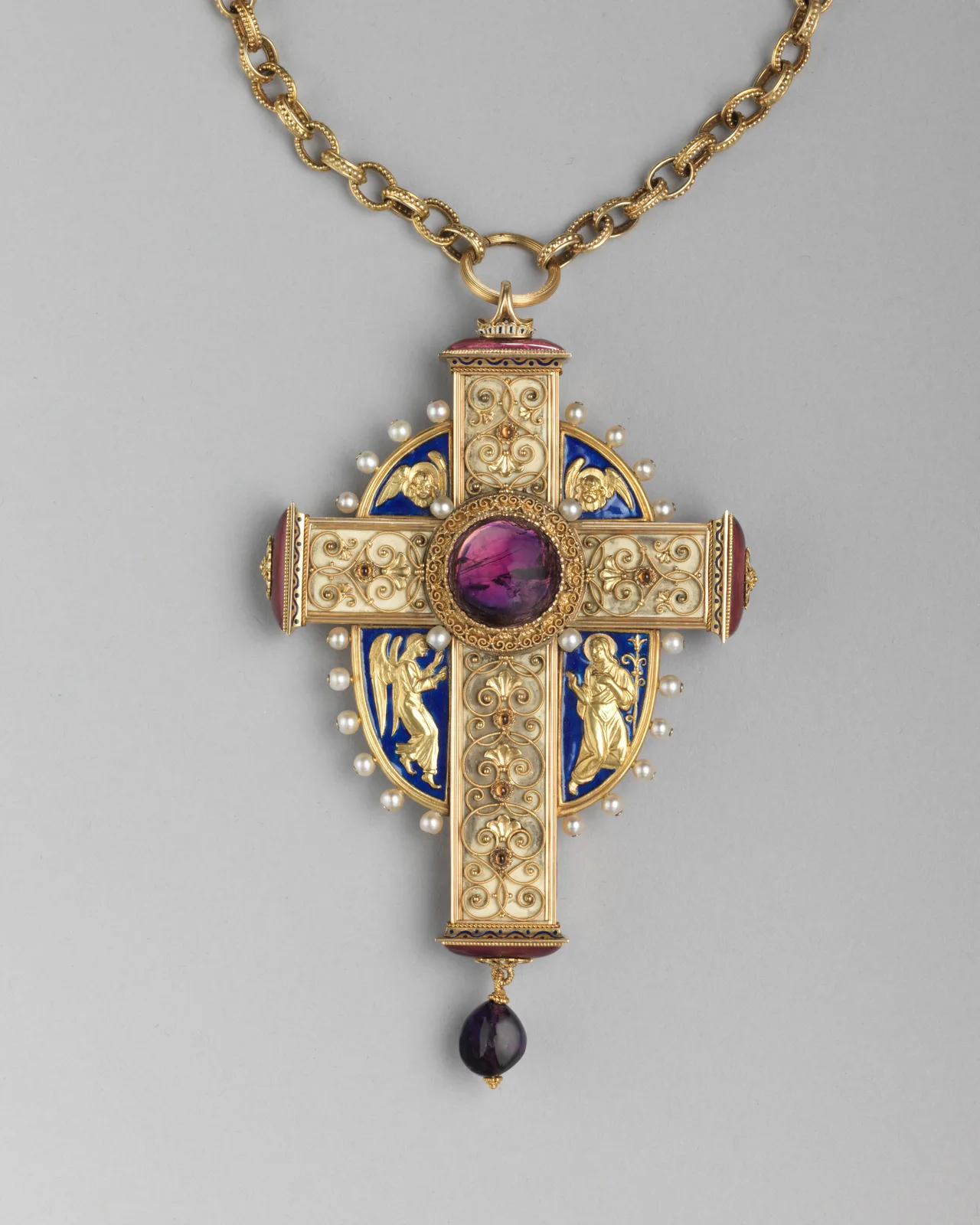
Turn the cross and the stones keep their carats. The gold keeps its karat. You would feel eighteen parts in twenty-four, then a purple cabochon whose number is a weight, not a share.
That is the note. A carat is a weight. A karat is a share of twenty-four — how much of the metal is gold, a fraction you wear, not a mass you count on a stone.
Educational only · Not jewelry, insurance, or legal advice