A halo is a ring of light
A halo is a ring of light. Smaller stones circling a center so the center reads larger — a ring of melee asked to frame. You do not meet a pavé field. You do not meet milgrain as a row of metal beads. You do not meet a prong, a claw that holds. You feel a ring of light, then the center it frames. The literacy is the circle you wear.
A pavé is a field: small stones set close until the metal disappears, a whole paved surface. Milgrain is a row of metal beads along an edge. A prong is a claw that reaches over a stone and holds it. A halo begins when the small stones make a ring — and the ring is there so the center can be read.
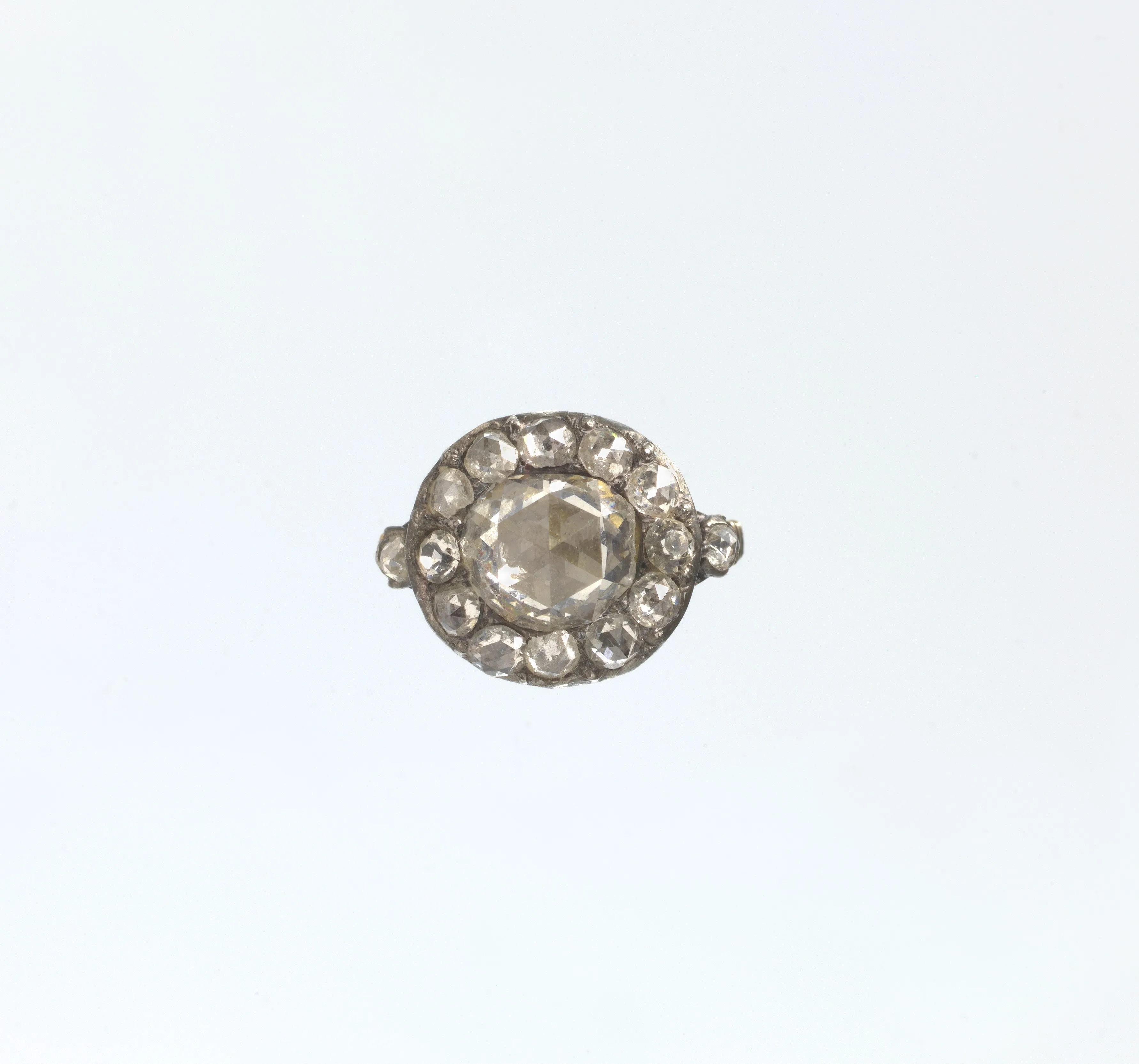
A European gold ring of about 1760 is the lesson in one face. A round diamond, a tight circle of smaller diamonds, already a ring of light you can name. You would feel that circled center before you named a cut. A pavé would have asked the whole head to become a field. Milgrain would have been a dotted metal rim. A prong would have been a claw you can count. This halo stays a ring of light. The small stones have already agreed to frame.
The literacy is the ring you can name. If the stones cover a whole surface, you are looking at a field. If the edge is metal beads, you are looking at milgrain. If you are counting claws, you are looking at a prong. A halo begins when the melee is a circle — and the center is what the circle was asked to keep.
A stomacher of circled centers, then a bow that frames
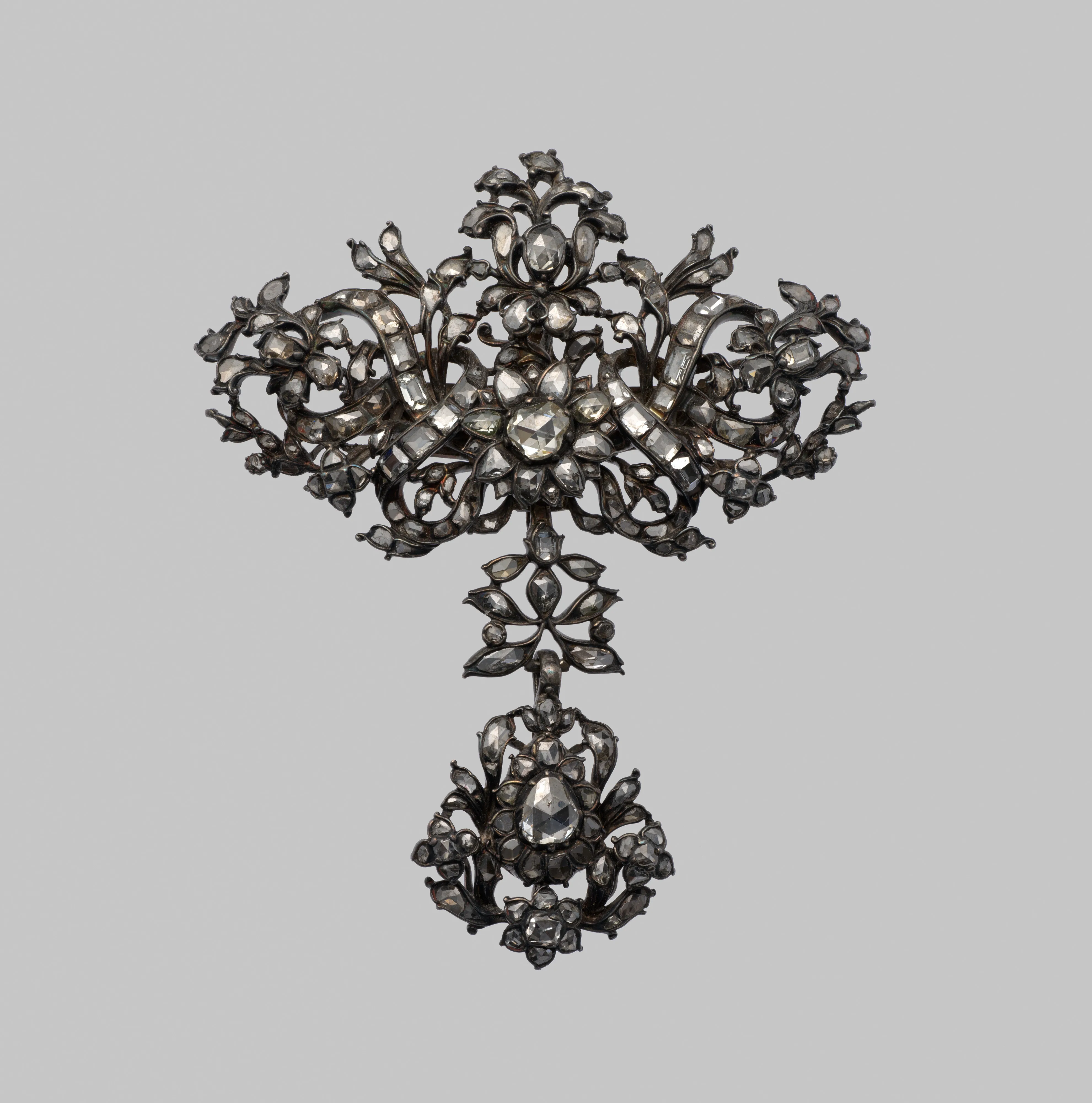
An early eighteenth-century silver stomacher keeps the same appetite as a quieter ring of light. A central diamond in a flower of smaller stones, then a pear drop in its own circle — already two halos you can name. You would meet those framed centers before you named a corsage. The modern halo takes that meeting and keeps it: the ring of light, a circle you can still read as a frame.
An eighteenth-century gold bow finishes the thought as a ring of light asked to sit on a knot, then again on a pendant. A small halo at the bow’s heart, a larger one around the diamond lozenge below. You would feel those circled centers before you named a ribbon. Turn the jewel and the halo stays a ring. A pavé would stay a field. Milgrain would stay a row of beads. A prong would stay a claw. You would feel a ring of light, then the center it frames.
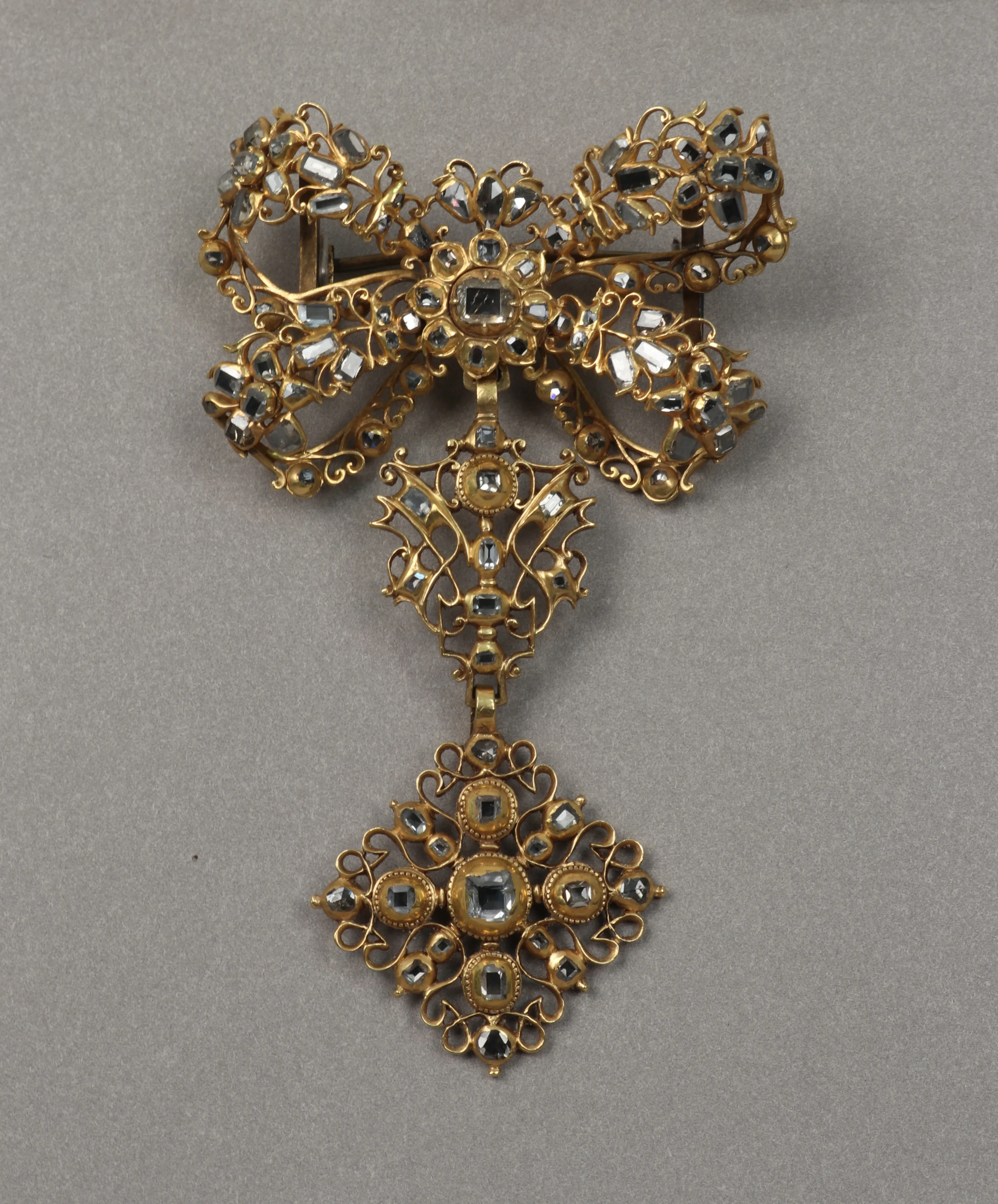
That is the note. Pavé is a field. Milgrain is a row of beads. A prong is a claw. A halo is the ring of light — smaller stones circling a center, so the center can be read.
Educational only · Not jewelry, insurance, or legal advice