A girdle is an equator
A girdle is an equator. The band where the crown of a cut stone meets the pavilion — the widest line, the place a setting takes hold. You do not meet a shank, which is the band of a ring. You do not meet a bezel, which is a wall of metal around a stone. You do not meet a prong, which is a claw. You feel a line around the stone, then the two worlds it separates. The literacy is the equator.
A shank circles the finger. A bezel is a rim that keeps an edge. A prong reaches up and pinches. A girdle begins when the stone itself draws a line: crown above, pavilion below, and between them a band you can find with a fingertip.
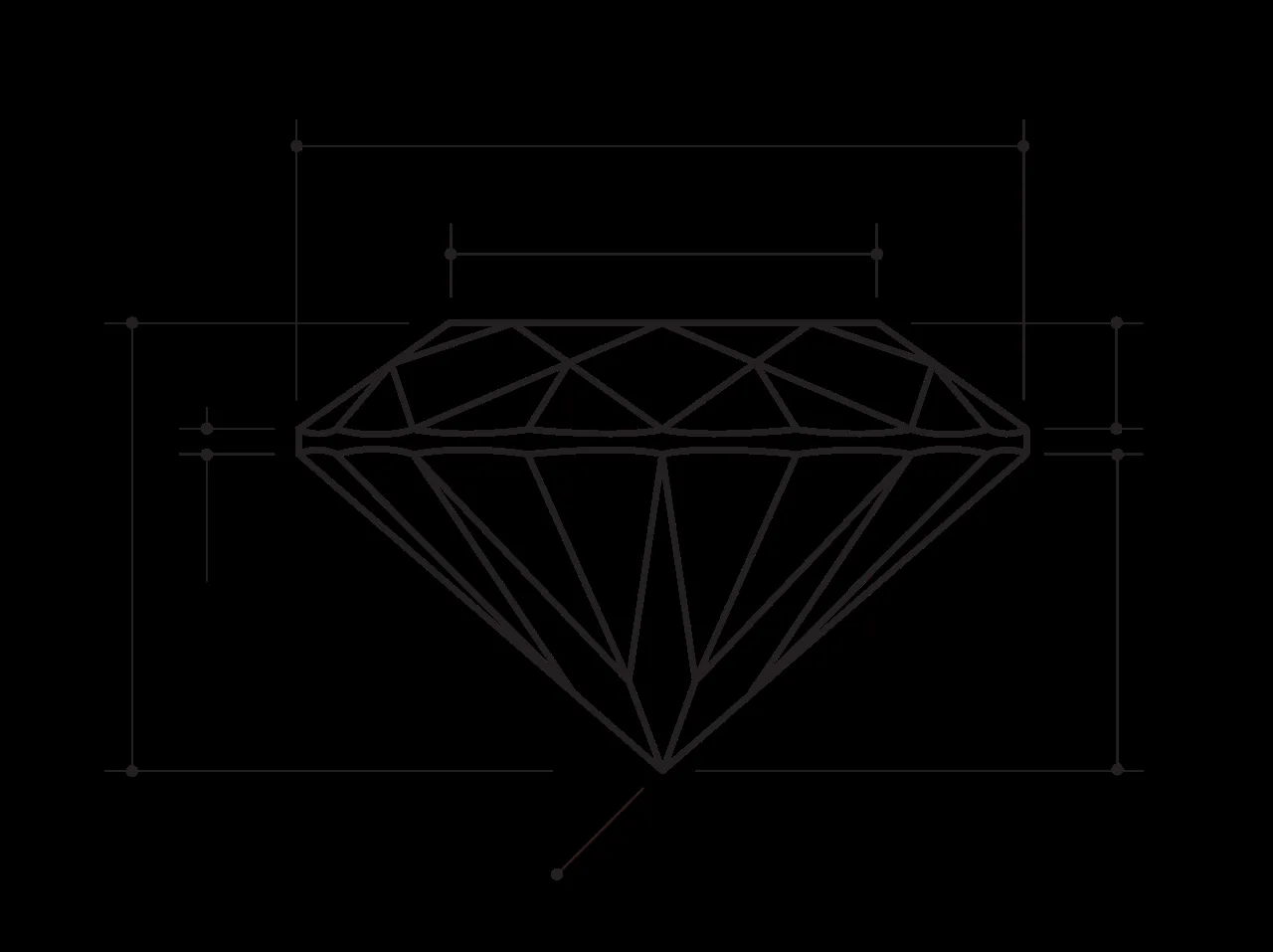
A side view of a round brilliant keeps the lesson in one drawing. The table and the crown sit above a wide middle line. The pavilion falls away below it, toward the point. That middle line is the girdle. You would see the equator before you named a facet. Marks on a diagram can measure a diameter or a depth. The line they travel around is still the band. Crown above. Pavilion below. The girdle is the meeting.
The drawing does not change the job. A brilliant can carry as many facets as it likes and still have one equator. You are looking at the line, not at a count of stars.
The same line on a stone, then on a second
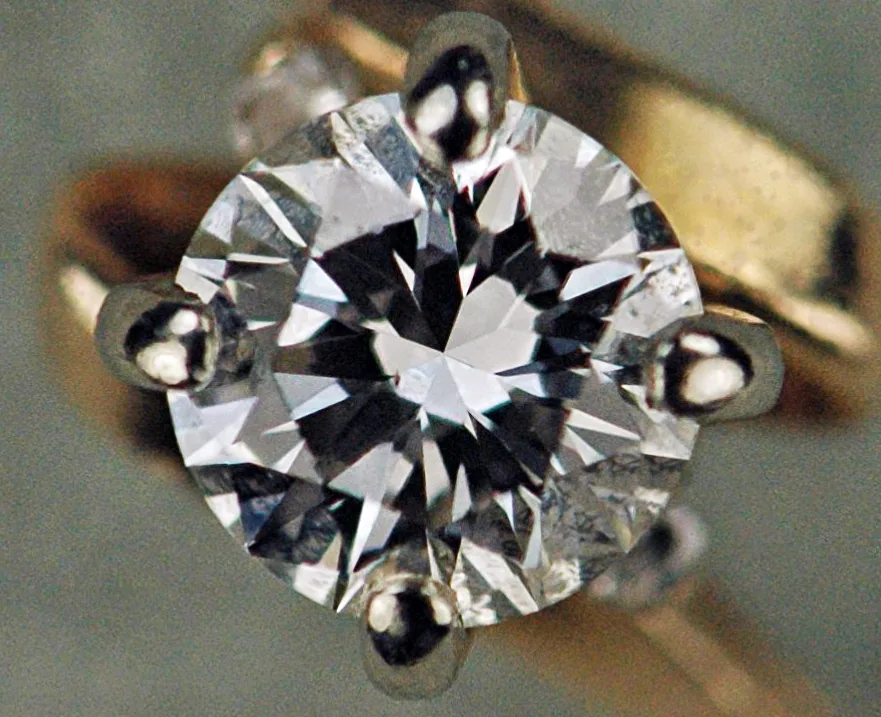
A round brilliant, about five and a half millimeters across, shows the equator as light. From the side the crown is a low roof, the pavilion a longer slope, and between them a bright rim — the girdle, already the widest place. You would meet that rim before you named a carat. A shank would have been the gold around a finger. A bezel would have been a wall. A prong would have been a claw reaching for this very line. The line belongs to the stone.
You would turn that brilliant and the rim would stay the rim. Light can break in the pavilion and still leave the equator where it was. The girdle is not the fire. It is the place the fire is organized around.
A second stone keeps the same appetite with a little of the crystal still attached. Two diamonds, seen from the side, each one drawing an equator the light can find. You would feel that band before you asked what a setting will do with it. The girdle does not need a claw to be a girdle. It is the place the claw, when there is one, will be asked to hold.
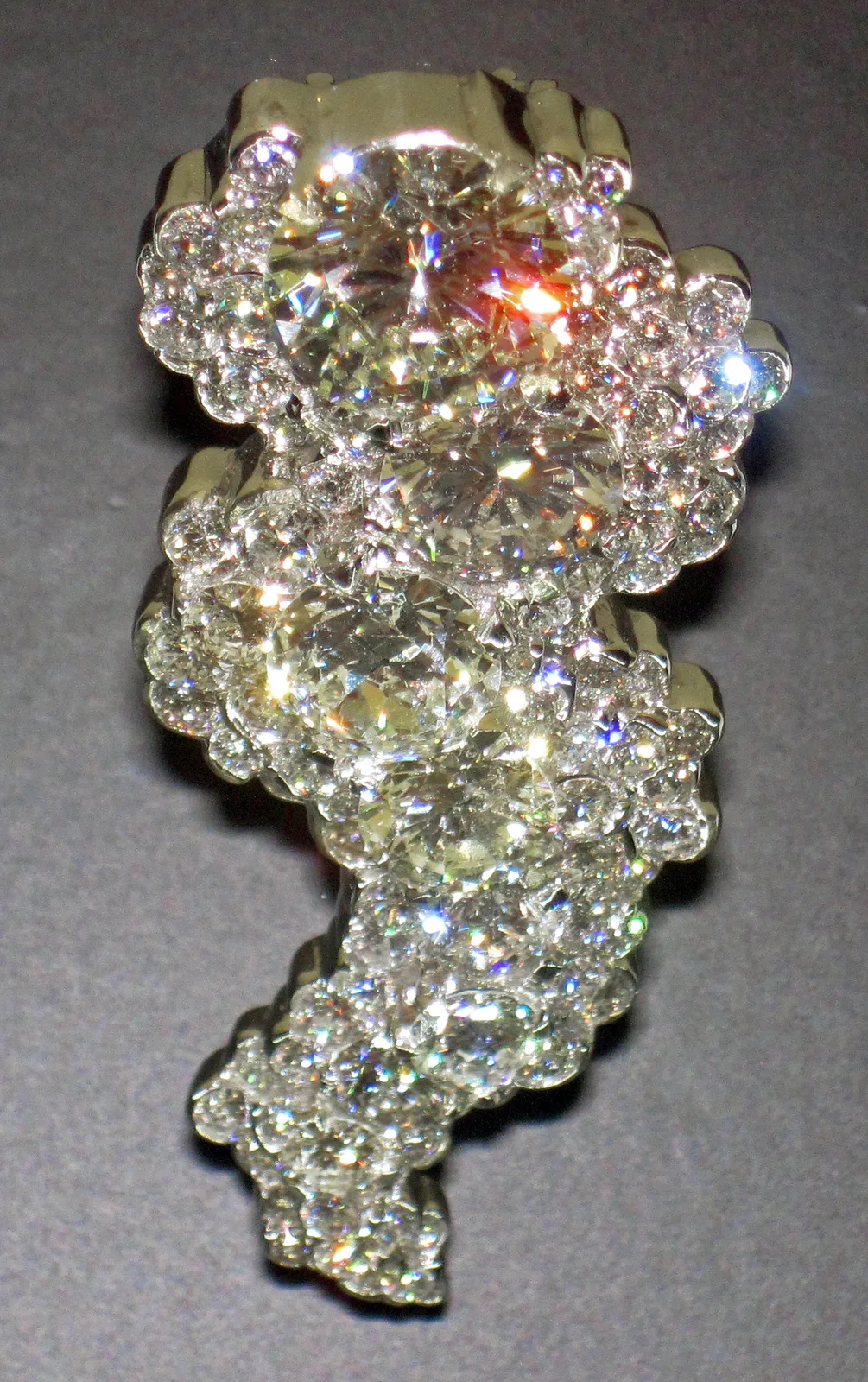
Turn either stone and the band stays the band. The crown can flash. The pavilion can hold the light. The equator is what you would set a fingertip against, the line a wall or a claw is later asked to meet. Two stones, one lesson, neither of them a ring’s band.
That is the note. A shank is the band of a ring. A bezel is a wall. A prong is a claw. A girdle is the equator — the band between crown and pavilion, the line a cut stone wears around its middle.
Educational only · Not jewelry, insurance, or legal advice