A foil is a mirror under the stone
A foil is a mirror under the stone. A thin sheet of metal, often patterned, sits behind a translucent gem — a cloisonné garnet most of all — and throws light back through the color. You do not meet a claw. You do not meet a wall. You do not meet a dome, a tiled field, or a weather of small stones. You feel a glow the gold has staged.
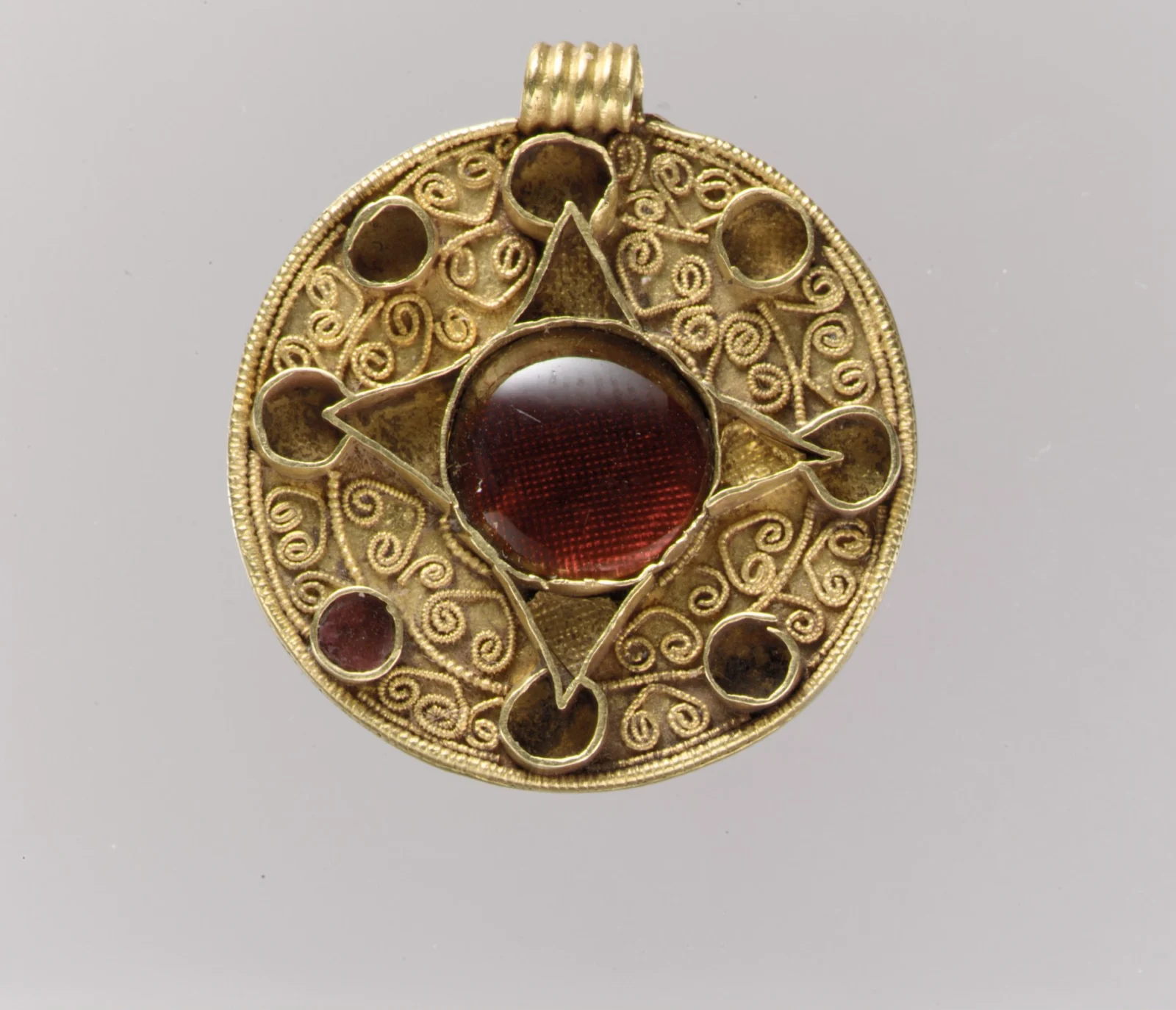
An Anglo-Saxon pendant is the lesson in one object. A circular gold disk, a ribbed loop, filigree scrolls, and at the center a cherry garnet whose face is not a simple red. A waffle of gold shows through the stone — a grid the setter laid down so the gem would return the day. You would see that cross-hatch before you named a kingdom. The foil is the work. The garnet is the window. A prong would have left air around a pavilion. A bezel would have drawn a rim and stopped. This gold goes underneath and lights the color from behind.
The literacy is the staged return. If the glow seems to come from inside a thin stone, look for a mirror the metal has already placed.
A cross that holds a grid, then a bird of cells
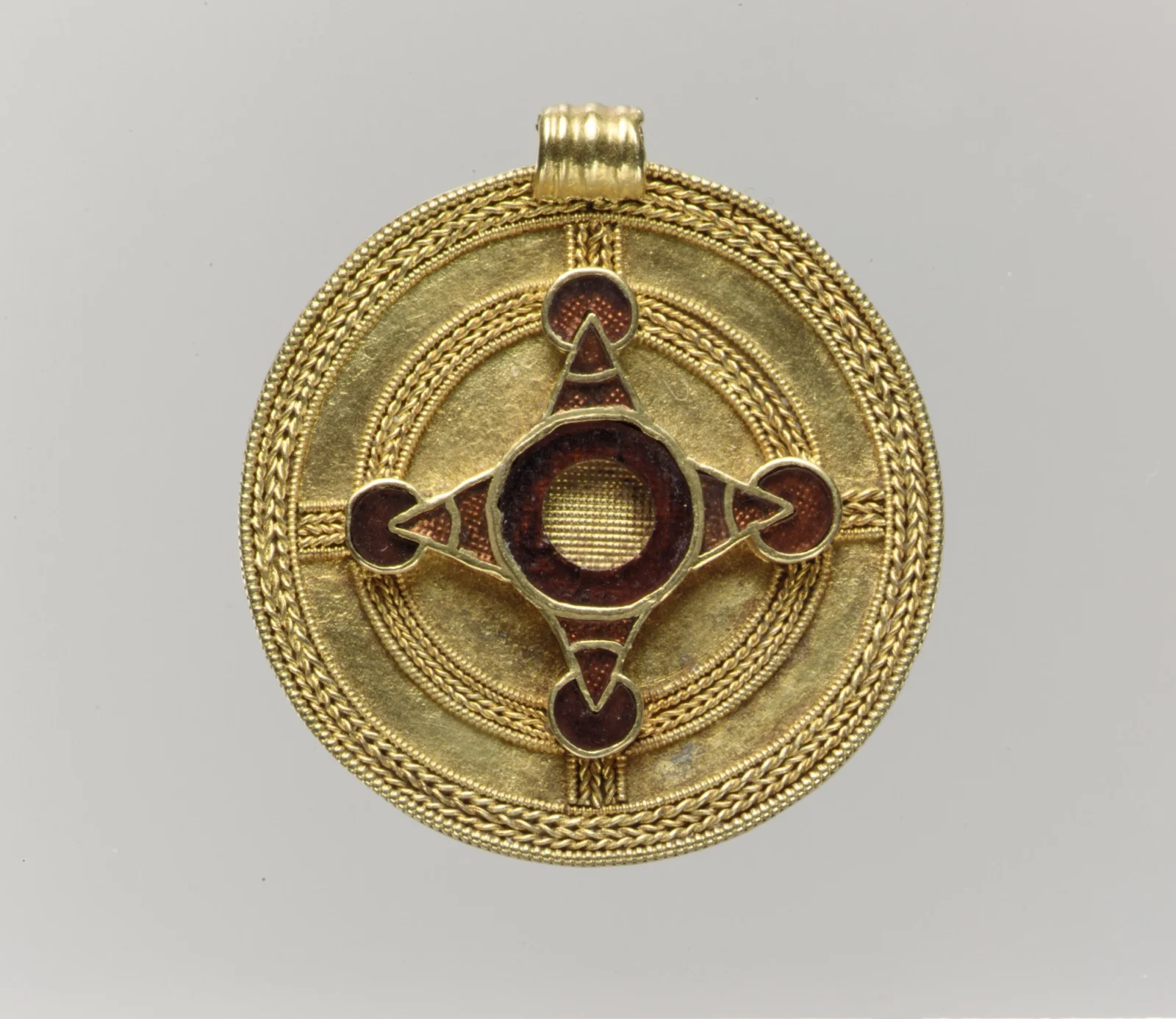
A second pendant from the same appetite draws the foil as a cross. Four arms of cloisonné garnet, a ring at the center, small circles at the ends, each cell a slice of red over the same hatched sheet. Twisted wire divides the disk into rooms. You would feel partitioned gold, then a glow that is the same temperature in every cell. The stones are thin on purpose. The mirror does the rest. A cabochon dome would have kept the light in a volume. A mystery set would have hidden the rail under a tiled color. Foil lets you see the stage — a pattern through the gem, light thrown back.
A Frankish bird finishes the thought as a body of cells. Gold walls, flat garnets, a pearl for an eye, a green accent at the neck, and through almost every red a grid that shimmers when the piece turns. You would meet a small eagle of light before you met a solid plaque. Cloisonné is the drawing. Foil is the weather inside the drawing — not pavé, not a field of sparks, a glow the gold has asked the stone to wear.
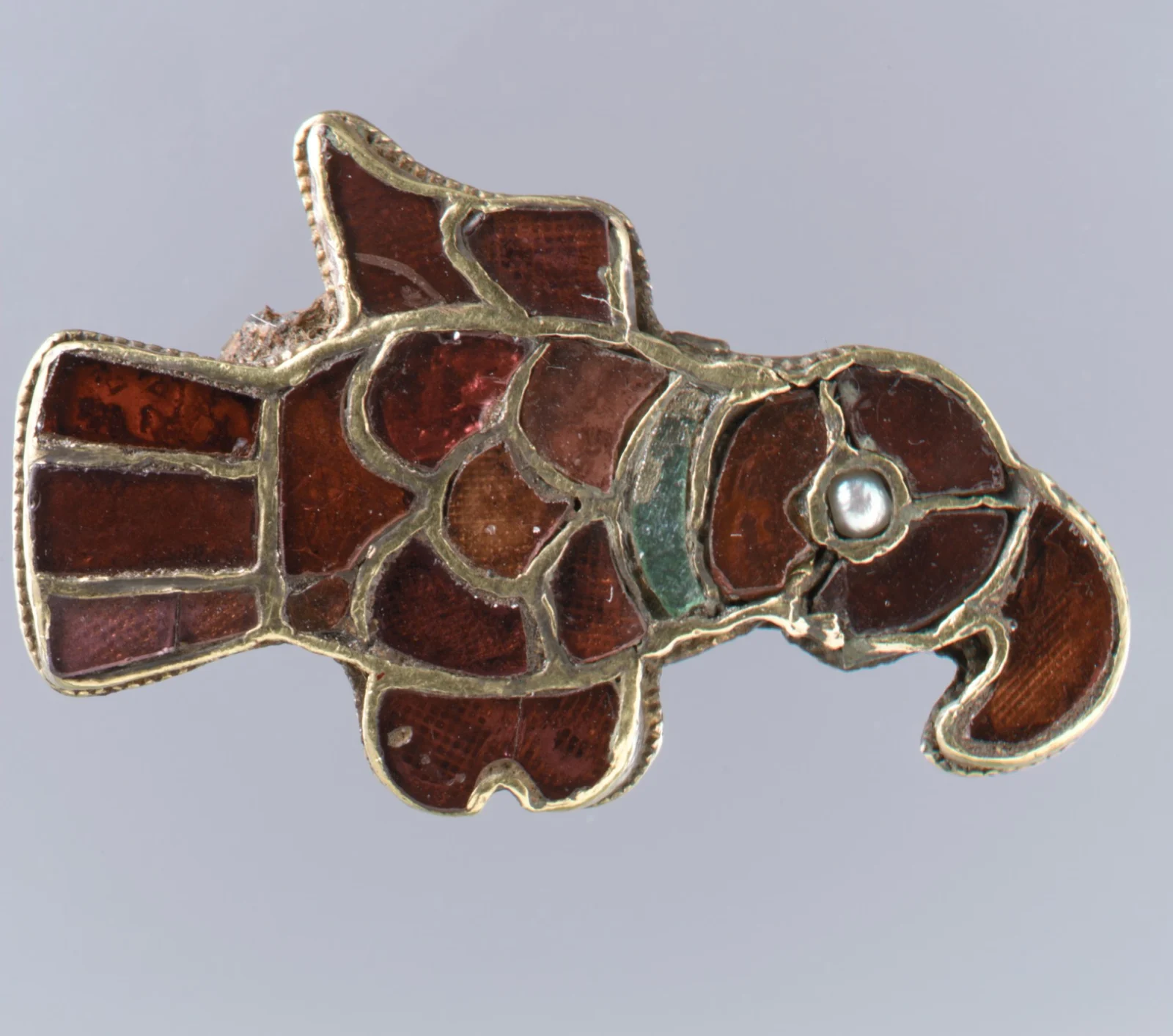
Turn the bird and the cells stay cells. The foil stays a foil. You would feel a warm lattice, then red that has been lit from underneath.
That is the note. A prong is a claw. A bezel is a wall. A cabochon is a dome. A mystery set is a tiled color. Pavé is a field. A foil is the mirror under the stone — thin metal, thrown light, a glow the gold has staged.
Educational only · Not jewelry, insurance, or legal advice