A cushion is a soft cut
A cushion is a soft cut. A square or a quiet rectangle whose corners have already agreed to round — a pillow of stone, worn as a face with a gentle outline. You do not meet a round lantern of facets. You do not meet an emerald cut’s stepped room with clipped corners. You feel a soft square, then a hold. The literacy is the pillow.
A round brilliant breaks light into a circular flash. An emerald cut is also a rectangle of steps, but it is a hall: broader, corners cut on the diagonal, a room you look down into. A cushion begins when the square has already softened — a stone asked to sit as a pillow, not as a circle, not as a flight of steps.
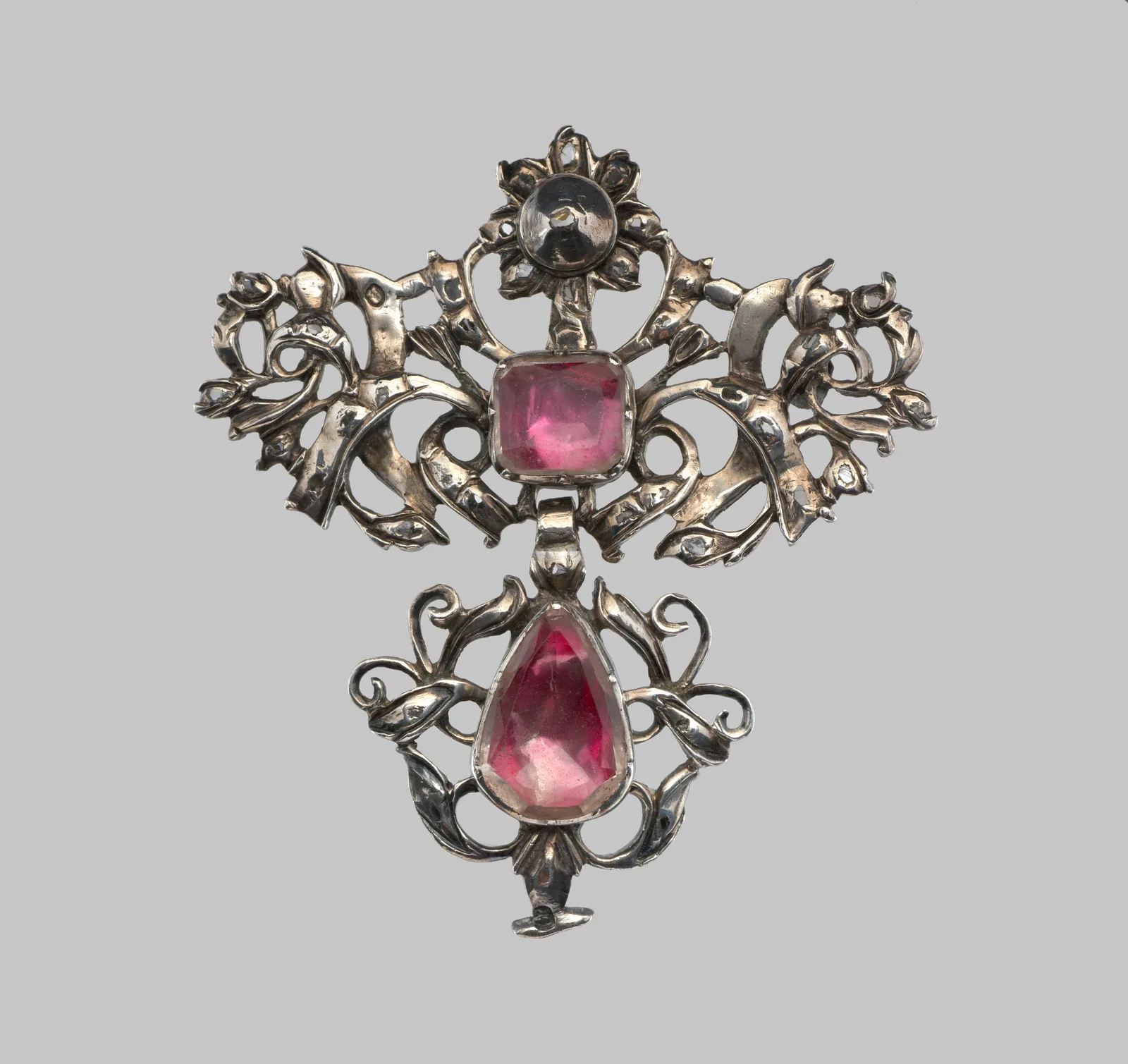
An eighteenth-century silver brooch is the lesson in one pillow. A soft square of jewel at the bow, rounded corners already decided, then a pear as the drop that is not the cushion. You would see that pillow before you named a scroll. A brilliant would have asked the upper stone to be a circle of fire. An emerald cut would have opened a stepped room. This square stays soft. The pear is another cut. The cushion is the pillow that holds the bow.
The literacy is the outline. If the stone is a circle of flash, you are in a brilliant. If the rectangle is a wide room with clipped corners, you are in an emerald cut. A cushion begins when the square has already agreed to be a pillow.
Old pillows in a bow, then the same soft square on a pair
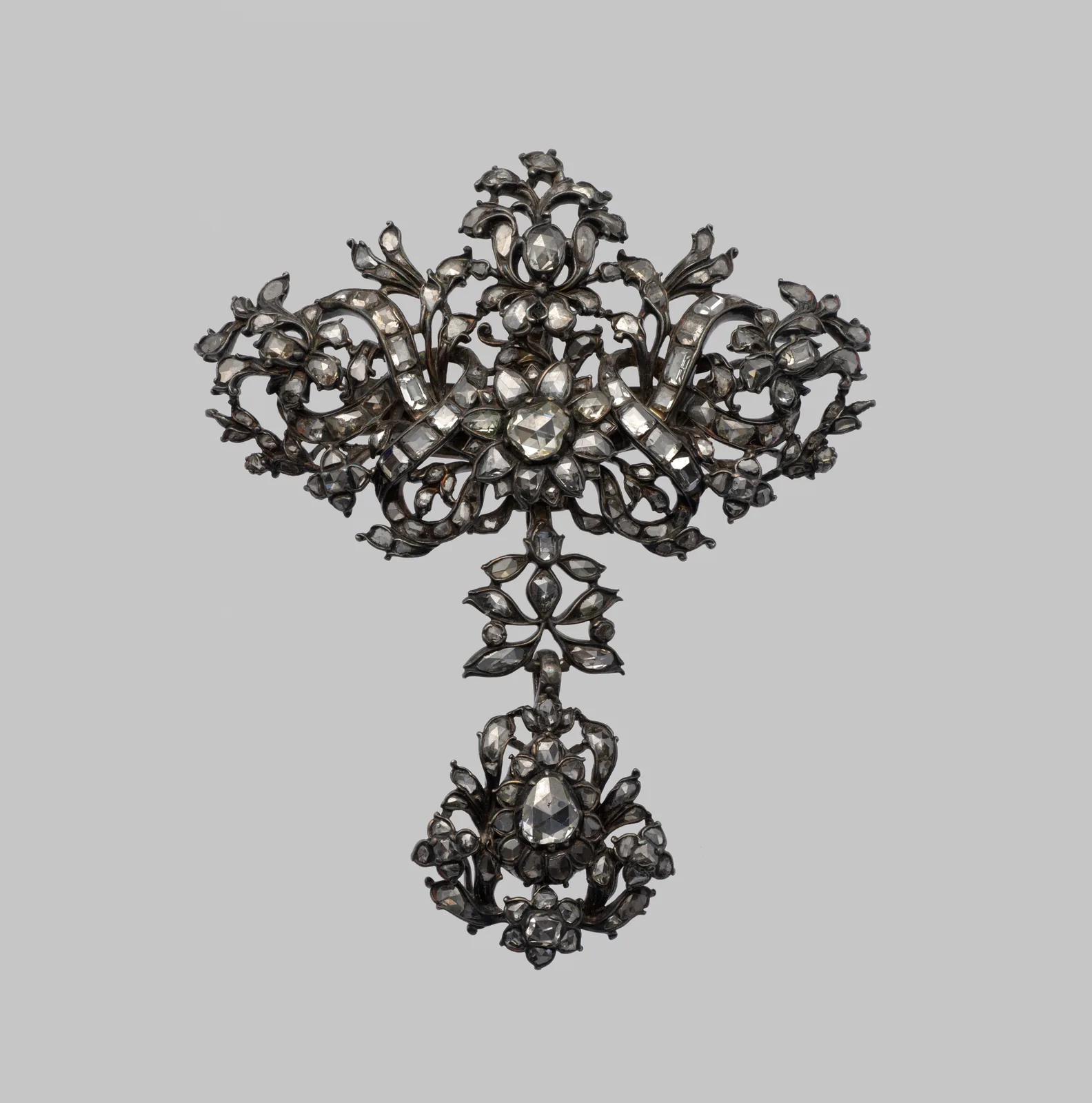
An early eighteenth-century diamond bow keeps the same appetite as stones that have not yet been asked to be modern rounds. Old cuts, a slightly cushioned face here and there, a pear at the drop, silver as the night around them. You would meet those softened squares and ovals before you named a ribbon. The modern cushion takes that pillow and names it: a soft square, rounded corners, a sit you can still read as a cushion on a sofa.
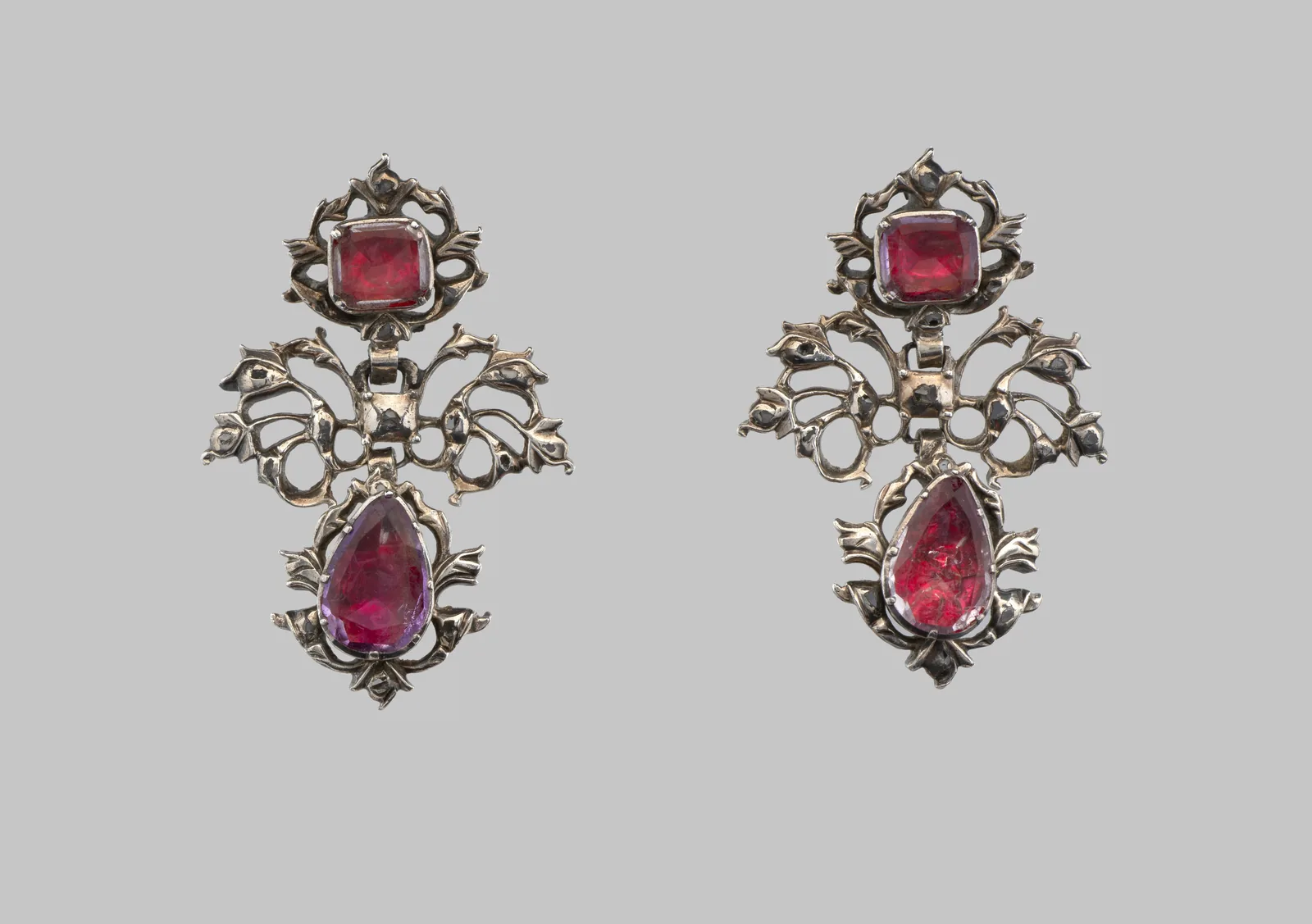
A pair of silver earrings finishes the thought as the pillow worn small. A soft square at each top, a pear as the drop again — the same grammar as the brooch, a cushion you meet first. You would feel those rounded corners before you named a leaf in the silver. Turn the jewel and the square stays a pillow. A brilliant on a modern shoulder would stay a circle. You would feel a soft square, then stone, and almost no circular lantern under the fingertip.
That is the note. A brilliant is a round lantern. An emerald cut is a stepped room. A cushion is the soft cut — a square or rectangle with rounded corners, a pillow you wear.
Educational only · Not jewelry, insurance, or legal advice