A crown is a top
A crown is a top. The upper half of a faceted stone — everything above the girdle, the roof of planes the eye meets first. A table is the window in that roof, one flat with a special job, the face you look through, not the roof itself. A facet is a single plane, one face among the many the roof is built from. A pavilion is the underside, the cone below the girdle, where the light is asked to return. The crown is the whole top. The literacy is the upper half.
You can cover it with a look. The window sits inside it. The single plane is only a piece of it. The lower cone is the other half of the stone.
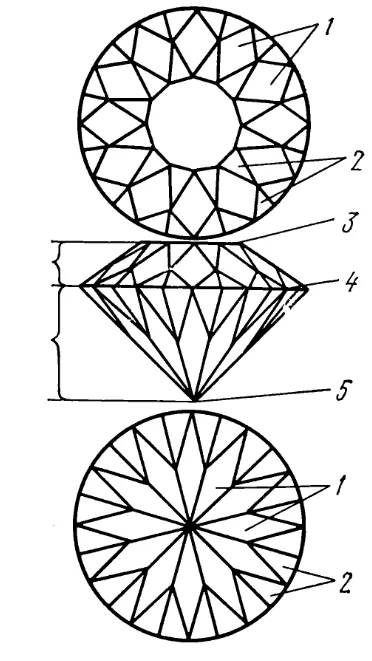
A roof, drawn
A King cut, drawn from above and from the side, keeps the lesson in one plate. From above, a small center sits in a field of flats — that whole field is the top. From the side, a roof of faces rises above a middle line, and a longer cone falls away below it. The roof is the crown. The angle marked on that roof belongs to the crown, not to the underside. You would see the upper half before you gave the center its other name.
The drawing is there to show a top, not to make you memorize a count of faces. A cut can carry more planes or fewer. The upper half is still the crown. Sixteen, or thirty-three, or eighty-six — the number is how the roof was built. The word is the roof.
A table would have been the window alone, the flat in the middle of the top view. A pavilion would have been the cone below the line. A single facet would have been one kite in that roof, not the roof. The crown is the architecture they sit in, or under, or make up.
The roof, in profile
Two amethysts, seen from the side, spend the fact as stones. Each one has a bright middle line. Above it, a low roof of flats. Below it, a longer slope toward a tip. You would meet the roof before you named the window cut into it. The species can be a purple. The literacy is the half: crown above, pavilion below, the girdle the line that parts them.
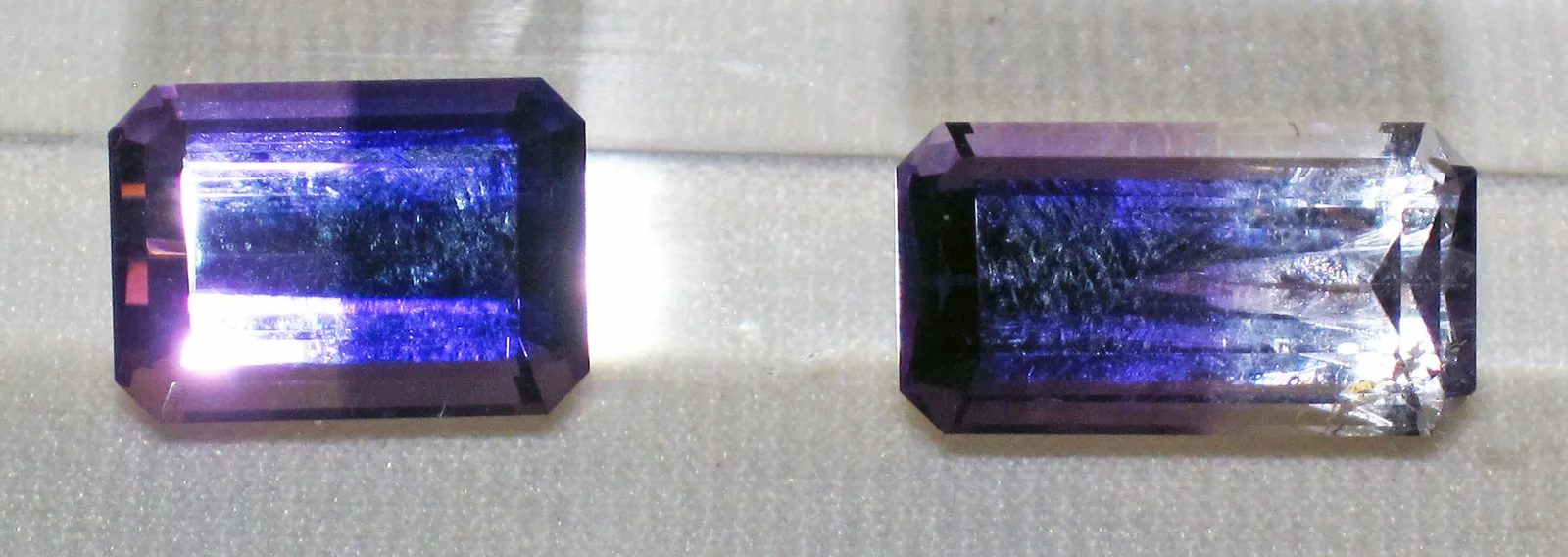
Where the top begins
You would feel that roof with a look before you asked how many planes it holds. One stone spreads the flats a little wider. The other stacks them a little tighter. Both are crowns. The pale band through the color belongs to the amethyst. It does not move the line. Above the line, the top. Below the line, the underside.
A fingertip at the girdle is finding the border, not the crown. The crown is what stands on the near side of that border, the half turned toward the eye when the stone is worn face-up. These two are turned sideways so the half can be seen as a height, not only as a pattern.
The top you look down on
A larger amethyst, seen from above, spends the crown as the whole face you meet. In the middle, an octagon — that flat is the table, a window with its own name. Around it, kites and triangles step outward. Those planes are not a separate subject. Together with the window, they are the top. You would meet that whole top before you isolated the center and called it by its other word.
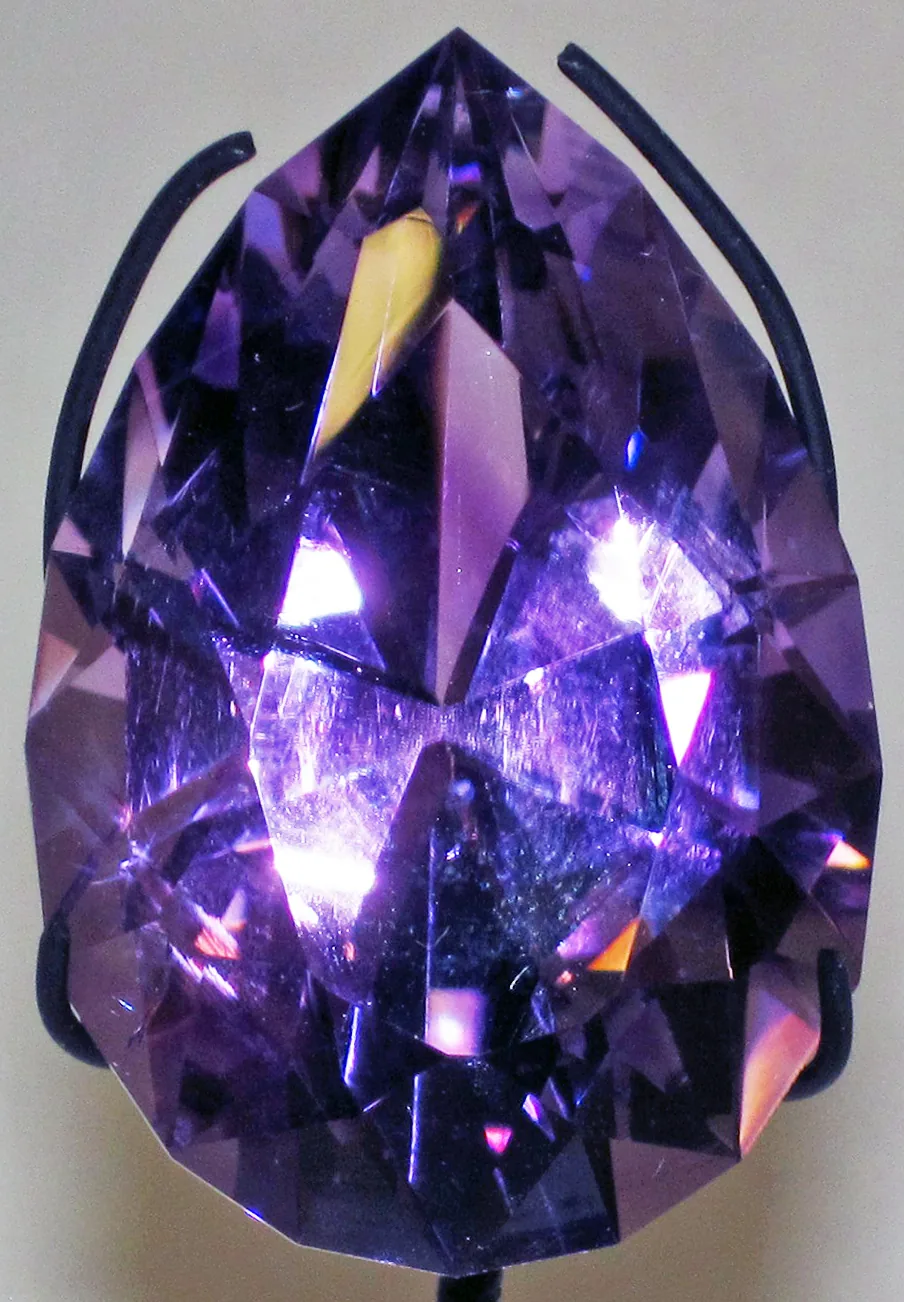
Not the window alone
You would cover one surrounding face with a word and still have the crown left over. A facet is that one face. The table is the window. The crown is the sum of the upper half — window included, and every plane from the window out to the girdle. Looking down, you do not see the pavilion. The underside is on the far side of the stone. What the eye is given is the top.
Turn the stone back to its side and the same top becomes a roof with a height. The King cut drew that height. These amethysts wear it. The count of facets can change. The half does not. Above the girdle, a crown. Below it, a pavilion. The table remains a window inside the top, not a synonym for the top.
That is the note. The table is a window. A facet is a plane. The pavilion is an underside. A crown is a top — the upper half of a faceted stone, the roof above the girdle.
Educational only · Not jewelry, insurance, or legal advice