A channel is a trench
A channel is a trench. A groove cut in the metal, stones sitting edge to edge, held by the walls of the cut. You do not meet a claw. You do not meet a wall around a single stone. You do not meet a weather of small sparks. You feel a cut, then a line. The literacy is the trench.
A prong is a finger you can count. A bezel is a rim around one gem. Pavé is a field that hides the metal. A channel begins when the gold has already been opened as a groove, and the stones agree to live in that groove — shoulder to shoulder, no claw between them.
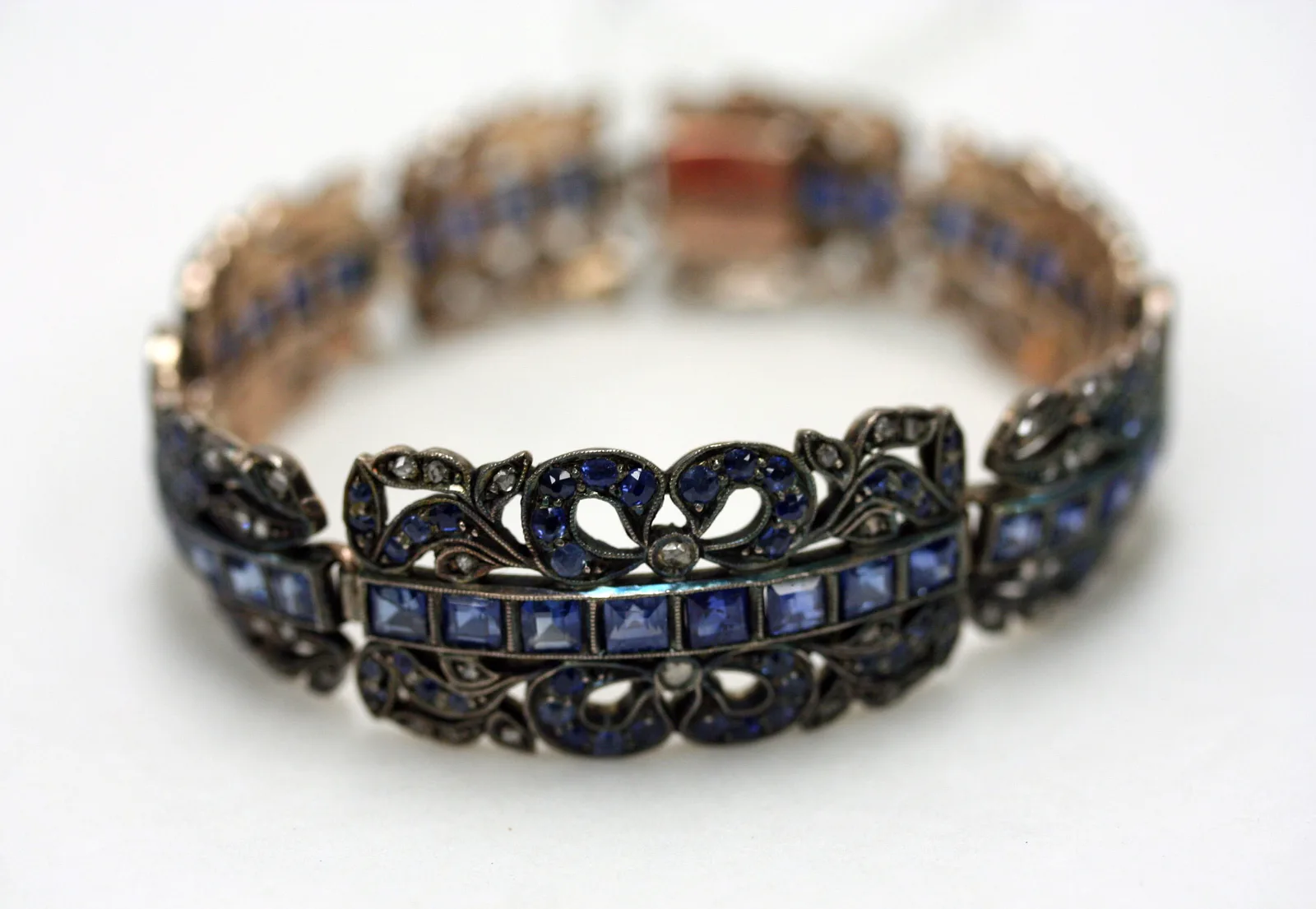
An 1830s bracelet is the lesson in one trench. Square sapphires in a horizontal cut, edge to edge, the metal as two rails rather than a crowd of fingers. Scrolls and small diamonds as the weather around the groove. You would see the blue line before you named a link. The sapphires sit because the gold has been opened for them. A claw would have left air. A bezel would have drawn a room around one stone. This cut keeps a row.
The literacy is the groove. If you can name every claw, you are not yet in a trench. A channel begins when the stones have already agreed to share one cut.
Stones in a gold cut, then a line held by the metal
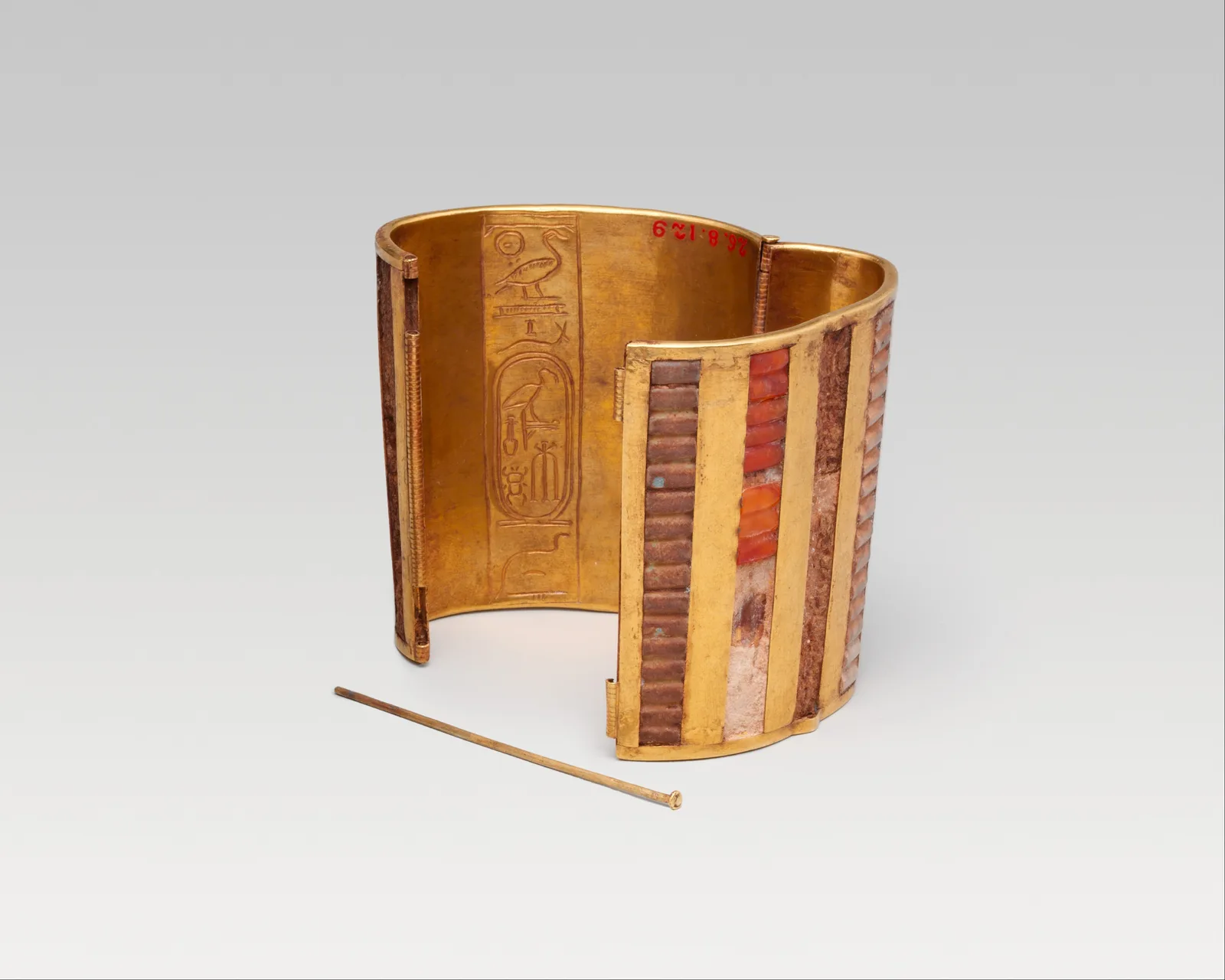
An Egyptian cuff keeps the same sit as color in a cut. Vertical gold ribs, rectangular carnelian laid edge to edge in each groove, a pin as the only hardware left visible. You would feel partitioned metal, then a warm red that lives inside the partition. The trench is the architecture. The stone is what the trench was asked to hold. A field of small sparks would have hidden that cut. This gold stays readable as a groove.
A Jaipur bracelet finishes the thought as a line the metal has already drawn. Diamonds set into recessed gold, a continuous row along each band, the stone sitting in a room the gold opened for it. You would meet that line before you met a carved emerald. The center is a green. The literacy is the groove beside it: stones in a trench the metal has cut, held by the walls, already a line. Not a claw. Not a single rim. A cut you can follow with a fingertip.
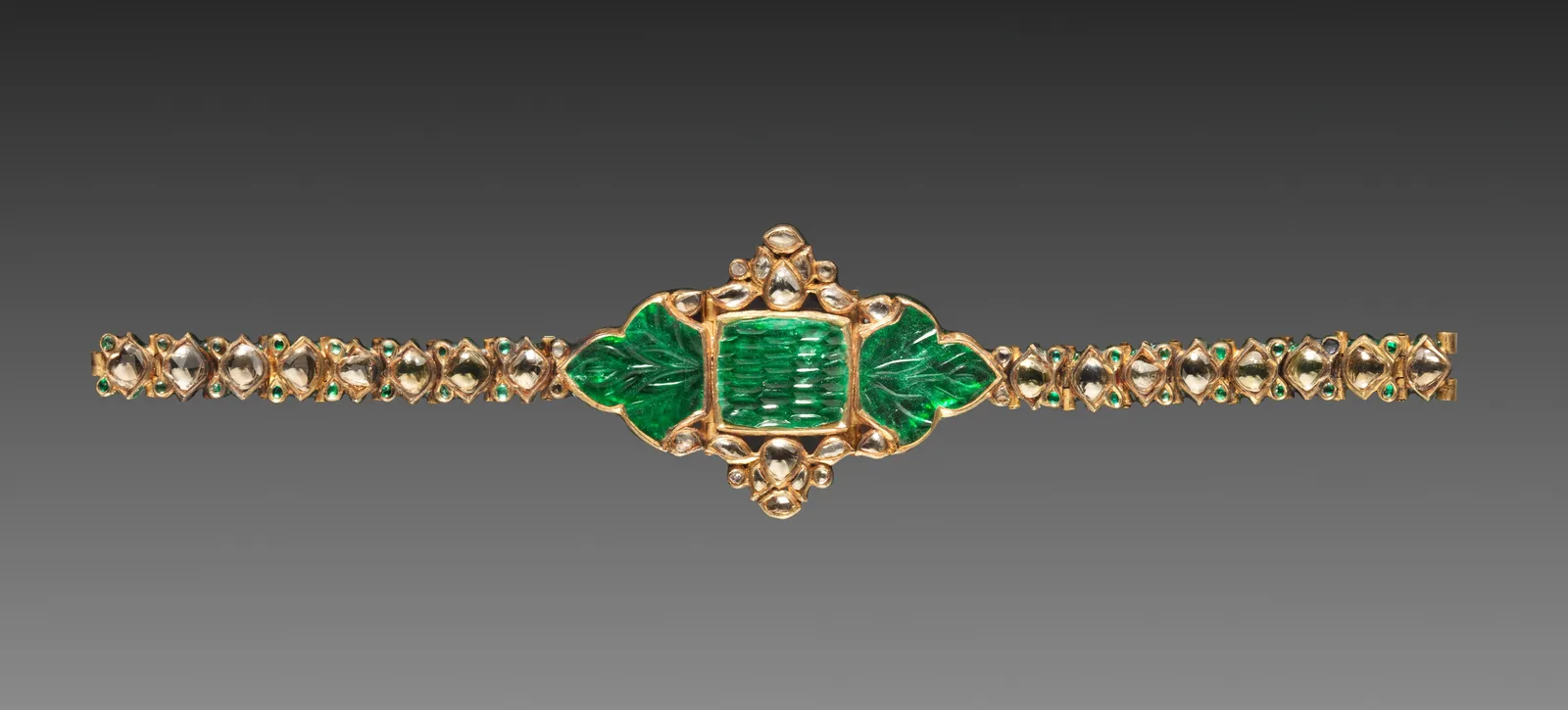
Turn the bracelet and the line stays a line. The emerald keeps its carved face. The diamonds keep the trench. You would feel a cut in the gold, then stone, and almost no claw under the fingertip.
That is the note. A prong is a claw. A bezel is a wall. Pavé is a field. A channel is the trench — a groove the metal has cut, stones edge to edge, a line you wear.
Educational only · Not jewelry, insurance, or legal advice