A carat is a weight
A carat is a weight. Two-tenths of a gram — 0.2 g — and the number tells you how heavy the stone is. You do not meet a share of gold. You do not meet a karat. A karat is how much of the metal is gold, twenty-four parts, a purity already in the band. A carat is a mass a gem can claim. You feel a weight, not a share. The literacy is the number the stone wears.
A point is one hundredth of a carat: a hundred points make one. A millimeter is a size, a measure across the face, not a mass. Stones of the same millimeter can weigh differently. A carat begins when the number is already about how heavy the gem is.
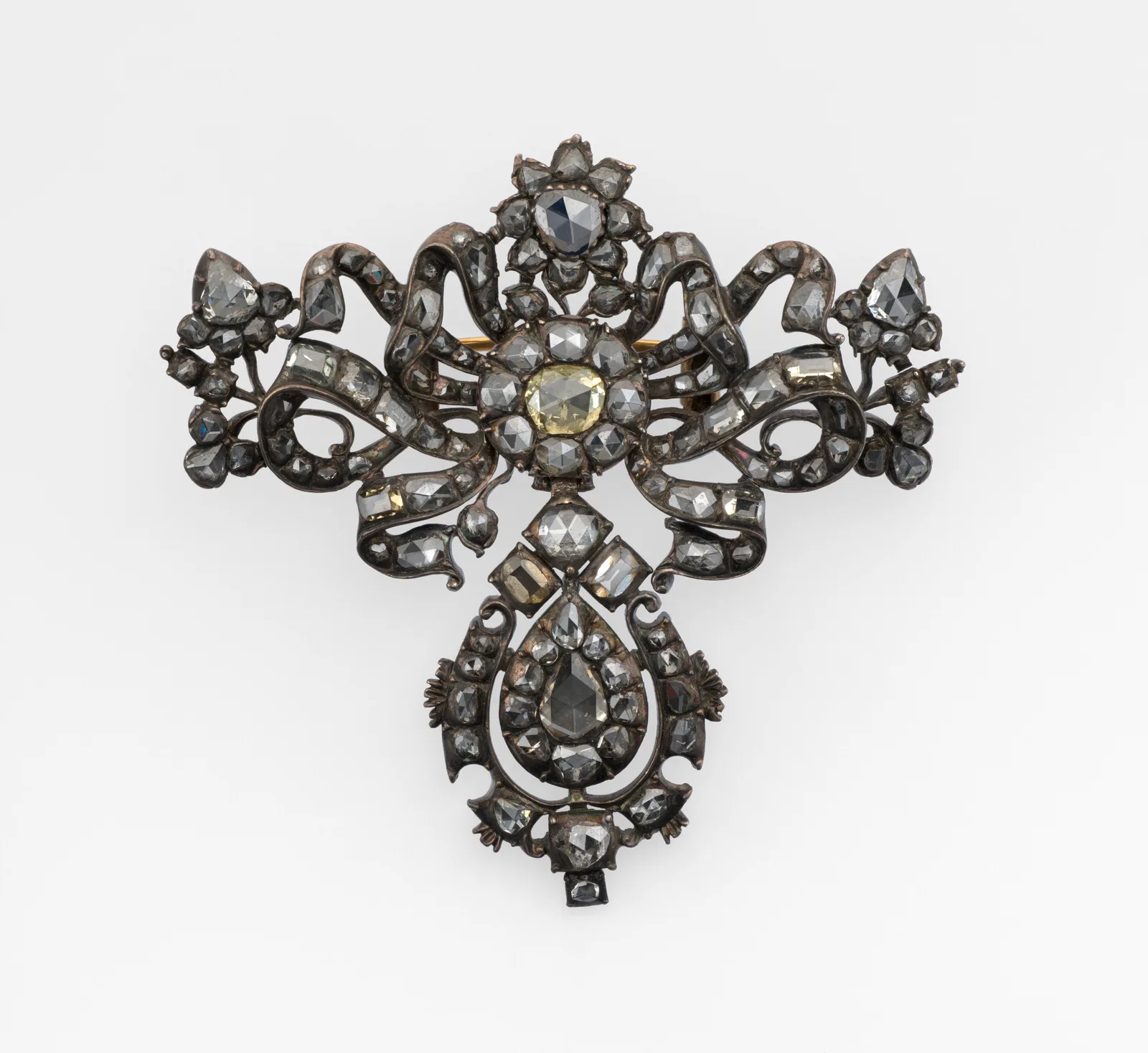
An eighteenth-century silver bow is the lesson in one face. A larger diamond at the knot, smaller stones along the ribbon, a pear with a weight of its own below. You would feel those different masses before you named a bow. A karat would have asked how much of the metal was gold. A point would have split the same carat into a hundred. A millimeter would have measured the face. This carat stays a weight. Each stone has already agreed to be a mass.
The literacy is the number you can name. If the number is about how much of the metal is gold, you are in a karat. If the number is a hundredth of a carat, you are in a point. If the number is a width, you are in a size. A carat begins when the gem is being weighed.
A necklace of many weights, then stones you can already tell apart
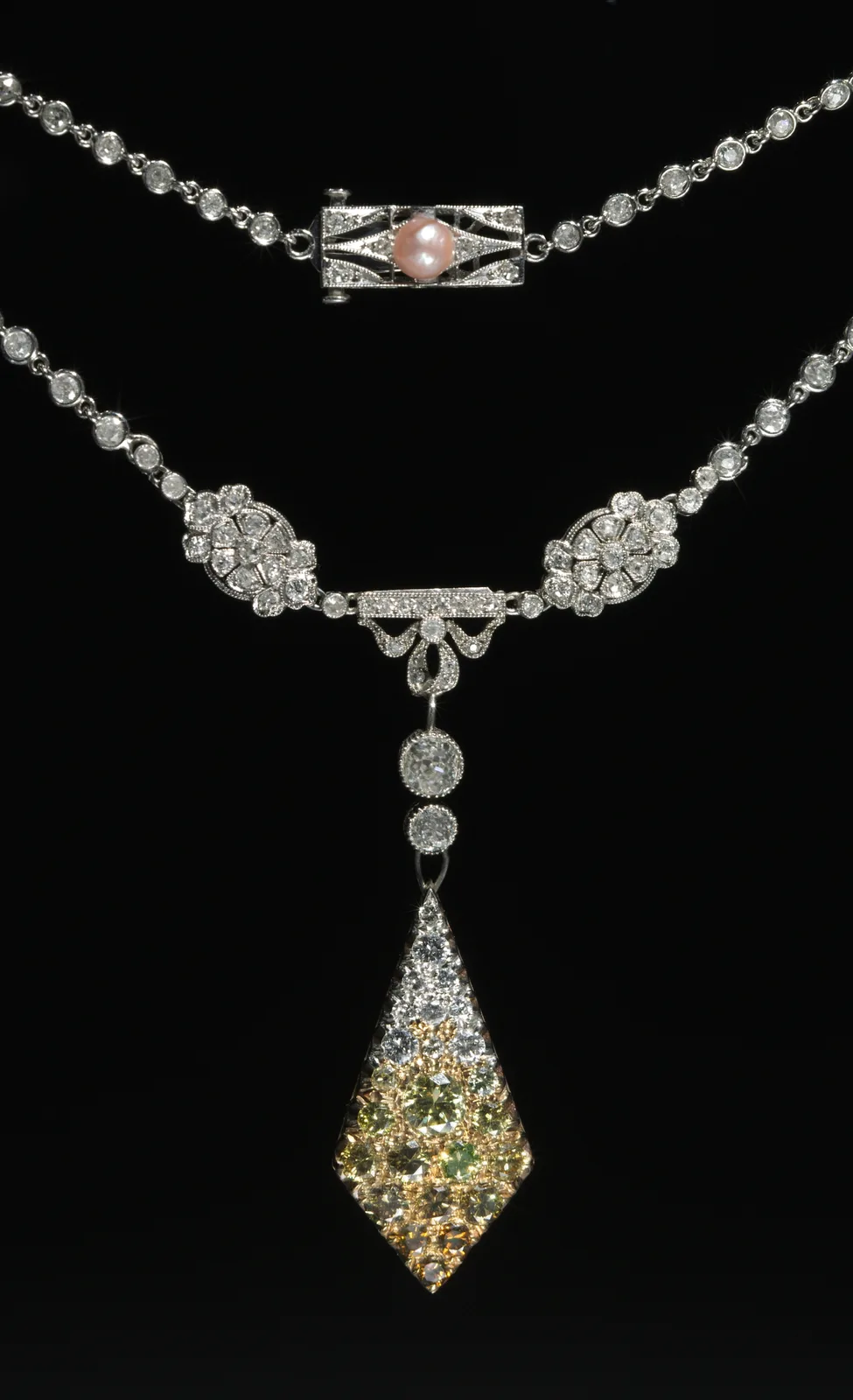
An American diamond necklace keeps the same appetite as a quieter scale. Small stones as a line of light weights, then a kite of many diamonds whose center reads heavier — already carats you can feel as more and less. You would meet those masses before you named a decade. A karat would have stayed with the metal. A point would have been a hundredth. A millimeter would have been a width. This necklace stays a count of weights. The stones have already agreed to be mass, worn as a line that can add.
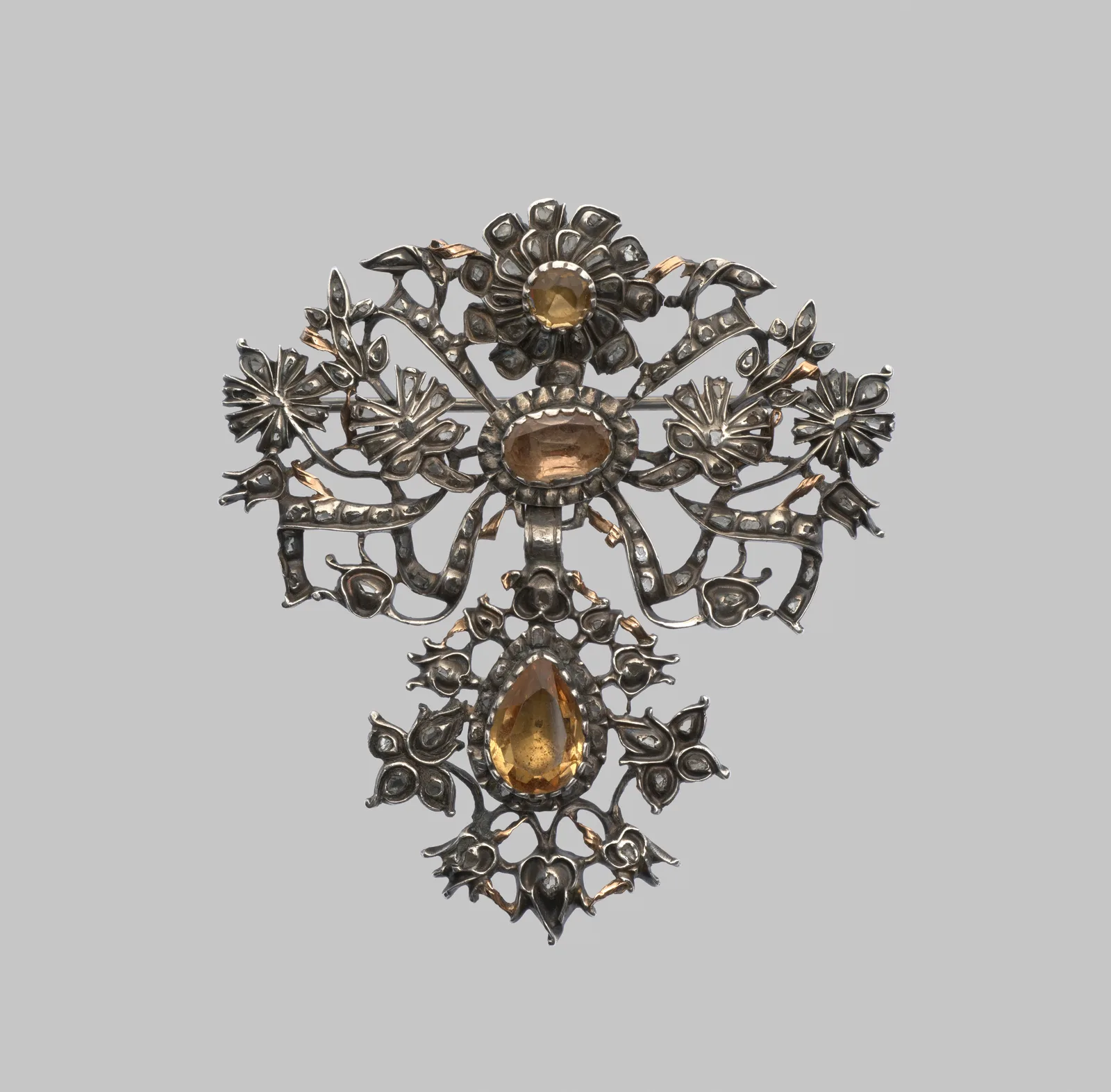
An eighteenth-century silver-gilt brooch finishes the thought as weights you can already tell apart. Three topazes — a small round, an oval, a pear — each a different mass, diamonds as the smaller hours around them. You would feel those three weights before you named a flower. Turn the jewel and a carat stays a weight. A karat would stay a share of twenty-four. A point would stay a hundredth. A millimeter would stay a size across. You would feel a mass, then the stone that claims it.
That is the note. A karat is a share of gold. A point is a hundredth. A millimeter is a size. A carat is the weight — 0.2 grams, a mass the stone can claim.
Educational only · Not jewelry, insurance, or legal advice