A camellia that sits
The camellia is a sit. This season the house keeps it that way: a flower that has already landed, a plane at the neck or on the hand, not a charm that turns on a jump ring. You meet the bloom before you name the house. Petals as a surface. Gold as a leaf that stays.
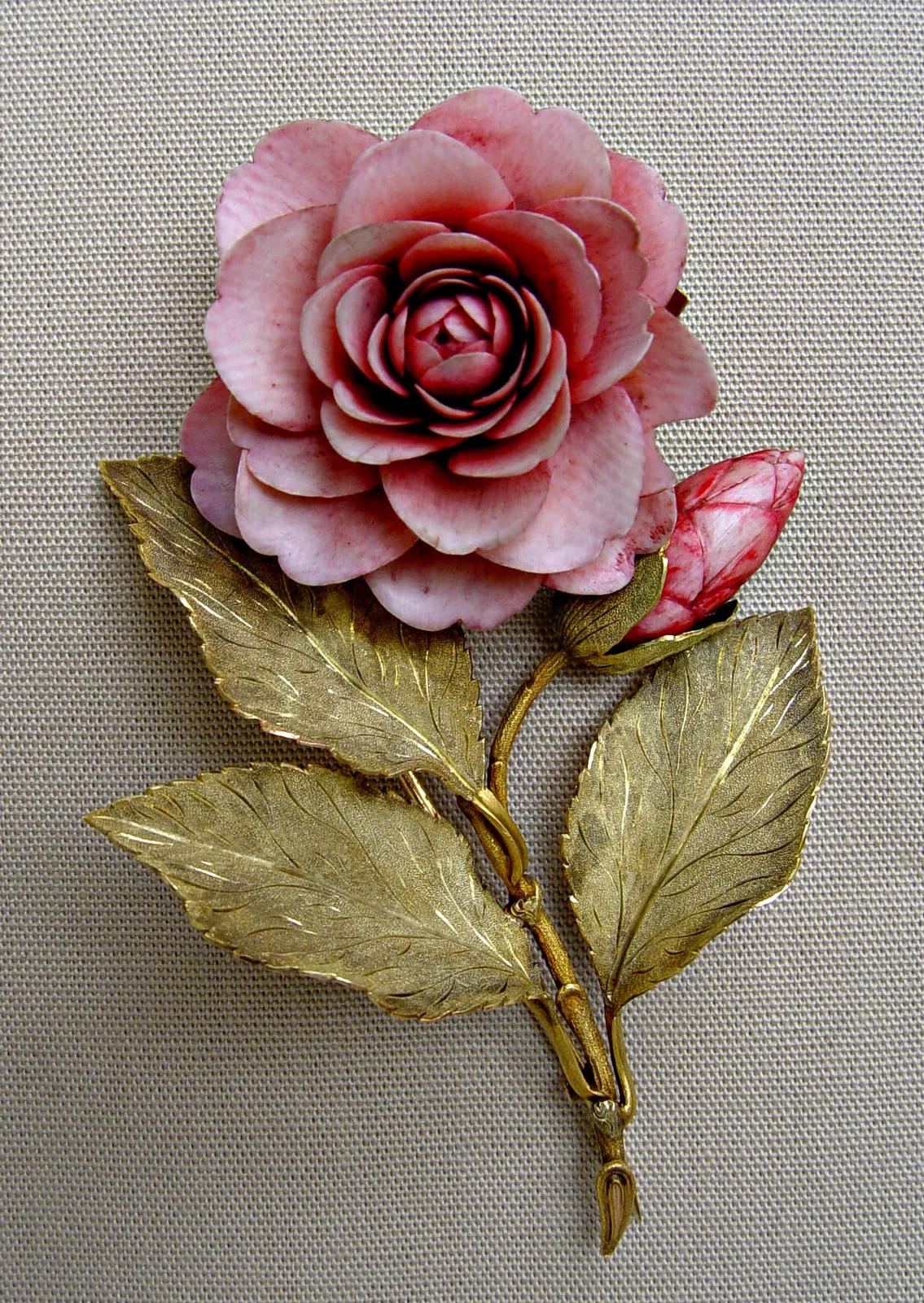
A Victorian camellia is the sit made plain. Ivory petals, tinted pink and a little dusty at the veins, a tight center, a darker bud tucked beside it. Three gold leaves, serrated, veined, already arranged as if the stem had chosen the cloth. You would feel the carved face of the flower first, then the cool leaf. Nothing hangs. The bloom is a weight that has decided its place — the same temperament a house camellia wants at a collar or on a finger, a motif that rests instead of swinging.
That is the flower sit in play now. Not a spray. Not a drop. A camellia as a small architecture you could cover with a palm.
A purple plane, then an orchid that lies
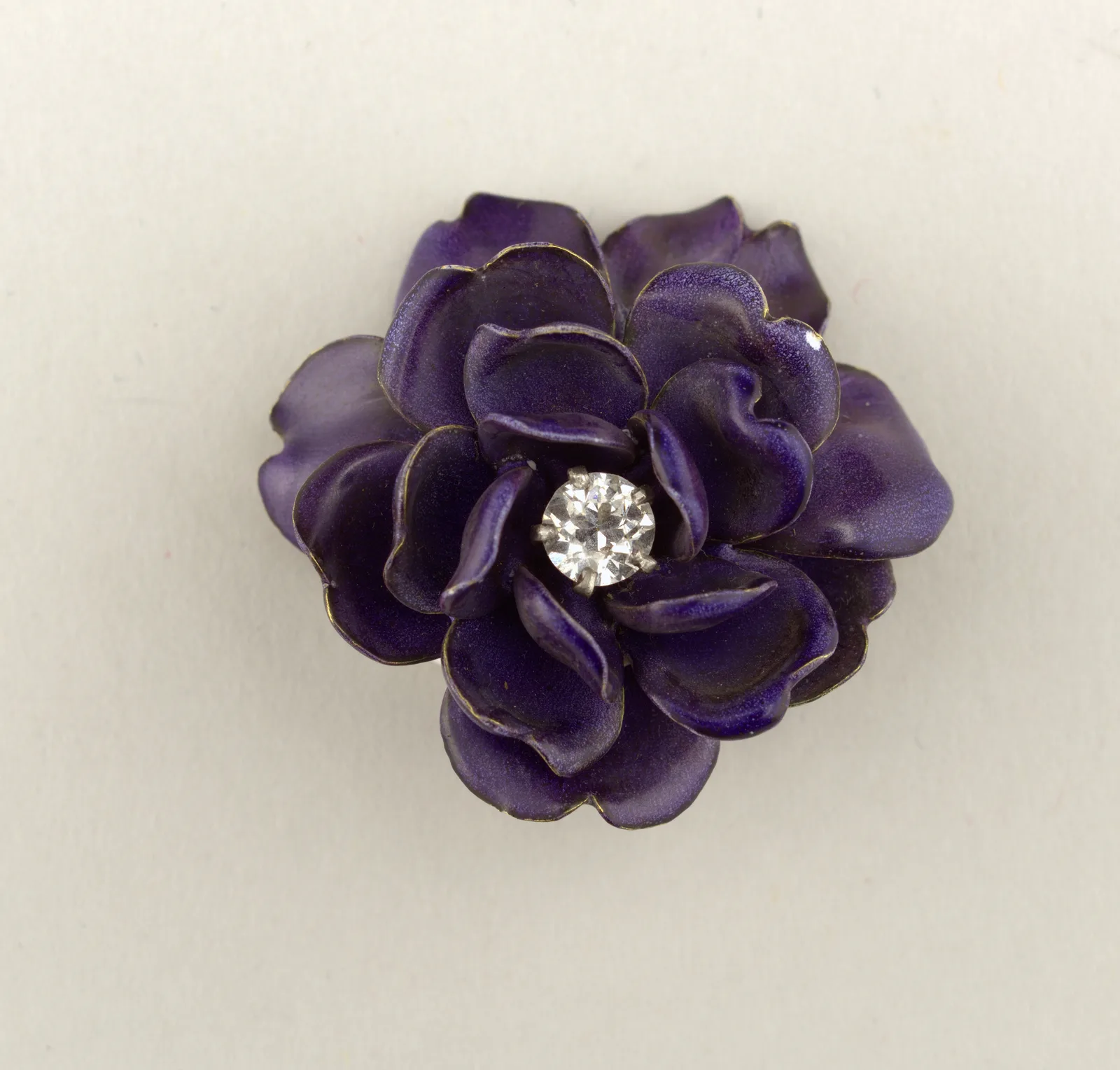
A purple enamel flower, about 1900, keeps the sit as a disk. Rounded petals in a deep violet, a thin gold line at the edge, one diamond for a heart. You would pin it where a knit closes and feel a cool plane, not a stem. The bloom is the jewelry. No vine to follow. No fall. A camellia thinks this way too — a round weather of petals, worn flat, already at rest on the cloth.
An orchid from the same appetite, a little earlier, spreads instead of stacking. Cream enamel, a blush at the rim, dark spots on the side petals, one diamond on the lip. You would meet a wing of flower before you named the species. The sit is still a landing. Six petals as a single thought against a blouse, a plane that has chosen the sternum and stayed.
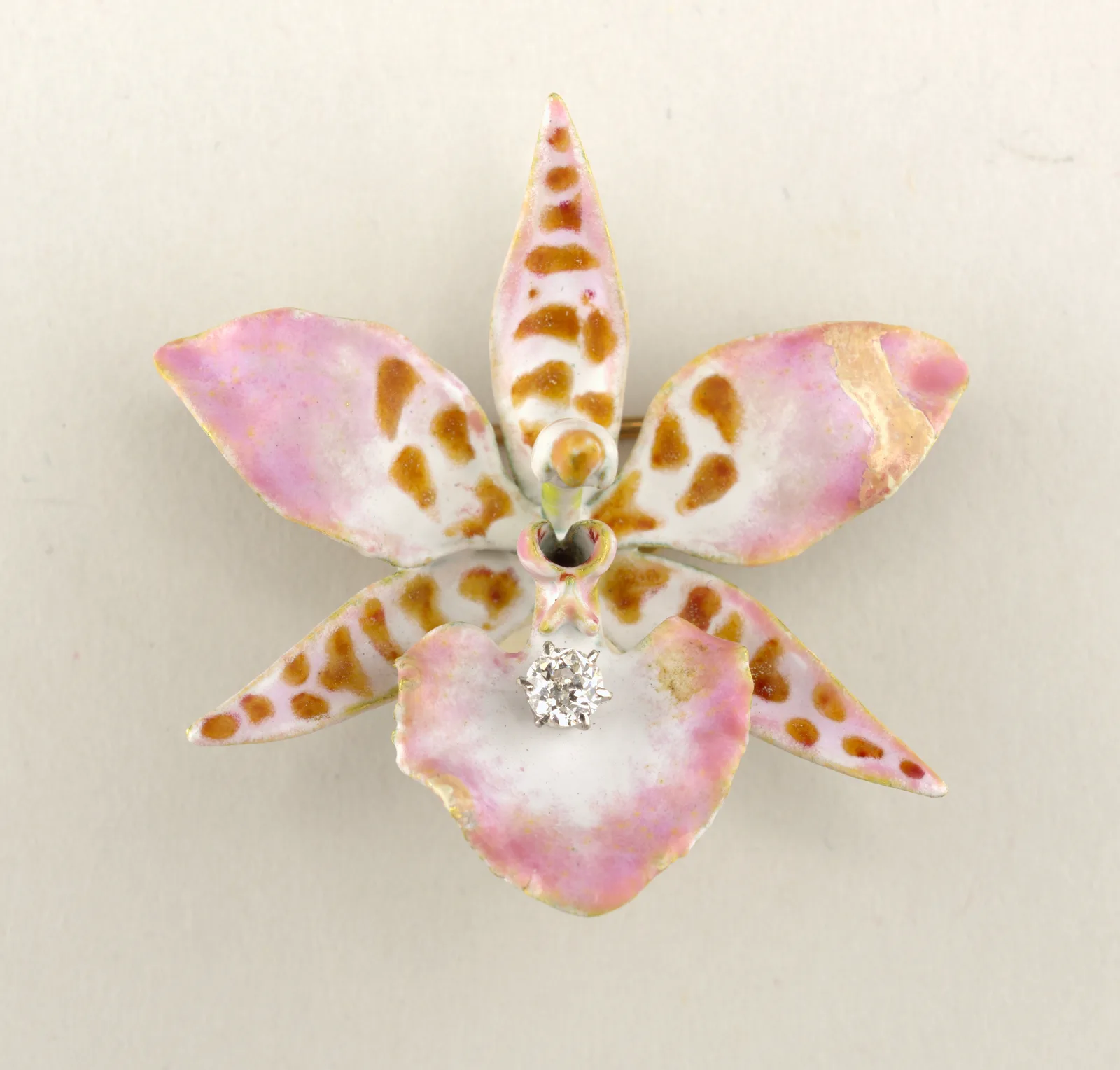
That is the season sit. A camellia that sits. Ivory and gold as a bloom that has landed. Enamel as a purple plane. An orchid that lies. Flower as jewelry, not as a charm — at the neck, on the hand, already chosen.
Educational only · Not jewelry, insurance, or legal advice