A cabochon is a dome, not a facet
A cabochon is a dome. No table, no crown, no pavilion. The lapidary polishes a convex curve over a flat or slightly rounded base and stops. What you meet is a volume of color with a single highlight sliding across it. A brilliant cut breaks light into a flash. A cabochon holds the light and gives it back as a glow.
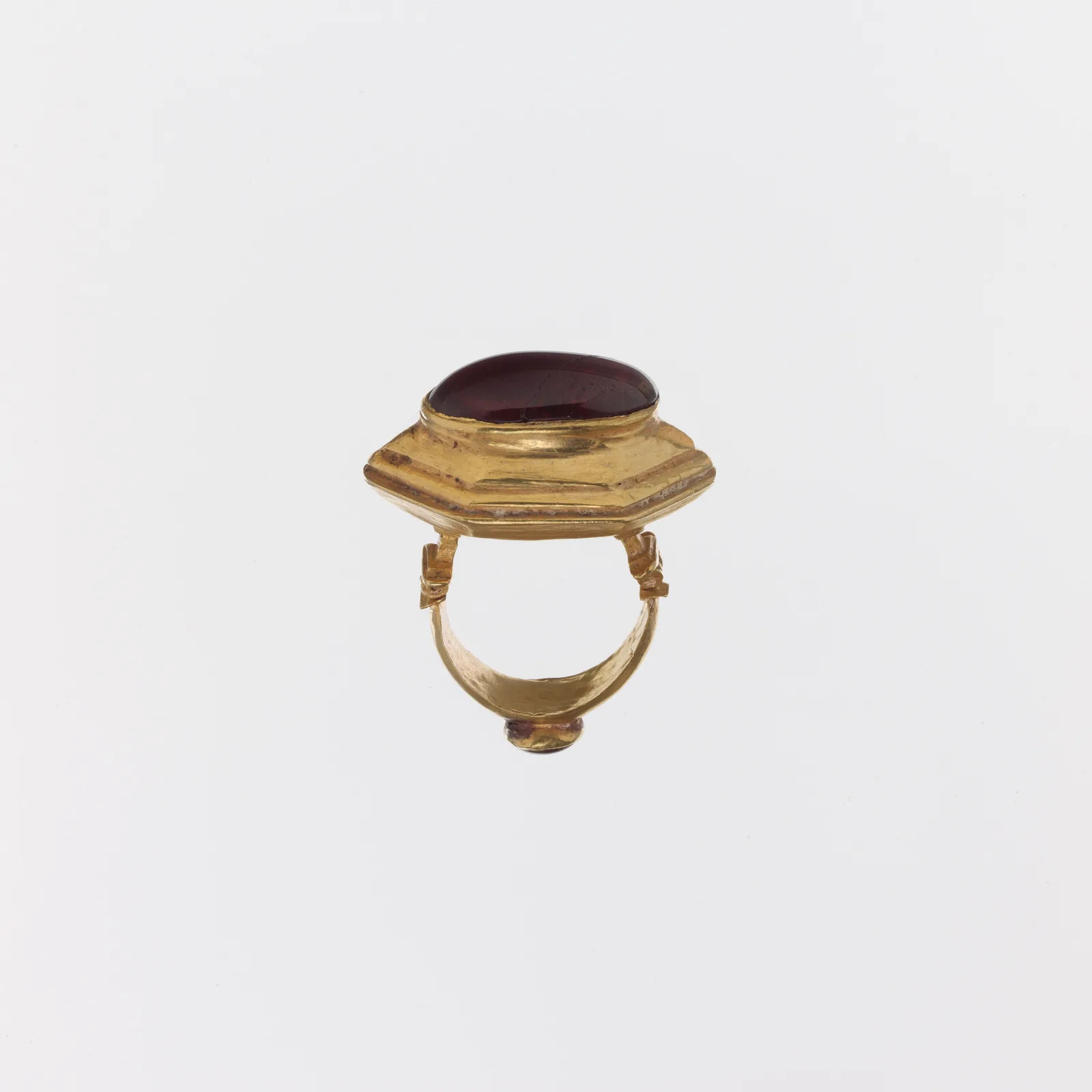
A Hellenistic garnet on a gold thumb-ring is the lesson in one object. An oval dome, deep red going almost black in the shade, a wet highlight on the curve. The bezel is hexagonal, stepped, made to hold a body of stone rather than a pointed cut. You would feel the height of the dome before you felt the hoop. The color lives inside the volume. Turn the hand and the highlight moves; the stone does not spark, it wells.
Soft stones and cloudy ones often want that sit. A facet can chip a softer material and can empty a stone that lives by color, not by fire. Garnet, turquoise, opal, moonstone, a star sapphire — the dome keeps the body of the hue, and sometimes a silk or a star that a brilliant would cut away. The literacy is simple. If the pleasure is the color in the mass, the cut is usually a curve.
Color that wants a volume
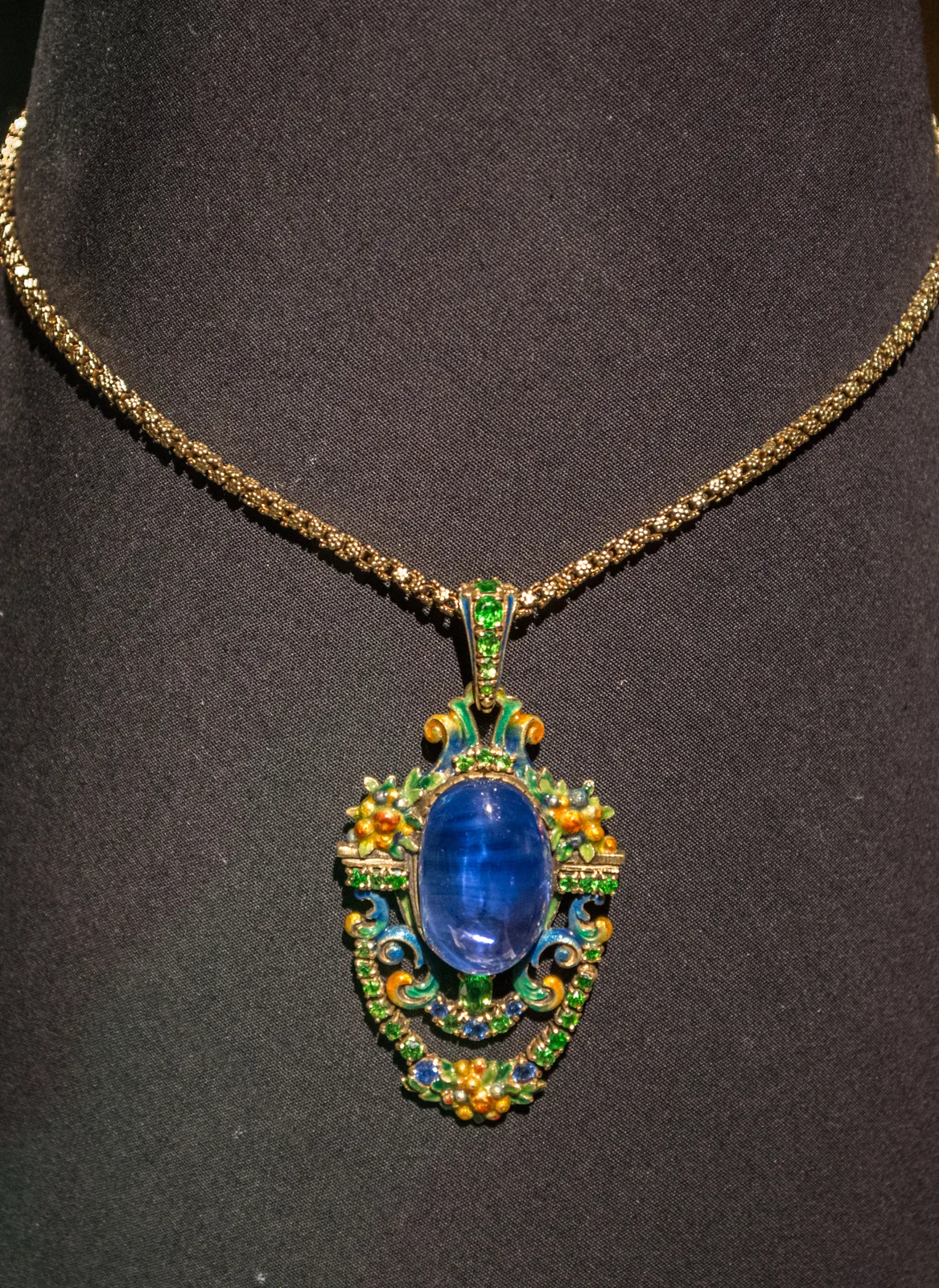
Meta Overbeck’s sapphire is the same sit in a later room. A tall blue dome, enamel leaves around it, small green stones in the frame. The cabochon is what you meet first — a cool, polished volume at the sternum, one highlight, no glitter grid. A second stone cut the same way would still be one temperature. The enamel is the garden. The dome is the jewel.
Turn the piece and the highlight travels. It does not break into a star of white. That is the difference you learn with a fingertip: a brilliant catches as a spark; a cabochon catches as a wet place on a curve. Colored stones that live by hue — a sapphire, a garnet, a turquoise — often keep more of themselves when the surface stays whole.
A carbuncle is only a name for a garnet cut that way: a polished dome, often with a hollow back so the red can glow. On a locket the stone is a circular well, blue enamel around it, pearls at the points, a gold lozenge. You would see a pool of red, then the metal. The light sits on the curve and stays. No pavilion to leak it.
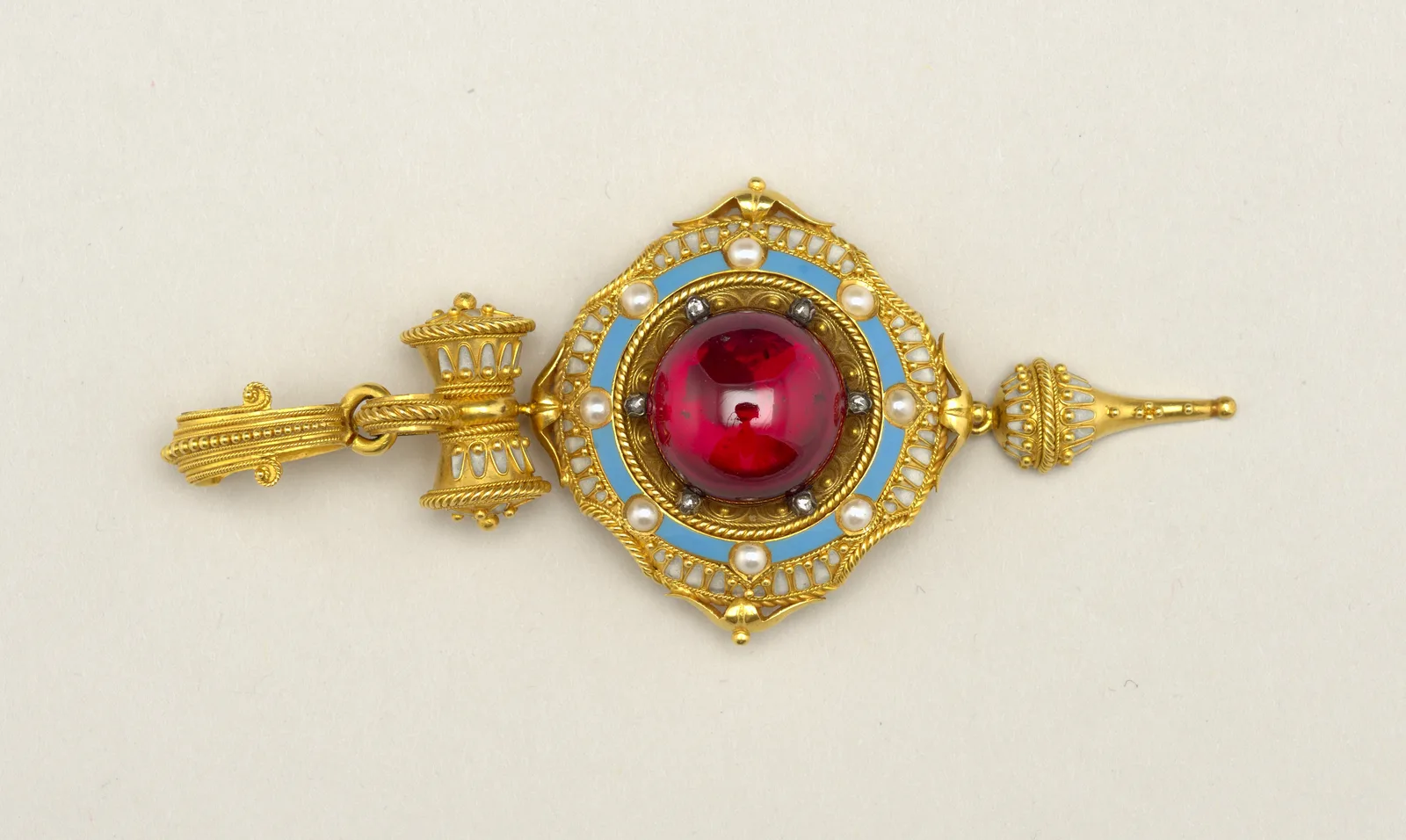
That is the note. A brilliant is a lantern. A cabochon is a well. Soft color often chooses the well — a dome you can feel, a glow that moves when you do.
Educational only · Not jewelry, insurance, or legal advice