A briolette is a drop
A briolette is a drop. A faceted teardrop whose whole body is already cut, worn hanging from the tip — a stone asked to live as a drop in air. You do not meet a pear with a table, set as a face in a hold. You do not meet a pendant as a general hanging jewel. You feel a drop, then a cap. The literacy is the suspend.
A pear is a faced stone: a pointed oval with a table, usually set, a face you look into. A pendant is the job of hanging — a locket, a cross, a drop, any jewel that agrees to swing. A briolette begins when the drop has already been faceted all around and hung from the point. The stone is the drop. The hold is only the tip.
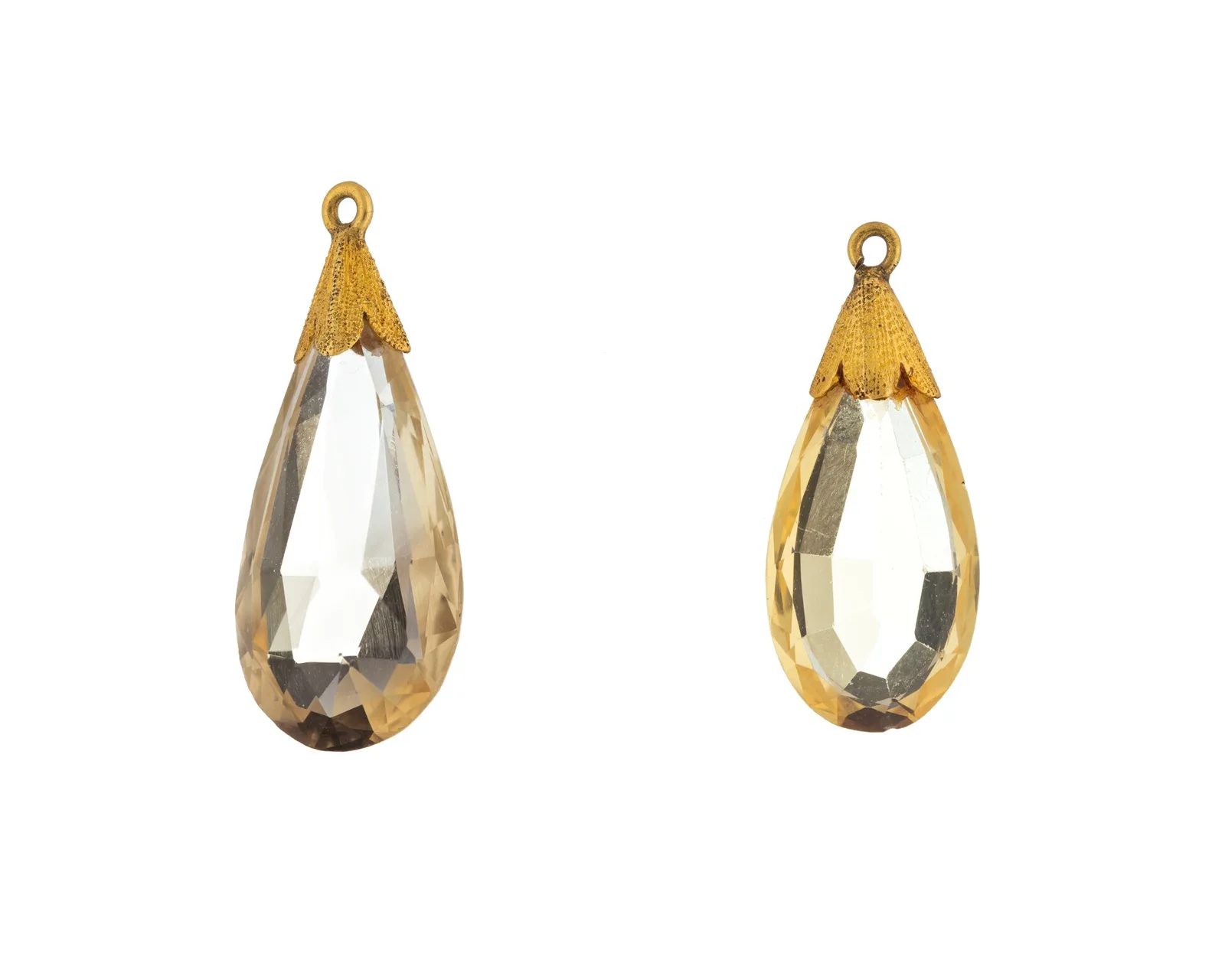
A pair of citrine drops is the lesson in one suspend. Facets all around, a gold cap at the tip, the stone hanging as itself. You would see those drops before you named a parure. A pear would have asked each stone for a table and a seat. A pendant might have been any jewel on a loop. These are drops. The briolette is the faceted teardrop that has already agreed to hang.
The literacy is the hang. If the stone is a faced oval with a table, you are in a pear. If the jewel is any hanging form, you are in a pendant. A briolette begins when the drop has already been cut in the round and hung from the tip.
Faceted drops at the ear, then a line of hung tips
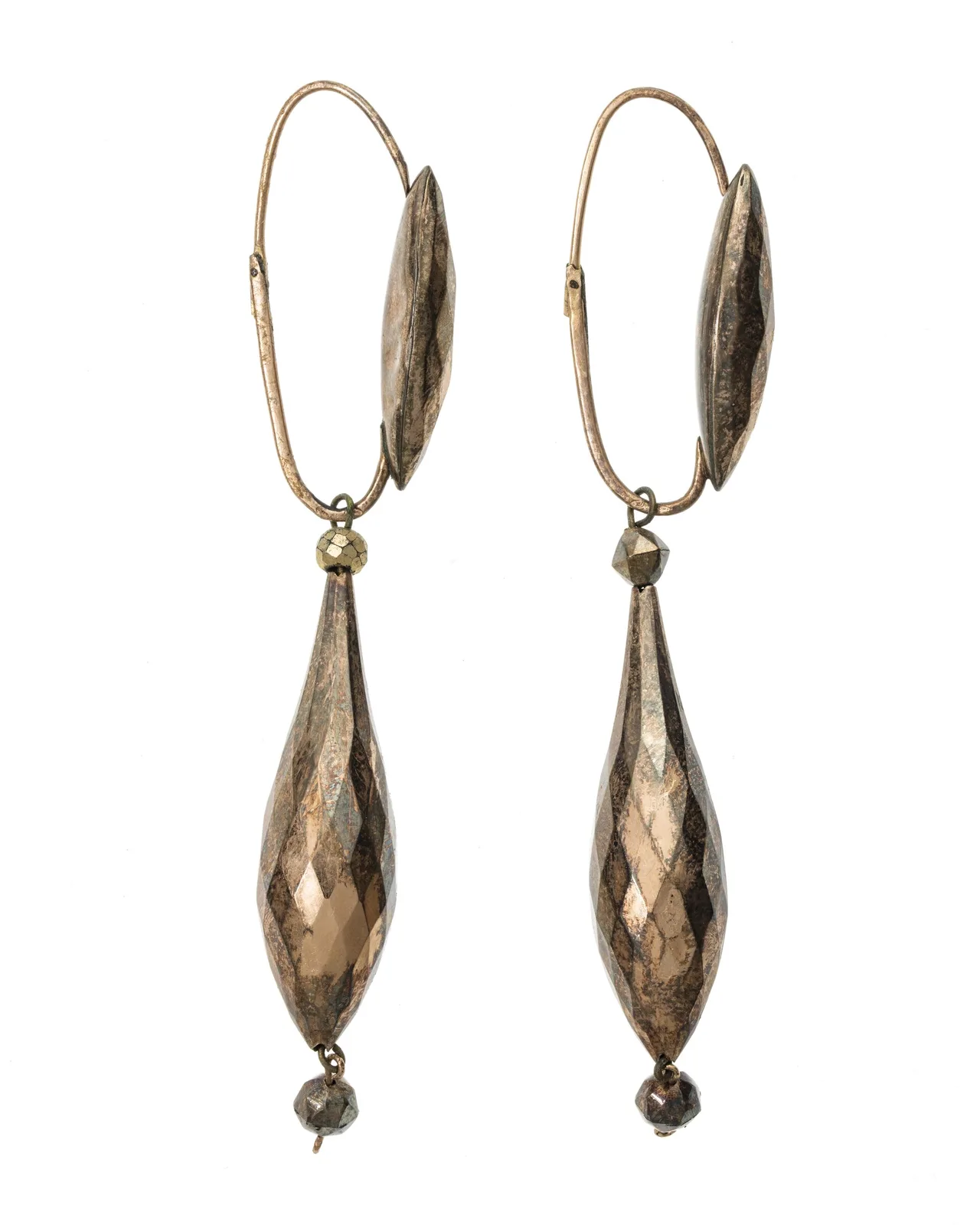
A pair of gold earrings keeps the same appetite as drops worn small. Long faceted bodies, hung from the tip, a small top as the only chair. You would meet those hanging cuts before you named a hoop. The modern briolette takes that suspend and names it: a drop cut in the round, hung from the point, a sit you can still read as a tear in air.
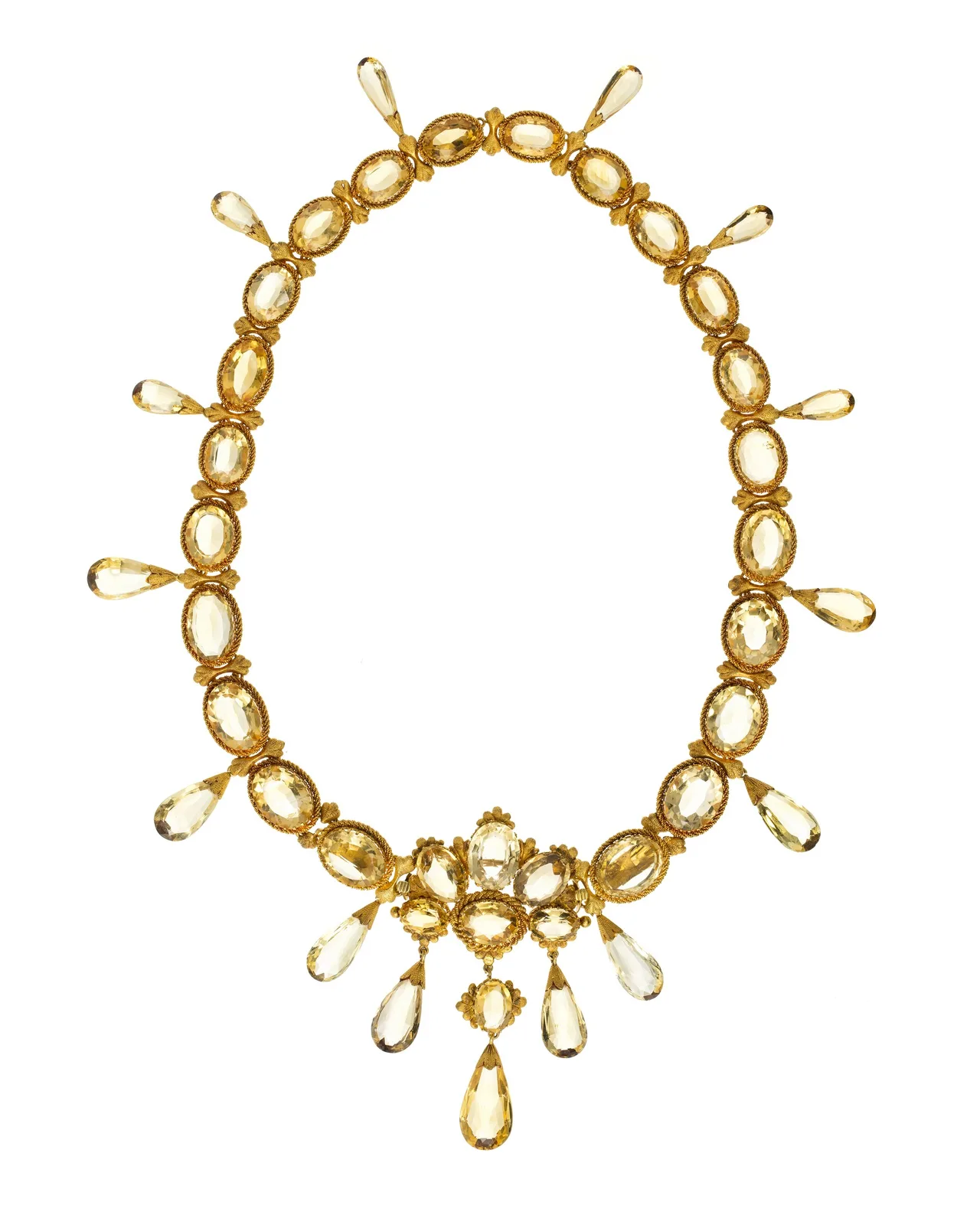
A gold necklace finishes the thought as the drop worn as a line. Ovals as the faced hours, then small pear drops hung from their tips around the neck — the same grammar as the citrine pair, a drop you meet first. You would feel those hanging points before you named a clasp. Turn the jewel and the drop stays a drop. A pear on a modern shoulder would stay a set face. You would feel a tip, then stone, and almost no table under the fingertip.
That is the note. A pear is a faced stone with a table. A pendant is any jewel that hangs. A briolette is the drop — a faceted teardrop suspended from the tip, a tear you wear.
Educational only · Not jewelry, insurance, or legal advice