A bee that lands
A bee on the body is a landing, not a mascot. This season the houses put a small insect where a jewel would sit — Chaumet’s Bee de Chaumet treats the bee as a gold arrival, already on the body — and the sit is the settle. You meet an insect that has chosen its place. Not a swarm. Not a crest at the window. A bee that has already landed.
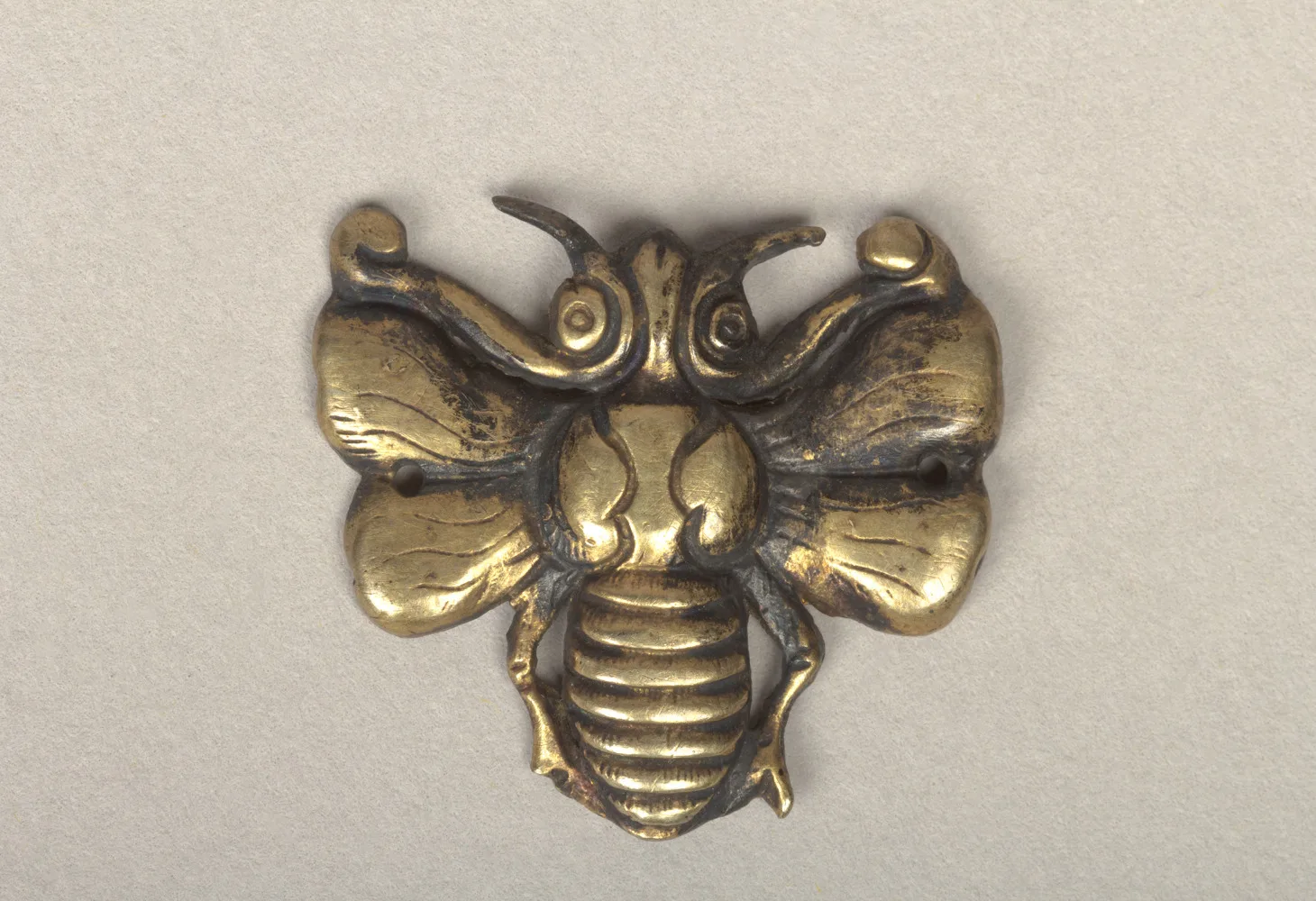
A Goryeo gold bee is the sit in one object. Round eyes, a ribbed abdomen, wings that finish in scrolls, two small holes already punched so the insect can be sewn down. You would feel a warm landing before you counted a dynasty. The gold is flat enough to lie. The holes are the decision: this bee was made to stay. Antennae curve in. Legs tuck. Nothing in the metal is still taking off.
That is the insect sit in play now. A bee worn as an arrival. Jewelry that has already chosen the cloth.
Another landing, then a bee that folded its wings
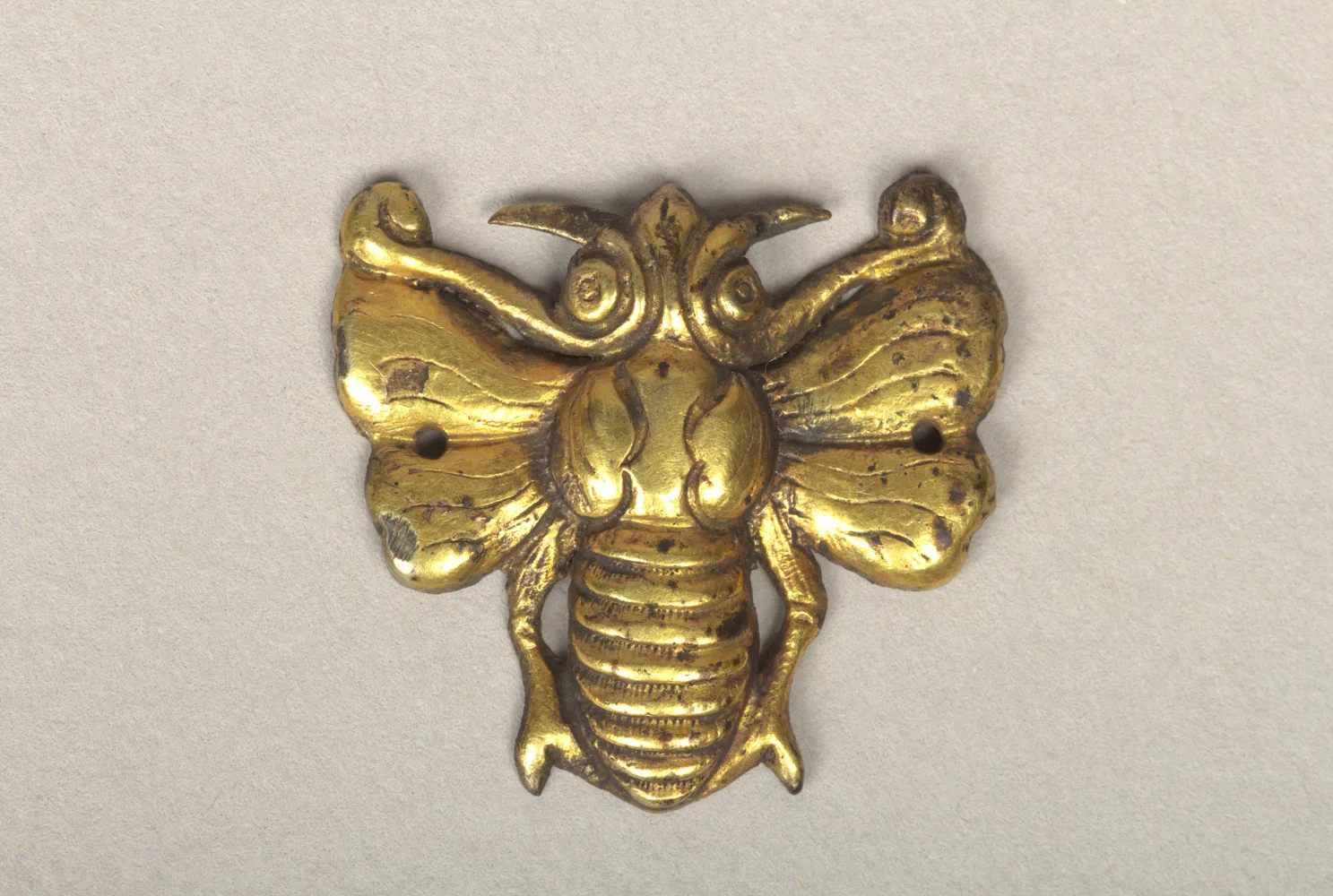
A second Goryeo bee keeps the same appetite in a different drawing. Scalloped wings, veins cut into the gold, four legs along the abdomen, the same two holes so the landing can be fastened. You would meet a slightly softer insect, then the same sit: a bee meant to be stitched where a jewel sits. Not a pair of angles. Two landings, two gold temperatures, one verb.
A Javanese gold bee finishes the thought as a body that has already folded. Large eyes, a short sip, wings closed over the back, legs set as if the metal had just chosen a stem. You would feel a small weight, a compact settle, before you named an island. The Goryeo bees lie as appliqués. This one has already arrived in the round. That is the season sit. A bee that lands. Gold that stays.
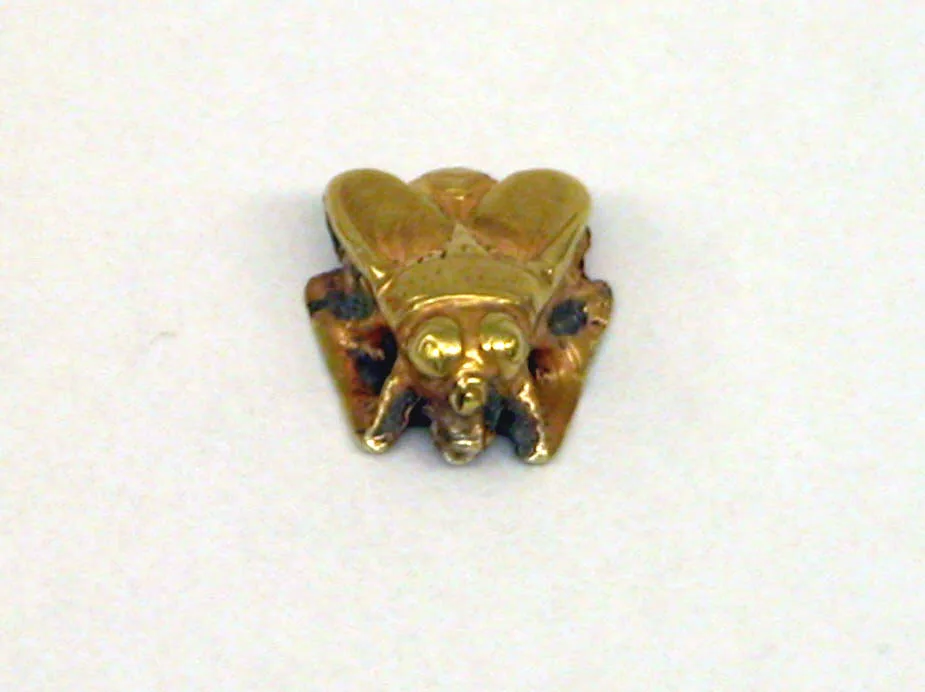
You would wear that folded bee as a quiet arrival. The wings have already agreed to stay. The house name on a modern bee is later. The sit remains an insect that has landed — small, gold, already on the body.
Educational only · Not jewelry, insurance, or legal advice