A bail is a loop
A bail is a loop. The ring that hangs a pendant from a chain — metal asked to hold a face and let it fall. You do not meet a clasp, which opens and closes a line. You do not meet a jump ring used only as a join between links. You do not meet the pendant face itself. You feel a loop, then the jewel it has agreed to suspend. The literacy is the hang.
A clasp is a meeting that parts and shuts. A jump ring can connect two links and stop there, a circle with no face to carry. The pendant face is the picture, the stone, the animal — the thing that hangs. A bail begins when a loop is asked to do the hanging. One ring. A chain passes through. The face falls below it.
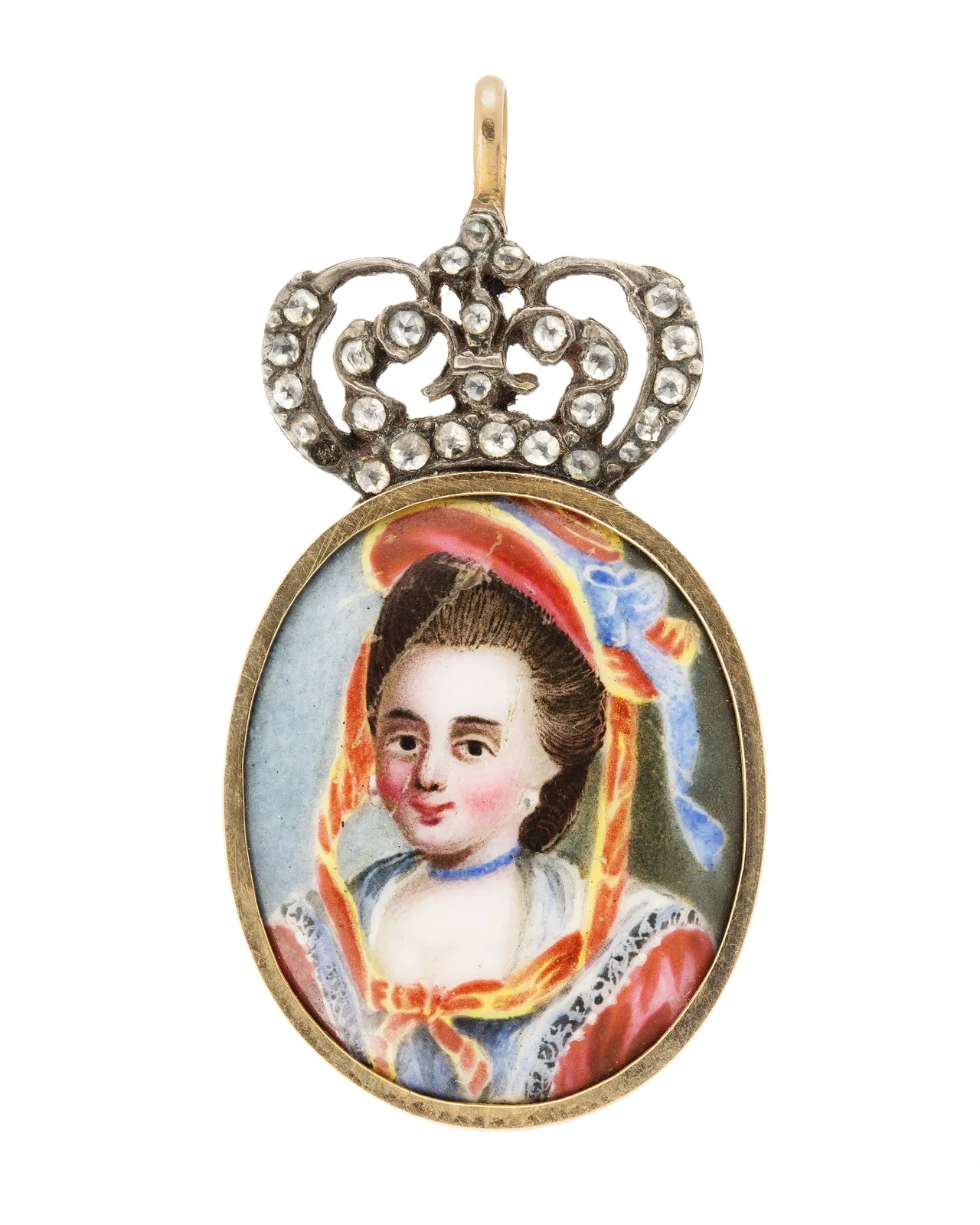
A German gold pendant of the 1770s keeps the lesson in one bow. A miniature of a woman, pale stones along the frame, and above the portrait a bow that finishes in a small ring — already the loop a chain would pass through. You would see that ring before you named a sitter. The face is the portrait. The bail is the loop. A clasp would have asked the gold to open and shut. A jump ring left in a chain would have joined two links and stopped. This loop has one job: to hang the face.
The ornament does not change the job. A bow can be set with pale stones and still be a loop. You are looking at the hang, dressed.
The same loop in gilt silver, then a plain ring
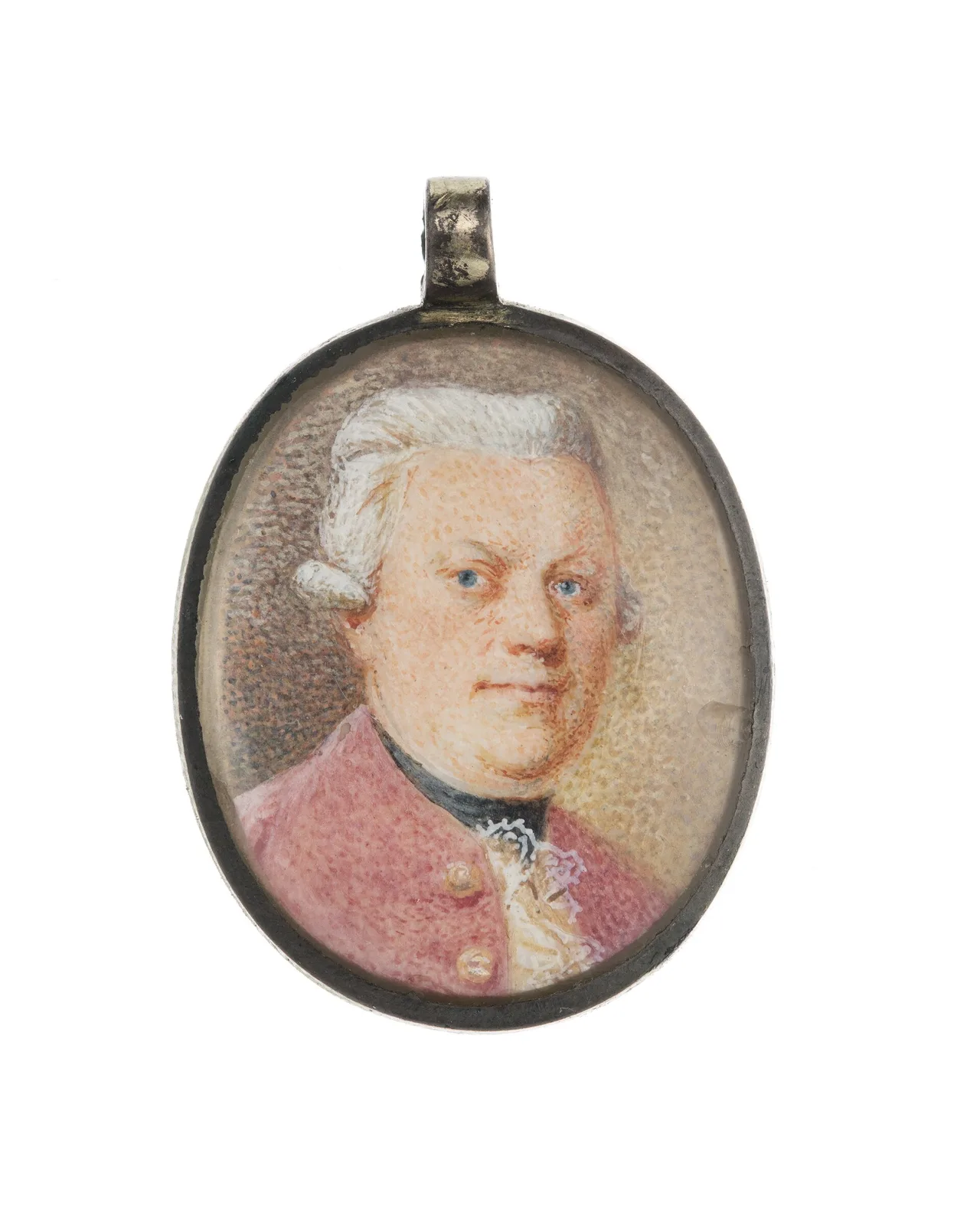
A gilt-silver pendant from the 1760s keeps the same appetite as a quieter bow. An ivory miniature of a man under glass, and above it an openwork loop of gilt silver — still a ring, still the hang, the gold only a coat on the silver. You would feel that bow before you named a decade. Turn the jewel and the portrait stays the face. The bow stays the bail. The loop does not need stones to be a loop.
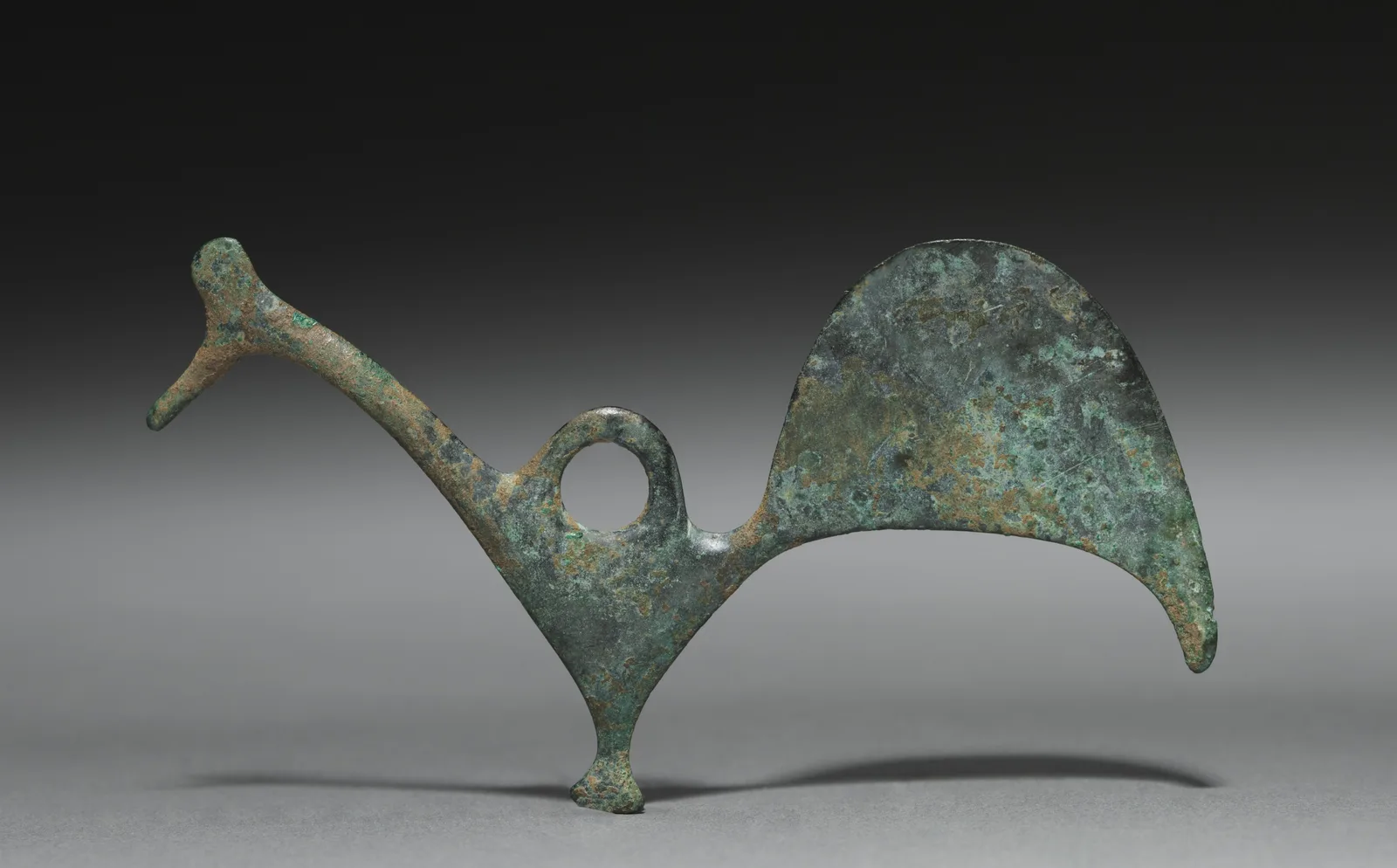
A bronze bird from northern Greece finishes the thought as the loop with no bow at all. One ring at the center, the body hung to either side so the piece falls even. You would meet that ring before you named a century. The bird is the face. The ring is the bail. No clasp. No chain-join pretending to be the jewel. A plain loop, and a pendant that exists so the loop can hold it.
That is the note. A clasp is a join that opens. A jump ring used only as a join is a link. The pendant face is the jewel that hangs. A bail is the loop — the ring that lets it fall.
Educational only · Not jewelry, insurance, or legal advice